
Brazil’s 2026 Runoff: Lula’s Historic Comeback Bid vs. Flávio Bolsonaro’s Right-Wing Surge
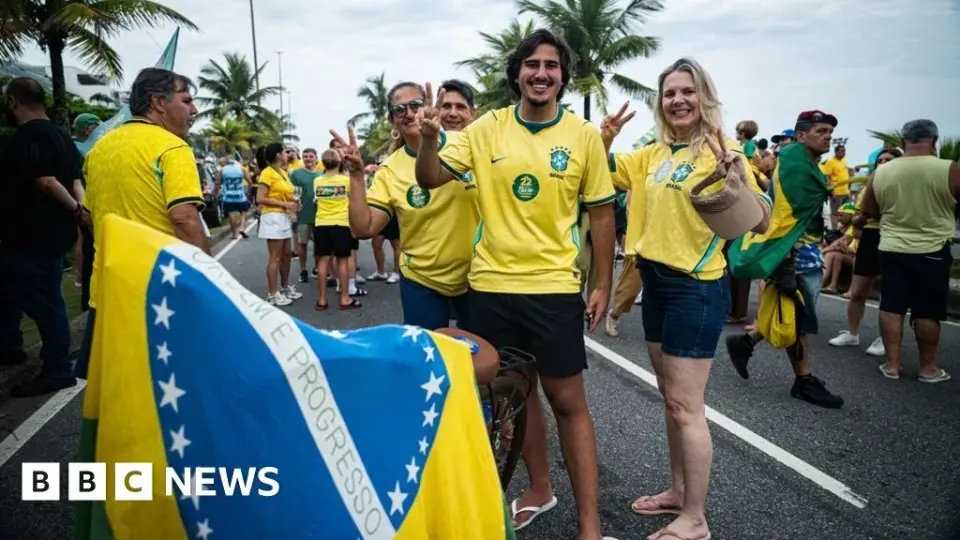
Brazilian voters face a historic runoff on October 25, 2026, pitting incumbent left-wing President Luiz Inácio Lula da Silva against right-wing senator Flávio Bolsonaro. Despite trailing in the first round, Lula is attempting an unprecedented comeback, while Bolsonaro leads on promises of tough crime crackdowns and closer US ties. The race is defined by deep economic anxiety, fears of democratic backsliding, and the potential release of Jair Bolsonaro, who is serving a 27-year sentence for coup plotting.
Key points
- The runoff pits 80-year-old incumbent Lula, seeking a fourth non-consecutive term, against 45-year-old senator Flávio Bolsonaro, who won the first round on October 4 with 47% of the vote to Lula’s 45%.
- Flávio Bolsonaro has pledged to release his father, Jair Bolsonaro, who is serving a 27-year prison sentence for plotting a coup after losing the 2022 election, and to align Brazil more closely with US President Donald Trump.
- Lula’s campaign frames the election as a 'battle for democracy,' arguing that Bolsonaro’s victory would threaten democratic institutions, while Bolsonaro’s supporters emphasize his promises to combat organized crime and reduce public spending.
- Recent polls show the race is extremely tight, with some surveys showing Bolsonaro leading by a narrow margin within the error range, while others show the candidates nearly tied.
- Massive rallies occurred on election eve, with over one million Lula supporters gathering on Rio’s Copacabana beach to boost turnout, while Bolsonaro supporters rallied in Belo Horizonte, a critical bellwether state.
Background
This election follows the 2022 presidential race, which was the closest in Brazilian history, resulting in Lula’s narrow victory over Jair Bolsonaro. Jair Bolsonaro was subsequently convicted in 2025 of conspiring to illegally remain in power after his defeat. The current campaign is also shaped by Brazil’s recent economic performance under Lula, which has seen solid growth but high cost-of-living pressures, as well as a record drop in Amazon deforestation, a key environmental metric that could be reversed under a Bolsonaro administration.
How outlets are covering it
Outlets highlight different aspects of the campaign’s intensity. The BBC emphasizes the unprecedented nature of Lula’s attempt to overcome a first-round deficit, noting that no candidate has ever won a Brazilian presidential runoff after finishing second since the return of democracy in 1985. The Financial Times focuses on the economic and geopolitical stakes, noting that a Bolsonaro victory would be a 'political win' for the Trump administration, which has imposed trade tariffs on Brazil, while Lula’s administration has accused the US of interfering in the election. The Guardian highlights the massive grassroots mobilization, noting that over one million Lula supporters rallied on Copacabana beach, with many citing fears of a return to dictatorship and the 'Bolsonarismo' movement. Al Jazeera reports on the tight polling, with a CNT/MDA survey showing Bolsonaro leading 46.3% to 45%, and notes that some voters view the choice as between the 'worst' and the 'lesser evil.' All sources agree that the election is defined by deep divisions over crime, economic policy, and Brazil’s relationship with the US.
Why it matters
The outcome will determine Brazil’s domestic policy direction, including its approach to organized crime, public spending, and environmental protection, as well as its foreign policy alignment, particularly with the US and other global powers. A Bolsonaro victory could lead to the release of Jair Bolsonaro and a potential shift in Brazil’s stance on regional issues, while a Lula victory would maintain the current course and potentially deepen ties with other developing nations. The election also serves as a bellwether for the broader right-wing surge in Latin America, with implications for US foreign policy in the region.
What to watch
Voters will cast their ballots on October 25, 2026, with results expected in the evening. Lula is set to watch the results from São Paulo, while Bolsonaro is expected to be in Brasília, where his father is under house arrest. The outcome will determine whether Brazil continues on its current path or shifts toward a more right-wing, US-aligned government.
- Brazil election: Voters to choose between Lula and Bolsonaro's son BBC
- Bolsonaro and Lula face off in knife-edge Brazil election Financial Times
- More than one million Lula supporters rally on eve of Brazilian election runoff The Guardian
- Brazil’s Lula, Bolsonaro draw thousands to election-eve rallies Al Jazeera
- Bolsonaro, Lula about even in polls for Brazil runoff vote Reuters
Want the full story? Read the original reporting
Read on BBC