
Brazil's October 4 Vote: A Polarized Clash Over Sovereignty, Debt, and Scandal
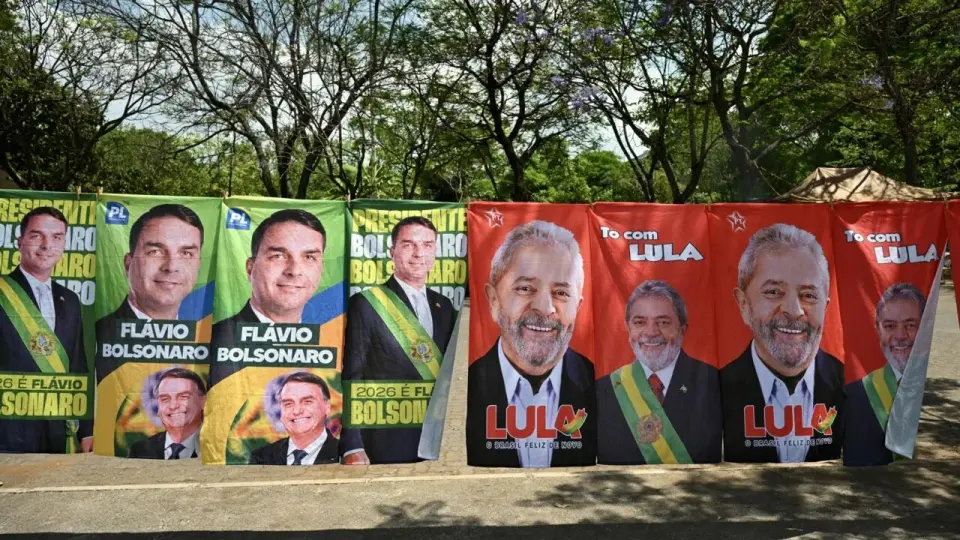
Brazilian voters face a tight presidential race on October 4 between incumbent Lula da Silva and Flávio Bolsonaro, with polls predicting a runoff on October 25. The campaign is defined by mutual accusations, including a dispute over the patron saint Our Lady of Aparecida and a gynecological comment by Lula. While Lula emphasizes social welfare and strategic autonomy, Flávio Bolsonaro aligns with the US and faces corruption probes. Analysts warn that regardless of the winner, Brazil faces deep fiscal deficits, institutional fragmentation, and eroding global credibility due to great-power rivalry.
Key points
- The first round of Brazil's presidential election is scheduled for October 4, with a likely runoff on October 25 between Lula da Silva and Flávio Bolsonaro, who are currently tied in polls.
- Lula da Silva, 80, seeks a fourth non-consecutive term, campaigning on social welfare programs, reduced work weeks, and Brazilian sovereignty, while warning against US interference.
- Flávio Bolsonaro, 45, is under investigation for corruption related to the financing of the biopic 'Dark Horse' and has admitted to seeking funds from jailed banker Daniel Vorcaro.
- The campaign has featured intense mudslinging, including a dispute over the patron saint Our Lady of Aparecida and a gynecological comment by Lula that Flávio's camp labeled sexist.
- Both candidates face significant economic challenges, including a government debt projected to reach 98% of GDP by the end of 2026 and a budget deficit of 9.48% of GDP.
- Foreign Affairs argues that Brazil's foreign policy autonomy is eroding due to domestic fiscal constraints, institutional fragmentation, and corruption scandals, particularly involving the Supreme Court.
Background
Recent coverage has highlighted the statistical dead heat between Lula and Flávio Bolsonaro, with Flávio's momentum surging in late September amid a Supreme Court scandal. Earlier reports noted the parallels between Brazil's political turmoil and US events, as well as the impact of the 'Dark Horse' scandal on Flávio's campaign. The current election is seen as a critical juncture for Brazil's global influence and domestic stability.
How outlets are covering it
France 24 emphasizes the personal attacks and polarized nature of the campaign, highlighting the dispute over the patron saint and Lula's gynecological comment. Foreign Affairs focuses on the structural weaknesses of the Brazilian state, arguing that neither candidate offers a clear plan to restore Brazil's credibility or address its fiscal and institutional fragmentation. CNBC highlights the economic and geopolitical implications, noting the impact of the election on Brazil's relations with the US and China, as well as the concerns over fiscal credibility and high interest rates. The MV Times provides a local perspective on Brazilian voters in Martha's Vineyard, noting logistical challenges and the importance of voting for the Brazilian community abroad.
Why it matters
The outcome of Brazil's presidential election will have significant implications for the country's domestic stability, economic trajectory, and global influence. The tight race between Lula and Flávio Bolsonaro reflects deep political polarization and the challenges of governing in a fragmented and fiscally constrained state. The election will also impact Brazil's relations with major powers, particularly the US and China, as well as its role in regional institutions. Regardless of the winner, Brazil faces significant challenges in restoring its credibility and addressing its fiscal and institutional weaknesses, which will affect its ability to project influence and manage global competition.
What to watch
The first round of Brazil's presidential election will take place on October 4, with a likely runoff on October 25 between Lula da Silva and Flávio Bolsonaro. Investors and analysts will be watching closely for signs of fiscal adjustment and the impact of the election on Brazil's relations with the US and China. The outcome of the election will also have implications for Brazil's domestic stability, economic trajectory, and global influence, as well as its role in regional institutions.
- Lula and Bolsonaro’s mudslinging heats up ahead of weekend vote France 24
- Brazil’s Election Won’t Fix What’s Broken Foreign Affairs
- Brazil votes in high-stakes election as U.S.-China rivalry and debt loom large CNBC
- Brazilians on-Island head to polls this Sunday for presidential election MV Times
- Lula leads Bolsonaro by 3 points in Brazil runoff scenario, Datafolha poll shows reuters.com
Want the full story? Read the original reporting
Read on France 24