
AI Decodes 1809 Napoleonic Cipher in Six Hours, Revealing Lost Military Briefing
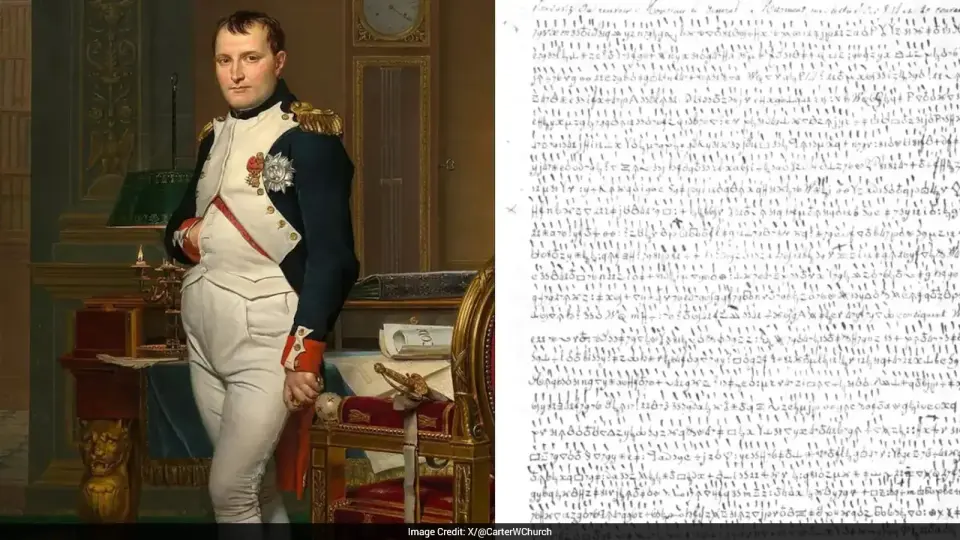
Carter Church, an AI engineer at SentinelOne, used OpenAI’s GPT-6 Astra to decode a 217-year-old encrypted letter from 1809. The AI transcribed 1,300 symbols from a scanned image in six hours, revealing a military briefing sent to General Auguste de Marmont. The decoded text details troop positions and completes a sentence from Napoleon’s memoir, marking a significant application of AI in historical research.
Key points
- Carter Church used OpenAI’s GPT-6 Astra to decode a cipher from 1809 in approximately six hours.
- The letter was sent by Eugene de Beauharnais, Napoleon’s stepson and Viceroy of Italy, to General Auguste de Marmont.
- The decoded text reveals French and Austrian troop movements prior to the Austrian invasion of 1809.
- Church published the transcription, cipher key, and code on September 18, 2026, allowing for independent verification.
- The decipherment completes a sentence in Napoleon’s 1865 memoir that previously broke off mid-thought.
Background
This development follows earlier reports in our archive from October 2026, which highlighted AI’s growing role in solving historical cryptographic puzzles. Previous coverage noted that while the technical breakthrough was significant, some historical details remained debated among scholars. The current event confirms the successful application of multimodal AI in archival research, building on the narrative of AI expanding beyond modern tech sectors into historical analysis.
How outlets are covering it
NDTV emphasizes the speed of the AI solution, highlighting that GPT-6 Astra cracked the code in six hours, a feat that would have been impossible for human cryptographers. Euronews provides detailed context on the military situation in 1809, noting that the letter warned Marmont not to be intimidated by Austrian forces. RuntimeWire offers a more technical perspective, detailing how Church used a simulated-annealing solver and a partial key from French historian Daniel Tant. RuntimeWire also notes that while the cipher was not exceptionally difficult for a specialist, the AI’s ability to handle the entire workflow from image to text was the key innovation. The Telegraph source was inaccessible due to a security block, so no perspective could be extracted from it.
Why it matters
This event demonstrates the practical application of multimodal AI in historical research, showing how AI can process complex, unstructured data from archival sources. It highlights the potential for AI to uncover lost historical documents and fill gaps in historical records, such as the completion of Napoleon’s memoir. The open release of the key and code by Church allows for transparency and verification, setting a precedent for AI-assisted historical research.
What to watch
Researchers and historians may use the published key and code to verify the decipherment and explore other unsolved ciphers. The success of this project may encourage further applications of AI in archival research, potentially leading to the decoding of other historical documents. There may also be debates among historians about the accuracy of the AI’s interpretations, particularly regarding the five signs whose readings remain uncertain.
- Napoleon's 217-Year-Old Mysterious Letter Cracked Using AI In 6 Hours NDTV
- Napoleon’s 217-year-old coded message ‘cracked by AI’ The Telegraph
- Napoleon’s centuries-old code cracked by AI in six hours The Times
- AI decodes 217-year-old Napoleonic letter in 6 hours Euronews.com
- GPT-6 Astra helped decode a 217-year-old cipher letter to Napoleon's marshal RuntimeWire
Want the full story? Read the original reporting
Read on NDTV