
Budapest 1956 Commemoration Marks EU-Hungary Thaw Amid Ukraine Peace Stalemate
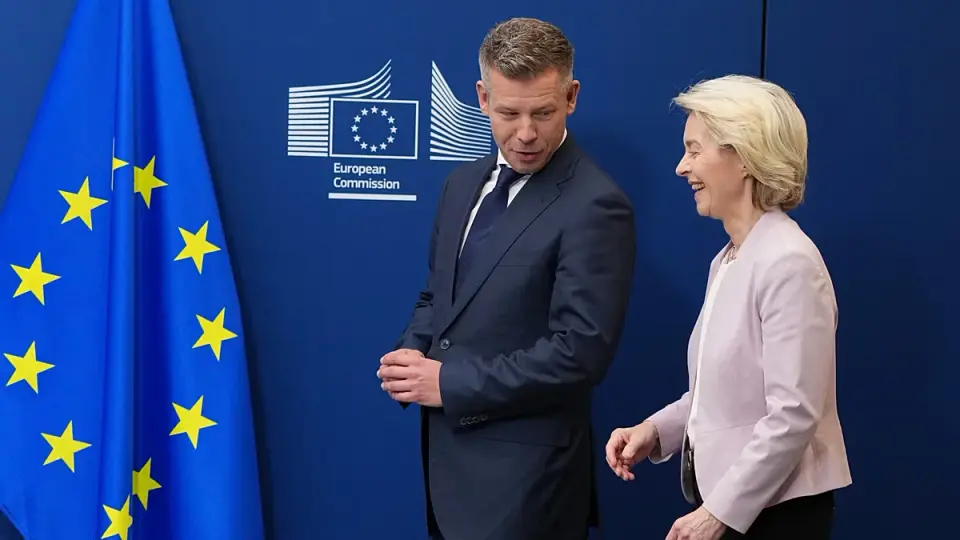
European Commission President Ursula von der Leyen and Council President António Costa joined Hungarian Prime Minister Péter Magyar in Budapest to mark the 70th anniversary of the 1956 uprising, signaling a major diplomatic reset between Brussels and Budapest. While the event highlighted improved EU-Hungary relations, it coincided with Hungary blocking Ukraine’s EU accession progress and a stalled peace process, as Russia launched cluster missile strikes on Kyiv and Putin reiterated his 'one people' narrative.
Key points
- Von der Leyen addressed the Hungarian parliament, a venue previously targeted by Viktor Orbán, marking a shift from years of acrimony to a new chapter in EU-Hungary relations.
- Prime Minister Magyar announced the creation of a dedicated museum for the 1956 revolution, emphasizing national sovereignty and the 'hole-punched flag' as a symbol of freedom.
- Hungary blocked the next steps in Ukraine’s EU accession talks despite Kyiv meeting prior demands, complicating the diplomatic thaw.
- Russia launched ballistic missiles with cluster warheads on Kyiv’s city center overnight, damaging historic sites and civilian infrastructure.
- Putin claimed Russians and Ukrainians are 'one people' and insisted on achieving war 'objectives' if Ukraine rejects his terms, while Europe fears a secret US-Russia deal.
Background
This event follows a recent Brussels summit where Magyar and Zelenskyy agreed to rebuild ties, though Zelenskyy is unlikely to attend the Budapest commemoration. Earlier tensions included Hungary’s veto on EU accession clusters, which was lifted after Ukraine adopted a minority education law. The current diplomatic environment is strained by US midterm elections and fears that Washington might prioritize a transactional deal with Moscow over European security.
How outlets are covering it
Euronews frames the Budapest event as a clear signal of a 'reset' in EU-Hungary relations, contrasting von der Leyen’s current parliamentary address with her past portrayal as a public enemy under Orbán. The outlet highlights the paradox of Hungary blocking Ukraine’s EU accession despite improved bilateral ties. The Budapest Times focuses on the domestic symbolism, quoting Magyar’s emphasis on the 'hole-punched flag' and the new museum as proofs of national resilience and freedom. National Review and National Post provide historical context, framing the 1956 uprising as a pivotal moment against Soviet communism, with the latter detailing personal accounts of the refugee crisis and antisemitism that drove families to flee. Euronews also notes European anxiety over Trump’s engagement with Putin, describing the security environment as 'ruthless' and 'terrifying' for European officials.
Why it matters
The Budapest commemoration serves as a barometer for shifting European power dynamics, illustrating how Hungary’s pivot toward Brussels coexists with its continued obstruction of Ukraine’s EU integration. Simultaneously, the ongoing Russian missile strikes and Putin’s rhetoric underscore the fragility of peace efforts, as Europe scrambles to maintain a role in negotiations despite US-Russia overtures that may exclude European interests.
What to watch
Zelenskyy is set to meet US envoy Steve Witkoff on Friday, followed by consultations with European and American teams. Russia has indicated readiness to resume technical-level trilateral talks in mid-November, though Brussels hopes to expand these to include European representatives. The EU continues to push for a €70 billion aid package for Ukraine while navigating the uncertainty of US midterm elections and potential US-Russia-China summits.
- A Budapest reset, and a scramble to get Ukraine peace talks back on track Euronews.com
- The Hungarian Revolution Was the First Tear in the Iron Curtain National Review
- Escaping Hungary: How my mother fled to Canada after the Red Army crushed the revolution 70 years ago National Post
- The hole story: a flag’s missing centre becomes freedom’s lasting symbol The Budapest Times
- Hungary Marks 70th Anniversary of 1956 Revolution, Reaffirms Support for BiH Sarajevo Times
Want the full story? Read the original reporting
Read on Euronews.com