
Burnham pledges public control of services and wider devolution in first Commons address
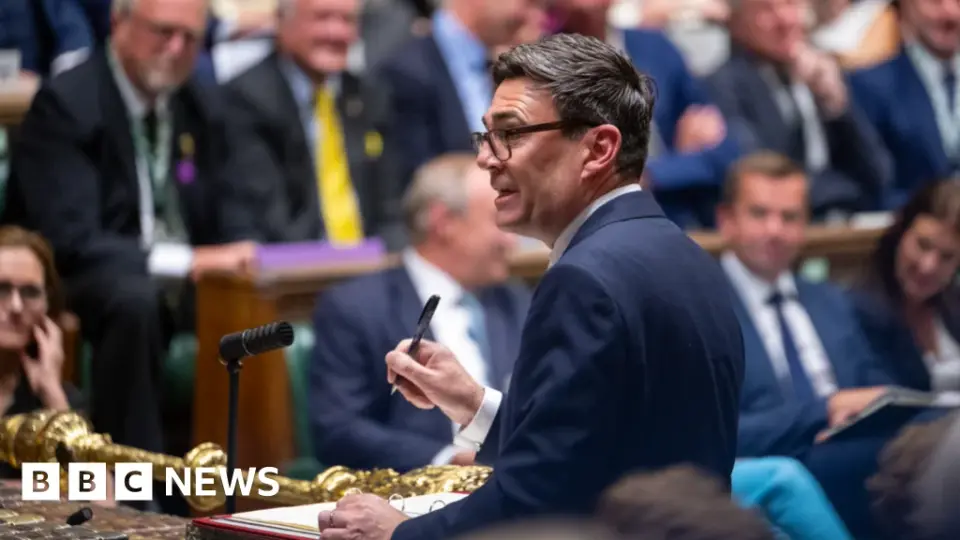
Andy Burnham delivered his first statement to the House of Commons on September 1, 2026, promising greater public control over essential services and expanded devolution across England. He criticized post-1980s privatization and centralization as causes of economic stagnation, while pledging to extend regional powers beyond mayoral areas. The three-and-a-half-hour session included a tribute to outgoing PM Keir Starmer and faced sharp criticism from Conservative leader Kemi Badenoch.
Key points
- Burnham promised a plan for 'stronger public control' of water and energy sectors later in 2026, citing privatization as a 'wrong turn' since the 1980s.
- He committed to extending devolution powers to all parts of England, including areas without elected mayors, specifically addressing concerns in Cornwall and Shropshire.
- Burnham expressed interest in a 'local model of devolution' for Scotland, Wales, and Northern Ireland, while urging the Scottish government to bring Glasgow’s bus service under public control.
- Conservative leader Kemi Badenoch accused Burnham of offering 'more government control, more taxes and more politicians,' calling his economic theory 'completely wrong.'
- Keir Starmer announced he would step down as MP for Holborn and St Pancras, triggering a by-election, shortly before Burnham’s speech.
Background
Burnham became prime minister on July 20, 2026, following Labour’s leadership transition after Starmer’s resignation. His early tenure focused on social care, youth unemployment, and establishing 'Number 10 North' in Manchester to centralize devolution efforts. This Commons address marked his first formal parliamentary session since taking office, following a summer tour where he outlined his vision for regional growth and public service reform.
How outlets are covering it
The BBC and The Guardian emphasized Burnham’s focus on optimism, collaboration with opposition parties, and his 'place first' approach to growth. The Guardian noted his relaxed demeanor and lack of surprise announcements, while the BBC highlighted his detailed diagnosis of post-1980s economic failures. The Independent, however, framed the event through the lens of declining public support, noting that pollsters warned the 'Burnham bounce' had ended, suggesting skepticism about his ability to deliver on promises. Conservative perspectives, represented by Badenoch, sharply contrasted with Burnham’s vision, rejecting his economic model as flawed and warning of increased government control.
Why it matters
This address sets the legislative and political agenda for Burnham’s government, particularly regarding the future of essential services and regional autonomy. The promise of public control over water and energy could reshape UK infrastructure policy, while expanded devolution may alter the balance of power between London and regional centers. The sharp opposition from Conservatives signals a contentious parliamentary battle over economic strategy and public spending, potentially influencing the 2029 general election landscape.
What to watch
Burnham is expected to release a detailed plan for public control of water and energy sectors later in 2026. He will also work with Cornwall Council and its MPs to finalize a devolution deal, potentially setting a precedent for other non-mayoral areas. The by-election in Holborn and St Pancras, triggered by Starmer’s departure, will test Labour’s local support. Additionally, Burnham plans to attend the Cop31 climate conference in Turkey later this year and may engage in further discussions on electoral reform and political donations.
- Andy Burnham promises more devolution and public control of essential services BBC
- Burnham says Brexit brought ‘decade of low growth’ in first Commons address as prime minister – as it happened The Guardian
- Starmer drama on Burnham’s first day back at Westminster Yahoo
- Andy Burnham blames Brexit for ‘decade of low growth’ — follow live The Times
- ‘Burnham bounce’ is over, pollsters warn The Independent
Want the full story? Read the original reporting
Read on BBC