Carney warns Alberta not to gamble on a Brexit-style referendum
Prime Minister Mark Carney warned that Alberta's plan for an October referendum on formal secession is a
All articles tagged with #brexit
Prime Minister Mark Carney warned that Alberta's plan for an October referendum on formal secession is a

Former Bank of England governor Mark Carney calls Alberta's plan to hold a vote on secession a 'dangerous bluff,' warning it could backfire and complicate Ottawa negotiations, drawing a Brexit-like parallel to what happened 10 years after the UK vote. He urges caution, stressing there is a strong case for a united Canada, while noting the October 19 vote to decide Alberta’s future and that the movement backing independence has gathered enough signatures to trigger a referendum. Carney says he will campaign for Canadian unity in the coming months.

Canada’s Mark Carney warns that Alberta’s plan to hold a referendum on secession could backfire, citing Brexit lessons to urge caution and label the move a potential “dangerous bluff.”

Britain has cycled through six prime ministers in ten years amid Brexit fallout, sluggish productivity, rising debt, energy shocks, and inflation, leaving growth stalled and forcing hard, potentially unpopular policy trade-offs that make any future PM's task the same uphill climb.

Amid Ukraine, energy and economic pressures, the UK says it will pursue a pragmatic push to deepen ties with the EU in security and economics, including a food-safety agreement, carbon trading linkage, a youth exchange via Erasmus+, and rejoining Erasmus+. Government ministers insist no re-entry into the single market or customs union, with legislation to align some standards while keeping Brexit red lines. Critics warn of becoming a rule-taker and question costs, as Erasmus+ is projected at about £570m in the first year and Horizon funding at roughly £2.2bn annually, among other concessions that could complicate future independence from EU rules.

During a White House visit for St. Patrick’s Day, Ireland’s Taoiseach Micheál Martin politely interrupted Donald Trump’s insults toward Labour leader Keir Starmer, praising Starmer for repairing Irish-British ties post-Brexit while Trump ramped up talk about Iran and NATO. Martin argued Europe’s migration framework is positive and highlighted Ireland’s openness to newcomers, steering the conversation away from Trump’s attacks. He also managed a light moment regarding Ireland’s president Catherine Connolly, after Trump admitted he didn’t know who she was, as the piece notes Martin’s aim to avoid the missteps seen with Germany’s Merz in a prior White House visit.

New Cancer Research UK data show a 29% reduction in cancer deaths since 40 years ago, offering a hopeful counterpoint to gloom about UK outcomes. But England’s cancer plan reveals serious gaps—long treatment waits and persistent inequalities—while NHS trusts have struggled to meet diagnosis and treatment targets. Brexit is linked to slower development of new therapies and tighter clinical-trial conditions. Even so, the death rate has fallen about 11% over the last decade, and advances in ovarian, stomach and lung cancers, plus a push for genomic testing, suggest progress that must be paired with stronger prevention and equity to sustain gains.

BBC reporters depict Horden, a former mining town in east Durham, as a community left poorer and more isolated since the pits closed, with boarded-up streets, absentee landlords and rising child poverty; residents lash out at Westminster and Labour, while Reform UK gains ground amid frustration over Brexit funding cuts and lack of local investment, even as regeneration plans and community efforts attempt to reverse the decline.

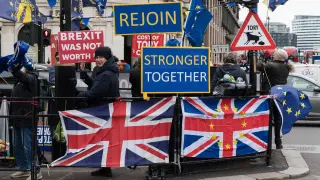
EU and UK are accelerating talks to deepen trade, customs, and defence ties ten years after Brexit, signaling a reset with discussions on re-entering the customs union, closer alignment with the Single Market, and the UK's role in EU defence financing for Ukraine, amid domestic political pressures and ongoing diplomatic momentum.

Six years after Brexit, Britain faces a strategic choice between deepening ties with the United States for security and economic benefits or rebuilding closer links with the European Union to share defense needs and preserve access to the single market; while some, like Lord David Frost, urge a stronger U.S. alliance, others warn that detaching from Europe could weaken defense and trade, and UK leadership signals a broader EU reset at the sectoral level to bolster ties with Europe and its defense role.

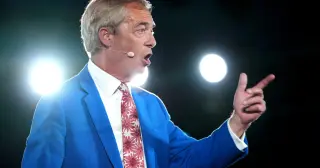
Former home secretary Suella Braverman defects from the Conservative Party to Reform UK, saying the Tories are too weak and centrist. Her move follows other right-wing defections and signals Reform’s growing momentum.

Keir Starmer signals a shift towards closer ties with the EU through alignment with the single market rather than rejoining the customs union, focusing on pragmatic trade and regulatory cooperation post-Brexit, amidst evolving political and geopolitical contexts.

Labour leader Keir Starmer indicates support for closer UK alignment with the EU's single market if it serves the national interest, emphasizing a sector-by-sector approach and highlighting recent agreements on food and agriculture, while maintaining commitments not to rejoin the EU or end freedom of movement.

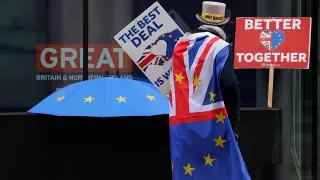
A decade after Brexit, UK political discourse is shifting towards re-engagement with Europe, with some Labour MPs and government officials exploring options like a Swiss-style 'dynamic alignment' deal to access the single market and boost economic growth, signaling a potential change in the UK's approach to its relationship with the EU.
The article argues that Brexit has exacerbated the UK's economic flaws and that the COVID-19 pandemic has complicated efforts to assess its true impact, with political figures using the pandemic to justify Brexit-related claims.