
Canada Supreme Court largely upholds Quebec ban on religious symbols for public servants
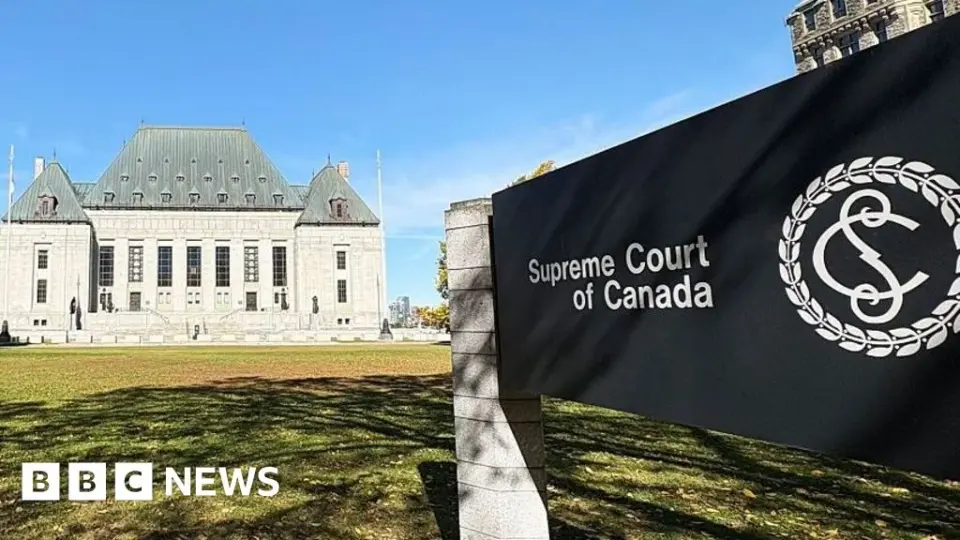
The Supreme Court of Canada has largely upheld Quebec's 2019 law banning religious symbols for public servants, confirming the validity of the 'notwithstanding clause' used to override Charter rights. While the court ruled the law infringes on democratic rights by banning face coverings for elected officials, it affirmed the province's power to override religious freedom and equality rights. The decision, which split the seven justices, has drawn sharp criticism from civil liberties groups and Muslim leaders, who argue it discriminates against religious minorities, while Quebec officials and some provincial leaders hailed it as a victory for provincial autonomy and secularism.
Key points
- The Supreme Court of Canada ruled on Friday that Quebec's Bill 21, which bans religious symbols for public servants, is largely valid, but found it infringes on democratic rights by prohibiting face coverings for elected officials.
- The court affirmed that the 'notwithstanding clause' allows legislatures to override Charter rights, including freedom of religion and equality, even before courts determine if a law violates those rights, though it noted the clause should be used sparingly.
- The decision was split, with Justices Karakatsanis, O'Bonsawin, and Kasirer dissenting, arguing the clause cannot authorize laws incompatible with Canada's democratic character, while the majority found the law largely valid.
- Civil liberties groups and Muslim leaders, including the National Council of Canadian Muslims, criticized the ruling as discriminatory, stating it bars entire categories of people from employment based on their identity, particularly affecting Muslim women wearing hijabs.
- Quebec officials and the Bloc Québécois leader praised the decision as upholding the province's right to protect its secular values, while Prime Minister Mark Carney said his government would study the implications and stressed respecting the rights of all Canadians.
Background
Bill 21 was enacted in 2019 by the Coalition Avenir Québec government to enforce secularism in public institutions, banning religious symbols for teachers, police, and other public officials. The law was passed using the 'notwithstanding clause,' a constitutional provision allowing provinces to override certain Charter rights for up to five years. The legal challenge spanned seven years, with lower courts in Quebec upholding most of the law in 2021 and 2024, before the Supreme Court heard arguments in March 2026. The ruling has broader implications for other provinces that have used the clause to shield laws on issues like strikes and gender-affirming care.
How outlets are covering it
BBC and WRAL reported the court largely upheld the law but noted the split decision and dissenting opinions, while Al Jazeera emphasized the human impact on Muslim women and the broader implications for religious minorities. Civil liberties groups and the National Council of Canadian Muslims criticized the ruling as discriminatory, while Quebec officials and the Bloc Québécois praised it as a victory for provincial autonomy and secularism. Prime Minister Mark Carney called for respecting the rights of all Canadians, and Alberta Premier Danielle Smith celebrated the decision as a win for provincial rights.
Why it matters
The ruling sets a precedent for the use of the 'notwithstanding clause' across Canada, potentially allowing other provinces to override Charter rights in areas like education, gender-affirming care, and labor disputes. It also highlights tensions between provincial autonomy and federal rights protections, with implications for religious minorities and civil liberties nationwide.
What to watch
The notwithstanding clause for Bill 21 must be renewed by 2029 to remain in effect. Civil liberties groups are calling on the federal government to limit the use of the clause, and the English Montreal School Board has pledged to continue political advocacy. Quebec has already expanded secularism rules to daycares and post-secondary institutions, and the newly elected Parti Québécois government has pledged to ban religious symbols for elementary school students.
- Canada's top court largely upholds Quebec ban on religious symbols for public servants BBC
- Canada’s Top Court Lets Quebec Use Controversial Measure for Secularism Law The New York Times
- Canada’s Supreme Court largely upholds Quebec ban on religious symbols for public servants WRAL
- In Canada, Quebec’s religious symbols ban faces a Supreme Court test Al Jazeera
- Canada's top court upholds Quebec religious symbols law in test of unity Reuters
Want the full story? Read the original reporting
Read on BBC