
Canada Supreme Court Upholds Quebec's Religious Symbols Ban, Splitting National Reaction
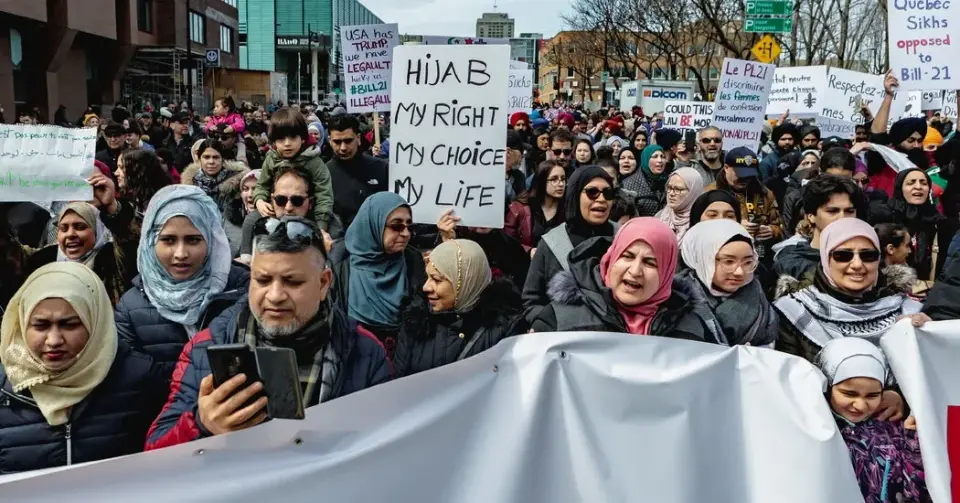
The Supreme Court of Canada has largely upheld Quebec's 2019 secularism law, Bill 21, which bans certain public-sector workers from wearing religious symbols. The court ruled that Quebec properly used the 'notwithstanding clause' to override Charter rights, though it struck down a provision affecting elected officials' face coverings. The decision has drawn sharp criticism from civil liberties groups and religious minorities, while provincial leaders praised it as a victory for federalism.
Key points
- The Supreme Court of Canada ruled on Friday that Quebec could use the notwithstanding clause to pass Bill 21, which prohibits public school teachers, police officers, and other officials from wearing religious symbols at work.
- The court struck down a specific provision of the law, finding that it infringes on the democratic rights of elected officials who wish to cover their faces for religious purposes.
- Prime Minister Mark Carney stated that the federal government will not use the notwithstanding clause and emphasized the need to respect the rights of all Canadians, including minorities.
- The ruling is expected to have far-reaching consequences for other provinces, such as Alberta and Saskatchewan, which have also invoked the clause to protect contentious legislation.
- Civil liberties groups and religious organizations, including the National Council of Canadian Muslims and the World Sikh Organization, condemned the decision as discriminatory and a major setback for Charter rights.
Background
Bill 21 was passed in 2019 by the Coalition Avenir Quebec government, expanding earlier secularism measures. The law has been challenged in courts since 2021, with lower courts upholding it due to the notwithstanding clause. The debate over secularism in Quebec dates back to the 1960s Quiet Revolution, which shifted control of public institutions from the Catholic Church to the state. The current ruling follows a seven-year legal battle that has divided Canadians over religious freedom, provincial autonomy, and minority rights.
How outlets are covering it
The New York Times and Financial Times highlight the landmark nature of the decision and its implications for provincial power. CBC provides a detailed account of the reactions from various political figures and affected individuals, noting the split among the seven justices. Al Jazeera focuses on the impact on Muslim women and other religious minorities, citing surveys and personal accounts of discrimination. Provincial leaders, such as Alberta Premier Danielle Smith and B.C. Premier Lorne Doerkson, expressed mixed reactions, with Smith praising the ruling as a win for provincial rights and Doerkson expressing concern for religious freedom. Civil liberties groups and religious organizations strongly criticized the decision, while Quebec officials and some federal politicians welcomed it.
Why it matters
The ruling sets a precedent for the use of the notwithstanding clause across Canada, potentially allowing other provinces to override Charter rights in future legislation. It also highlights ongoing tensions between provincial autonomy and individual rights, particularly for religious minorities. The decision may influence federal-provincial relations and the broader debate over the role of secularism in Canadian public life.
What to watch
The notwithstanding clause protecting Bill 21 is set to expire in 2029, and its renewal will be a key issue in future provincial politics. The federal government may consider constitutional negotiations with the provinces over the clause, though Prime Minister Carney has not yet committed to such discussions. The ruling may also prompt further legal challenges and political debates over the scope of provincial power and the protection of minority rights in Canada.
- Canada’s Top Court Lets Quebec Use Controversial Measure for Secularism Law The New York Times
- Canada’s Supreme Court Upholds Quebec’s Religious-Symbols Ban WSJ
- In Canada, Quebec’s religious symbols ban faces a Supreme Court test Al Jazeera
- Carney says he respects top court's independence after justices uphold Quebec's secularism law CBC
- Canada upholds law barring public sector workers from wearing religious symbols Financial Times
Want the full story? Read the original reporting
Read on The New York Times