
Carville Warns of Democratic 'Civil War' as Hollywood Donors Split Over Israel and 2028 Ambitions
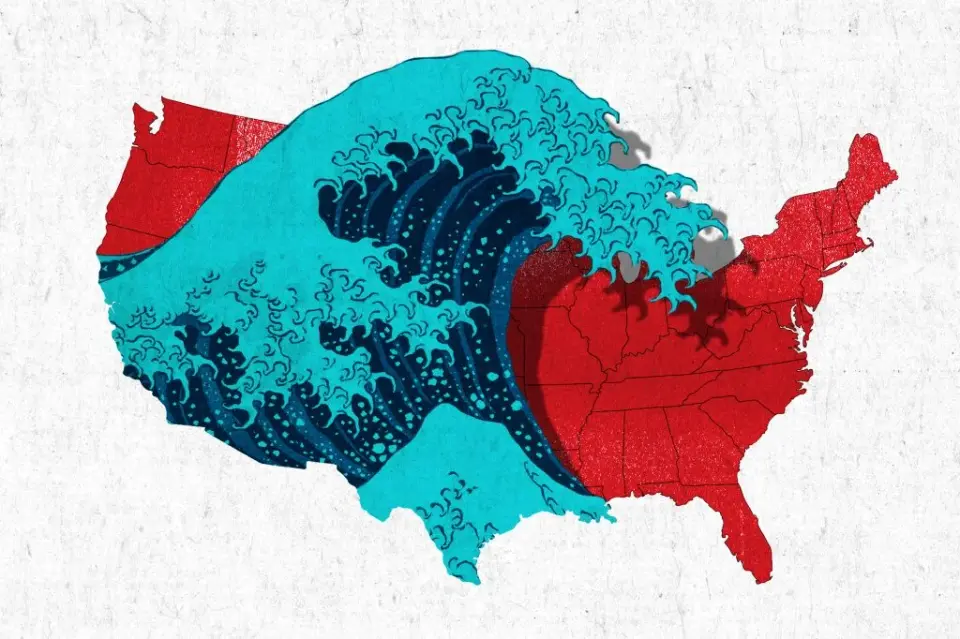
James Carville predicts a 'civil war' within the Democratic Party starting Wednesday, driven by deep divisions among Hollywood donors over support for Israel and progressive candidates. While prediction markets favor Democratic control of the House and Senate, internal fractures over figures like Michigan’s Abdul El-Sayed and Los Angeles’s Nithya Raman threaten party unity. Carville argues that Black and Hispanic turnout will be decisive, but warns that a narrow House victory could leave Democrats hostage to the Democratic Socialists of America. The focus is now shifting to 2028 presidential ambitions, with Jon Ossoff emerging as a leading candidate despite current midterm battles.
Key points
- James Carville states the Democratic 'civil war' begins Wednesday as fundraising shifts toward presidential hopefuls, highlighting deep donor divisions.
- Hollywood donors are split on the Michigan Senate race; pro-Israel figures backed Republican Mike Rogers, while progressives supported Democrat Abdul El-Sayed, whose stance on Israel caused controversy.
- Michigan Representative Haley Stevens, who lost the Democratic primary to El-Sayed, unexpectedly endorsed Republican Rogers, a move Carville called 'political suicide.'
- In Los Angeles, mayoral candidate Nithya Raman’s lead over incumbent Karen Bass has evaporated, with prediction markets now favoring Bass at 58 percent due to Raman’s perceived uncertainty on issues.
- Carville emphasizes that non-white voter turnout will be the primary driver of the election, potentially reversing historic GOP gains among Black and Hispanic voters from 2024.
- A $4 million attack ad in Ohio featuring the estranged mother of Democrat Amy Acton has drawn criticism, with Carville calling it a long-term black mark for the Republican Party.
Background
Recent coverage has highlighted James Carville’s strategic advice for Democrats, including his 2026-10-25 recommendation to prioritize public humiliation of President Trump over legislative wins due to veto threats. Additionally, Carville has criticized the Trump administration’s handling of federal properties and executive actions, such as the 2026-09-24 dispute over naming Ford’s Theatre. These earlier positions frame his current warnings about internal party discipline and the long-term political consequences of midterm outcomes.
Why it matters
The fragmentation of the Democratic donor base and internal ideological conflicts threaten the party’s ability to govern effectively even if they win a majority. A narrow House victory could empower the far-left wing, potentially hindering legislative progress and damaging the party’s brand ahead of the 2028 presidential cycle. The shift in focus from 2026 to 2028 suggests that current midterm battles are being viewed as precursors to a larger realignment of the party’s leadership and policy direction.
What to watch
The primary season for the 2028 presidential race is expected to begin effectively on Wednesday, with candidates like Jon Ossoff gaining momentum. The outcome of the Los Angeles mayoral runoff and the Michigan Senate race will serve as key indicators of the party’s internal cohesion. Republicans are expected to distance themselves from President Trump in the aftermath, while Democrats will face pressure to unify under a new leadership structure to avoid factional splits.
Want the full story? Read the original reporting
Read on The Ankler