
Ukraine Strikes Russian Cargo Ship, Proposes Dnipro Ceasefires
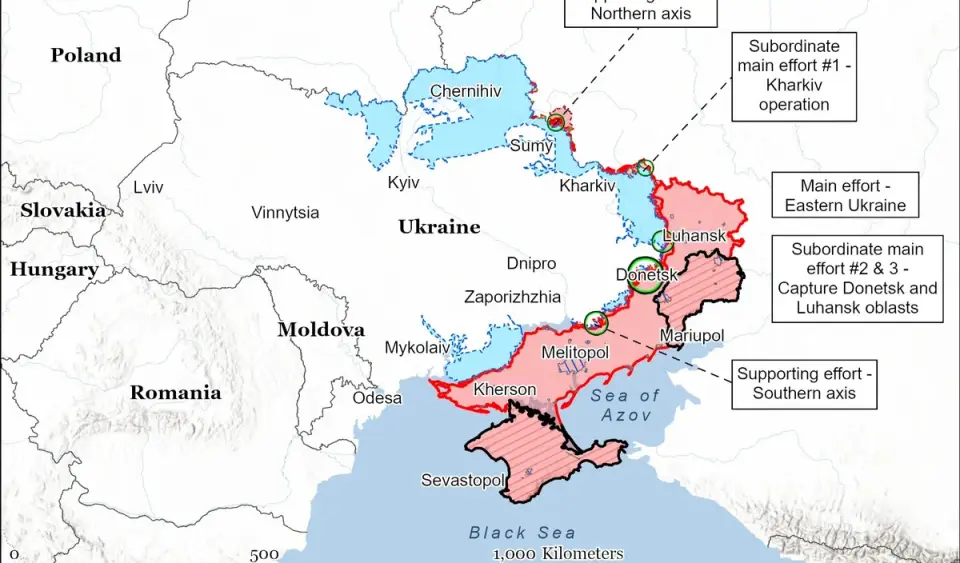
The Institute for the Study of War (ISW) reported that Ukrainian drones hit the Russian Sparta II cargo ship in the Gulf of Finland on November 21, disrupting military logistics. President Volodymyr Zelensky proposed temporary localized ceasefires to evacuate civilians from 15 settlements near the Dnipro River in occupied Kherson and Zaporizhia oblasts, leveraging the river’s stable frontline to facilitate humanitarian access. ISW noted that senior Kremlin officials continue to publicly state Moscow’s goal to control most of Ukraine, including Kyiv. Russian forces advanced northeast of Kupyansk, northeast of Lyman, and southeast of Dobropillya, while launching three ballistic missiles and 148 drones against Ukraine overnight.
Key points
- Ukrainian drones struck the Russian Sparta II cargo ship in the Gulf of Finland on November 21, targeting a vessel supporting Russian military logistics.
- President Zelensky proposed temporary localized ceasefires to evacuate civilians from 15 settlements along or near the Dnipro River in occupied Kherson and Zaporizhia oblasts.
- The proposed ceasefires rely on the Dnipro River’s geography, which creates a stable frontline that impedes direct ground contact and facilitates humanitarian operations.
- Senior Kremlin officials continue to explicitly state Moscow’s ultimate goal to control most of Ukraine, including Kyiv, according to ISW.
- Russian forces advanced northeast of Kupyansk, northeast of Lyman, and southeast of Dobropillya in recent operations.
- Russia launched three ballistic missiles and 148 drones against Ukraine overnight, continuing a pattern of aerial bombardment.
Background
This development follows earlier ISW assessments in October and November 2026, which highlighted Russian territorial losses and record casualties despite claims of expansion. In October, Ukraine advanced in Donetsk while Russia escalated strikes and closed independent media. In November, ISW warned Russia might inflate fictional front lines to force winter concessions, with Moscow demanding Ukrainian withdrawal from all of Donetsk, Luhansk, Zaporizhzhia, and Kherson oblasts. Zelensky rejected these demands, noting US support for Ukraine’s battlefield assessment. The current Dnipro ceasefire proposal builds on previous humanitarian pauses, such as the 80-hour truce in Oleshky, and reflects ongoing efforts to leverage geographic stability for civilian evacuation amid continued Russian aerial attacks.
Why it matters
The strike on the Sparta II cargo ship disrupts Russian military logistics, potentially affecting supply chains for frontline operations. Zelensky’s Dnipro ceasefire proposal offers a pragmatic humanitarian solution, leveraging geographic stability to evacuate civilians without requiring broad ceasefire agreements. However, Kremlin statements about controlling most of Ukraine, including Kyiv, signal Moscow’s long-term ambitions, complicating peace negotiations. Russian advances near Kupyansk, Lyman, and Dobropillya, combined with massive drone and missile strikes, indicate continued pressure on Ukrainian infrastructure and civilian areas, underscoring the urgency of localized ceasefires and defensive measures.
What to watch
Monitor for Russian response to Zelensky’s Dnipro ceasefire proposal, including potential violations or acceptance. Track further Ukrainian strikes on Russian logistics targets, such as cargo ships or refineries, to assess impact on Russian military operations. Watch for developments in peace negotiations, particularly US-mediated talks, and whether Moscow’s demands for territorial concessions align with ISW’s warning about inflated front lines. Observe Russian advances in the Kupyansk, Lyman, and Dobropillya sectors, and assess the effectiveness of Ukrainian defenses against ongoing drone and missile strikes.
Want the full story? Read the original reporting
Read on Kyiv Post