
Chancellor Healey pledges fiscal discipline and youth apprenticeships at Labour conference
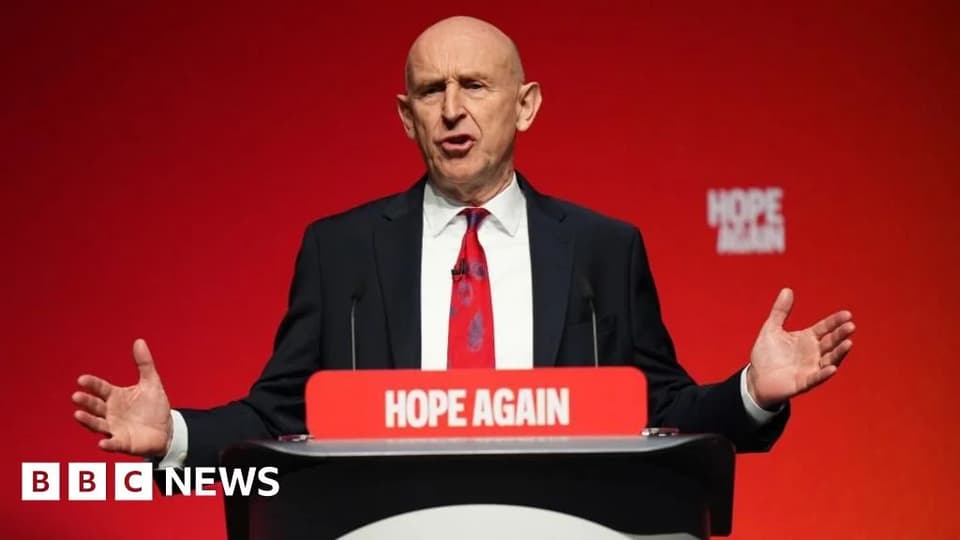
Chancellor John Healey told the Labour Party conference that providing jobs, not benefits, is the best support for young people. He announced an expansion of the Local Apprenticeships Service across England, funded by £100m in welfare fraud savings. Healey emphasized strict fiscal discipline ahead of next month’s Budget, stating that the government cannot afford the spending levels of the 1990s. While he praised youth as 'digital natives,' he refused to set a timeline for reducing the benefits bill, citing the need to address the one million young people not in education, employment, or training. The speech faced criticism from opposition parties for lacking detail on how to fund new initiatives while cutting welfare.
Key points
- Healey declared that cutting welfare spending is a 'moral duty' and that the best offer for youth is a first job with training and a wage, not a benefit payment.
- The Local Apprenticeships Service will expand from a pilot to all English mayors, rolling out from March 2027, with an additional £100m funding from Department for Work and Pensions fraud crackdowns.
- Healey admitted that the financial surplus of the 1990s is gone and pledged to stick to fiscal rules alongside Prime Minister Andy Burnham to manage borrowing costs.
- The chancellor refused to commit to a specific timeline for reducing the UK benefits bill, stating he would not set a deadline before the next election.
- Healey highlighted that one in eight young people aged 16 to 24 are not in education, employment, or training, aiming to transform this group from 'generation jeopardy' to 'generation hope'.
Background
This announcement follows earlier concerns about the UK labor market, where automation and opaque hiring processes have eroded trust among job seekers. While US job markets have remained resilient, UK policymakers are focusing on structural barriers for youth, including the high rate of those not in education, employment, or training. Previous discussions on networking and recruitment transparency highlight the ongoing tension between traditional hiring methods and the need for accessible entry points for young workers.
How outlets are covering it
The BBC reported Healey’s speech as a push for fiscal discipline and youth employment, noting his refusal to set a timeline for welfare cuts. The Guardian’s live coverage framed the speech as offering an 'upbeat vision' but lacking detail on how to fund Burnham’s plans, with economics editor Heather Stewart noting the absence of a clear funding strategy. Opposition parties, including the Conservatives, Liberal Democrats, and Greens, criticized the speech as 'hot air' and 'vibes' without substance, arguing that Labour failed to address the welfare bill or provide credible growth plans. The Telegraph was inaccessible due to a security block, so its perspective could not be synthesized.
Why it matters
The chancellor’s stance on welfare and apprenticeships signals a potential shift in UK social policy, prioritizing employment over direct financial support. This could impact the millions of young people currently excluded from the labor market and influence the upcoming Budget. The emphasis on fiscal discipline may constrain future public spending, affecting sectors like social care and defense, while the expansion of apprenticeships aims to address skills gaps in key industries like re-industrialization.
What to watch
The final report by former minister Alan Milburn on tackling youth unemployment is expected in the coming weeks, potentially influencing policy adjustments. The Budget, due next month, will determine how Healey’s fiscal promises are implemented, including whether the pensions triple lock is retained to fund social care reforms. The Local Apprenticeships Service is set to roll out across England from March 2027, with mayors gaining powers to match young people with employers.
- Best thing we can offer young people is a job, not benefits, says chancellor bbc.com
- Faslane dry docks and research ship to be built in UK, says chancellor bbc.com
- Healey lays ground for welfare cuts The Telegraph
- Healey tells party conference that money New Labour had in 1990s ‘is simply not there now’ – UK politics live The Guardian
- UK's Healey puts defence in focus for reindustrialisation push Reuters
Want the full story? Read the original reporting
Read on bbc.com