
Cockroach Leaders Detained After Breaching Delhi’s Closed Protest Site
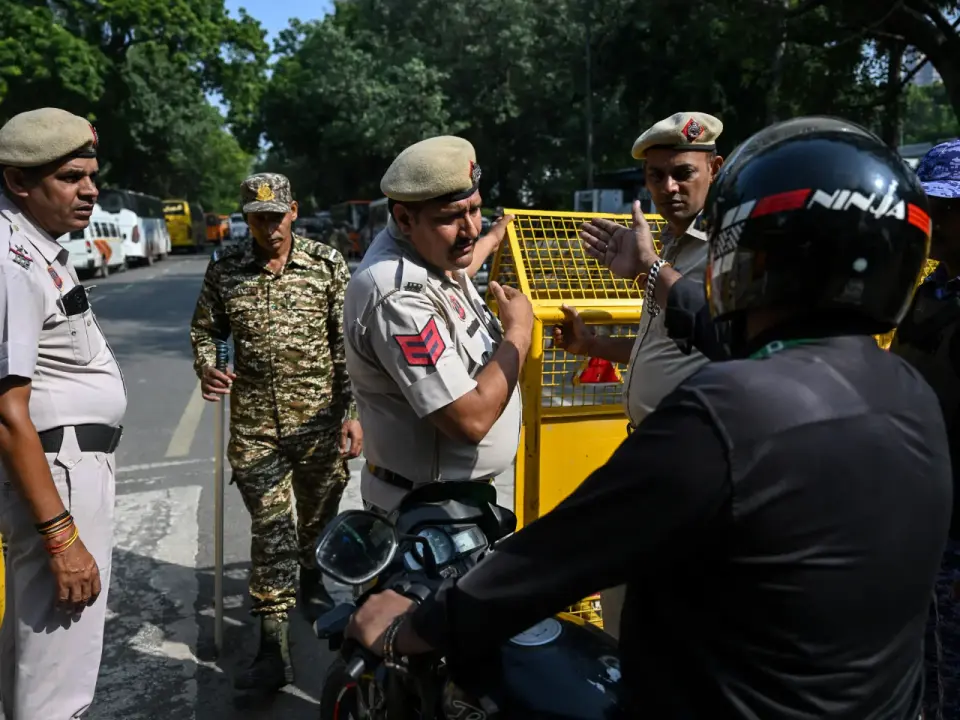
Police detained leaders of India’s youth-led Cockroach Janta Party (CJP) after they breached barricades to enter Jantar Mantar, a site authorities had recently de-designated for protests. The group demands the resignation of Chief Election Commissioner Gyanesh Kumar over voter list revisions that critics allege favor the ruling BJP. While the government and Election Commission deny disenfranchisement, the crackdown has intensified tensions, with Human Rights Watch condemning the arrests as arbitrary and the CJP vowing to continue its resistance despite the security measures.
Key points
- CJP leaders Ashutosh Ranka, Saurav Das, and Ajinkya Shinde were detained on Tuesday after jumping barricades to enter Jantar Mantar in New Delhi.
- Delhi Police had announced on Monday that Jantar Mantar was no longer an official protest site, designating three new venues instead, but CJP members proceeded with their demonstration.
- The protests demand the resignation of Chief Election Commissioner Gyanesh Kumar over the Special Intensive Revision (SIR) of voter rolls, which critics claim removed over 130 million names to favor the BJP.
- Human Rights Watch urged the government to stop 'arbitrary' arrests and engage with protesters, citing violations of peaceful assembly rights.
- The CJP, founded by Abhijeet Dipke, has mobilized daily protests this month, following a weekend crackdown that saw thousands detained and released.
Background
The CJP emerged in May 2026 after India’s Chief Justice compared unemployed youth to 'cockroaches,' a remark that became a rallying cry for young Indians frustrated by joblessness and exam irregularities. The movement previously forced the resignation of Education Minister Dharmendra Pradhan in July. Recent tensions escalated in October when authorities detained CJP leaders upon arrival in Delhi to disrupt planned protests, releasing them on bail with peace conditions. The current dispute centers on the SIR, which critics argue disproportionately affects opposition-leaning constituencies, while the Election Commission maintains the changes were unanimous and necessary for accuracy.
How outlets are covering it
Al Jazeera and BBC report the detention as a direct response to CJP leaders breaching a closed site, emphasizing the physical confrontation and the government’s move to de-designate Jantar Mantar. The Guardian frames the event as part of a broader 'democratic crisis,' arguing that Modi’s heavy-handed tactics, including detaining journalists and shutting down transit, reflect authoritarian fear rather than strength. While Al Jazeera and BBC focus on the immediate police action and HRW’s condemnation, The Guardian highlights the political implications, noting that mass voter deletions in West Bengal may have influenced recent BJP victories, and warns that repression could harden youth frustration into wider resistance. All sources agree on the core facts of the detention and the CJP’s demands but differ in their assessment of the government’s intent and the long-term impact on Indian democracy.
Why it matters
The detention of CJP leaders underscores the escalating tension between the Indian government and a new generation of protesters challenging electoral integrity. The controversy over voter roll revisions threatens to undermine public trust in the Election Commission and the judiciary, potentially destabilizing the political landscape. If the government fails to address legitimate concerns about voter disenfranchisement, the crackdown may fuel further unrest, as the CJP has demonstrated its ability to mobilize large-scale protests despite severe restrictions. This episode highlights the fragility of democratic norms in India as youth-led movements increasingly confront state power over issues of accountability and fairness.
What to watch
The CJP has vowed to continue its protests, with founder Abhijeet Dipke stating that the government cannot 'denotify the resistance.' Authorities are likely to maintain heavy security in Delhi, particularly around the newly designated protest sites. The opposition Congress party has petitioned the Supreme Court to challenge the voter revision exercise, which may lead to legal scrutiny of the Election Commission’s decisions. Further clashes between protesters and police are possible as the CJP plans additional demonstrations, and the government faces pressure to either engage with the movement or face escalating public backlash over its handling of the crisis.
- Police detain leaders of India’s ‘cockroach’ movement at New Delhi protest Al Jazeera
- CJP: India 'cockroach' leaders detained after entering barricaded protest site BBC
- The Guardian view on Narendra Modi’s gen Z crackdown: he cannot arrest his way out of a democratic crisis | Editorial The Guardian
- Indian police detain 'cockroach' movement leaders demanding election chief's resignation Reuters
- Anti-CEC protests LIVE: Opposition leaders arrive at Rahul Gandhi’s residence for hi-tea meeting after Supreme Court march The Hindu
Want the full story? Read the original reporting
Read on Al Jazeera