
Eisenkot’s Coalition Bid Stalls as Likud Rejects Rotation, Bloc Fractures Over Arab Support
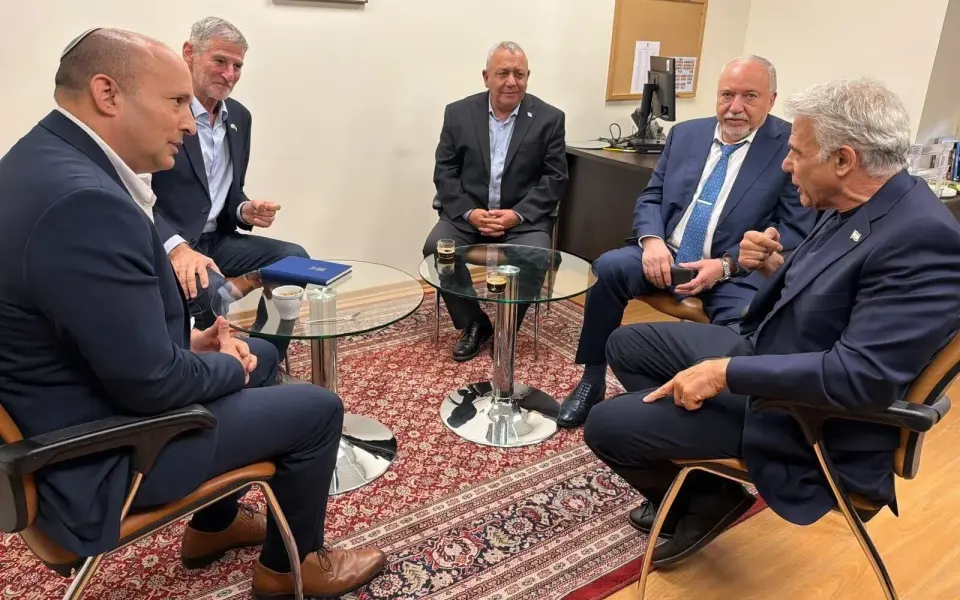
Gadi Eisenkot’s efforts to form a unity government with Benjamin Netanyahu’s Likud party collapsed on Sunday without a deal. The primary source, The Times of Israel, reports that Naftali Bennett reaffirmed support for an Eisenkot-led coalition but ruled out any role for Netanyahu as prime minister. Secondary sources confirm the talks failed over disagreements regarding the premiership and the inclusion of Itamar Ben-Gvir. Eisenkot now faces a December 6 deadline and is pursuing alternative paths, including a minority government supported by Arab-led parties or a coalition with ultra-Orthodox groups, despite internal opposition within his own bloc.
Key points
- Likud and Yashar ended coalition talks on Sunday without reaching an agreement, citing unresolved differences over leadership and cabinet composition.
- Naftali Bennett stated that B’Yachad will not join Netanyahu’s bloc and supports a government led by Gadi Eisenkot, explicitly excluding Netanyahu from the premiership.
- Likud demanded an end to political boycotts against Netanyahu and insisted on the inclusion of Itamar Ben-Gvir, while Eisenkot refused to serve under Netanyahu.
- Eisenkot outlined three potential paths: a unity government with Likud, a coalition with ultra-Orthodox parties, or a minority government supported by Arab-led parties.
- Avigdor Liberman opposed any government relying on Arab party support, while Yair Golan warned against a 'fake' unity deal that would preserve Netanyahu’s power.
Background
Following the October 27, 2026 election, no bloc secured the 61 seats required for a majority. Eisenkot’s anti-Netanyahu bloc won 48 seats, while Netanyahu’s coalition lost its majority. President Isaac Herzog granted Eisenkot a 28-day mandate to form a government, with a possible 14-day extension. Previous attempts to form a coalition have stalled due to disagreements over military service exemptions for ultra-Orthodox parties and the inclusion of far-right ministers.
How outlets are covering it
The Times of Israel emphasizes Bennett’s commitment to excluding Netanyahu from the premiership and his warning against a minority government reliant on Arab parties. Al Jazeera highlights the collapse of talks over the leadership question and Ben-Gvir’s inclusion, noting that Likud demanded Netanyahu serve first in a rotation. The Jewish Telegraphic Agency focuses on Eisenkot’s urgency, citing his warning that Netanyahu’s rhetoric against Arab citizens poses a danger to Israeli society. The Jerusalem Post analyzes Bennett’s warning that a government supported by Arab parties could trigger massive protests, comparing the potential unrest to the 2023 judicial reform demonstrations. Outlets disagree on the viability of the Arab-party support option, with Liberman and Bennett opposing it, while Eisenkot remains open to it as a last resort.
Why it matters
The failure to form a unity government risks prolonging political instability and could lead to a minority administration or new elections. The deadlock over the premiership and the inclusion of far-right ministers reflects deep divisions within Israeli politics. If Eisenkot fails to form a government by December 6, he may request an extension or face a confidence vote, potentially leading to further fragmentation or a return to the polls.
What to watch
Eisenkot is expected to pursue talks with ultra-Orthodox parties and potentially seek a confidence vote for a minority government. Likud may continue to demand an end to boycotts and the inclusion of Ben-Gvir. The outcome of these negotiations will determine whether Israel forms a new government or faces another election.
- Bennett backs unity government under Eisenkot, nixes Netanyahu as next PM, rules out defection The Times of Israel
- Netanyahu’s Likud, Eisenkot’s Yashar end coalition talks without deal Al Jazeera
- Yashar and Likud to meet again today for talks on potential coalition The Times of Israel
- Citing urgency, Eisenkot outlines 3 paths to government, signaling openness to Arab-party backing Jewish Telegraphic Agency
- Naftali Bennett warns gov't supported by Arab parties could incite protests The Jerusalem Post
Want the full story? Read the original reporting
Read on The Times of Israel