
EU Summit Ends in Stalemate Over Migration, Ukraine Funding, and Budget Deadlock
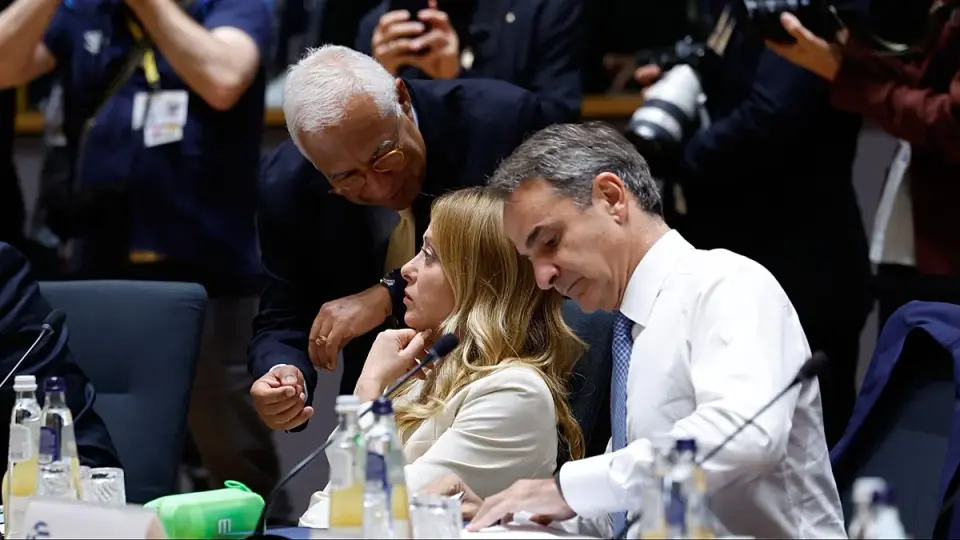
EU leaders concluded a two-day summit in Brussels without reaching agreements on the long-term budget or Ukraine’s 2027 funding needs. While Zelenskyy requested an additional €70 billion, leaders deferred decisions to later sessions. A contentious debate over migration, sparked by Spain’s regularization of 600,000 migrants, resulted in failed amendments from Italy, Denmark, and Poland. However, France and Germany reached a side deal on automotive rules and 'Made in Europe' procurement to counter Chinese competition.
Key points
- Zelenskyy requested an additional €70 billion for 2027, noting the war will cost €155 billion; leaders asked the Commission to propose new financing options but did not commit to specific sources.
- Italy, Denmark, and Poland pushed for amendments linking irregular migration to crime and criticizing 'pull factors,' implicitly targeting Spain’s regularization of 600,000 migrants; these amendments failed to secure unanimous support.
- Macron criticized the migration debate as 'politicized' and ineffective, while Spain and France agreed to end temporary border checks following the Ceuta crisis.
- France and Germany agreed to ease the 2035 combustion engine ban in exchange for stricter 'Made in Europe' procurement rules to protect against Chinese competition.
- Leaders deferred the €2 trillion long-term budget negotiations to later in the year, with Macron warning that a deal must be reached before his term ends.
Background
The summit followed a summer crisis in Ceuta, which exposed gaps in EU migration coordination. Previous discussions in June had already highlighted deep divisions between member states on asylum policies. The current stalemate continues a pattern of unresolved budgetary and security disputes, with earlier proposals for offshore return hubs and stricter border controls remaining under debate.
How outlets are covering it
Euronews and Politico emphasize the lack of concrete outcomes, noting that key decisions on Ukraine funding and the budget were postponed. Le Monde highlights the ideological split, framing the migration debate as a clash between Spain’s open approach and the hardline stance of Italy and Denmark. Il Foglio criticizes the Meloni-Frederiksen amendment as an overreach that echoed far-right narratives, arguing it failed to achieve its goals and deepened divisions. All sources agree that the migration debate was the most contentious, but they differ on whether the failure was due to political polarization or a lack of viable policy alternatives.
Why it matters
The failure to resolve Ukraine’s funding gap and the EU budget threatens the bloc’s ability to respond to Russian aggression and internal economic challenges. The migration deadlock risks fragmenting EU policy, potentially leading to national solutions that undermine the Schengen area. The France-Germany deal, however, signals a strategic shift toward industrial protectionism, which could reshape EU trade policy and counter Chinese influence in key sectors like automotive manufacturing.
What to watch
The European Commission is expected to present new options for Ukraine financing and an emergency migration framework before the end of the year. Leaders will reconvene in November and December to finalize the long-term budget. A second informal retreat is scheduled for February 2027 to assess progress on economic competitiveness and the 'Made in Europe' initiative.
- EU summit: Leaders clash over migration, as Denmark and Italy team up Euronews.com
- EU leaders clash over migration, Ukraine and budget in Brussels — but delay big decisions POLITICO.eu
- Macron criticizes 'very politicized' EU leader debate on migration at Brussels summit Le Monde.fr
- The pointless European row over migrants Il Foglio
- Poland, Italy and Denmark propose changes to EU summit conclusions — RMF24 UA.NEWS
Want the full story? Read the original reporting
Read on Euronews.com