
European Youth Protests: A Fragmented Crisis of Housing, Education, and Economic Anxiety
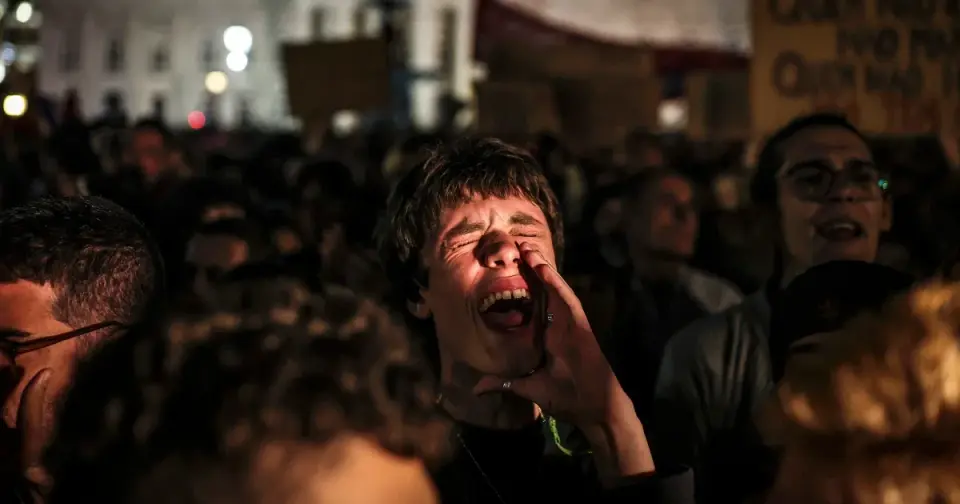
Youth-led protests have spread across at least eight European countries, driven by distinct national grievances regarding housing costs, education funding, and energy prices rather than a single coordinated movement. While France faces violent clashes and security escalations, other nations like Italy, Spain, and Belgium are organizing strikes and demonstrations. Experts warn that framing these events as a unified 'pan-European revolt' is a misleading narrative that obscures the specific, localized economic anxieties facing young people across the continent.
Key points
- Protests have erupted in at least eight European countries, including France, Italy, Spain, Portugal, Belgium, Greece, Albania, and Serbia, with demands varying from better school conditions to lower rents.
- In France, demonstrations began in mid-September over overcrowded classrooms and teacher shortages, escalating into violent clashes on October 17, including the burning of the Limoges town hall.
- The European Commission condemned the looting in France as 'unacceptable' while affirming the right to peaceful protest, marking a rare intervention in domestic member state affairs.
- Italy, Spain, and Portugal have scheduled general strikes for November 11 and 20, while Belgian students are protesting tuition fee increases in the French-speaking region.
- Eurostat data cited by The Guardian shows EU house prices rose 55.4% and rents 26.7% between 2010 and late 2024, contributing to a shared sense of generational insecurity.
- A 2026 TUI Foundation Youth Study found that 52% of young Europeans aged 16-26 expect to be worse off than their parents, compared to 25% who expect to do better.
Background
These events follow a period of heightened tension in European education systems, including recent school security escalations in Poland and debates over AI integration in schools. The current unrest builds on long-standing issues of public service underfunding and rising energy costs, which European leaders discussed in Brussels on October 15, drawing parallels to the 2018 Yellow Vest movement.
How outlets are covering it
NBC News characterizes the unrest as a 'generational roar' reflecting a collective howl against stacking crises in economics, housing, and healthcare. The New York Times emphasizes the bleak future outlook of young Spaniards and Portuguese, who have pitched tents in capitals to protest high rents. In contrast, The Guardian argues against the narrative of a coordinated 'youth uprising,' asserting that the protests have distinct national causes and constituencies. The Guardian notes that right-wing media and political figures, including Donald Trump, are exploiting images of violence to promote border closure, while left-wing groups may romanticize the chaos. Le Monde highlights the broader economic context, noting that energy prices and housing crises are driving unrest across multiple countries, prompting the European Commission to intervene. The sources agree on the widespread nature of the protests but diverge on whether they represent a unified movement or a series of disconnected national responses to similar economic pressures.
Why it matters
The unrest highlights a deepening generational divide in Europe, where young people face unprecedented housing costs and uncertain employment prospects. The potential for violence, as seen in France, poses a challenge to democratic stability and public order. Furthermore, the mischaracterization of these protests as a single continental revolt could be exploited by political actors to undermine democratic institutions or justify authoritarian measures. Addressing the specific, localized grievances is crucial to preventing further escalation and restoring confidence among young Europeans.
What to watch
General strikes are planned for November 11 in Spain and Portugal, and November 20 in Italy. In Serbia, students are running in this weekend's election on their own list. European leaders are expected to continue discussing energy bill reductions, while governments in affected countries must balance protecting peaceful protest with maintaining public order. The outcome of these protests will likely influence upcoming elections in Spain, France, Italy, Poland, and Greece, where far-right movements are gaining traction.
- Europe’s protests are about more than schools. They are a generational roar. NBC News
- Student Protests Mushroom Across Europe, Exposing Bleak Views of the Future The New York Times
- A violent and coordinated youth uprising? That’s exactly the picture Europe’s enemies want to paint | Alberto Alemanno The Guardian
- The agony of liberal Europe The Economist
- Italy, Spain, Belgium, Portugal: Social unrest spreads across Europe amid soaring energy prices and a housing crisis Le Monde.fr
Want the full story? Read the original reporting
Read on NBC News