
Farage Eyes French Veto to Block UK’s EU Return
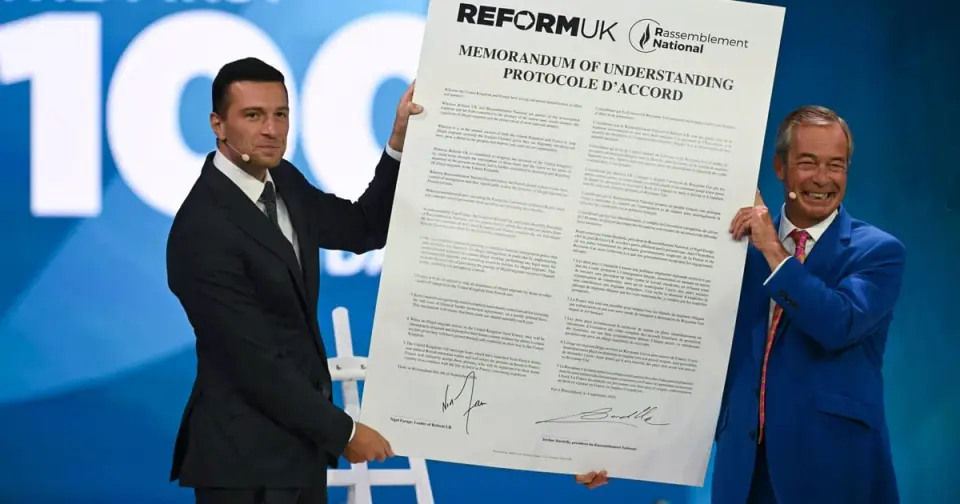
Reform UK leader Nigel Farage has suggested he may appeal to a future far-right French government to block Britain’s reentry into the European Union. Citing French constitutional rules that require a referendum or a supermajority for new EU members, Farage indicated that Marine Le Pen, the current polling leader for the April 2026 presidential election, would likely oppose UK accession. This comes as Prime Minister Andy Burnham opens discussions on closer EU ties but insists any return requires a new referendum.
Key points
- Farage stated he might persuade a Le Pen-led France to use its veto power to block UK EU reentry.
- French law requires a referendum or a three-fifths parliamentary majority for new EU members.
- Burnham confirmed rejoining without a new referendum is 'unthinkable' but left open the possibility of closer ties.
- Farage warned that overturning the 2016 Brexit result without a vote could lead to civil unrest.
Background
This debate follows the 2016 referendum where 52% of Britons voted to leave the EU. In October 2026, the UK and EU held a post-Brexit summit in Brussels to reset bilateral relations, though the EU declined to discuss long-term membership changes until London clarifies its intentions. Recent domestic political shifts in Europe, including the rise of far-right parties, have prompted UK leaders to reassess their stance on European integration.
How outlets are covering it
Politico and Mezha.net report that Farage is actively exploring the legal mechanism for a French veto, noting that Le Pen and Jordan Bardella are skeptical of EU expansion. UA.news highlights that Farage’s comments were made in the context of Burnham’s government already being aware of these French constitutional hurdles. While all sources agree on the factual basis of the French referendum rule, they emphasize different aspects: Politico focuses on Farage’s willingness to 'interfere in overseas politics,' while Mezha.net and UA.news frame it as a strategic calculation based on upcoming French elections. No source reports that a formal agreement has been reached between Farage and Le Pen, despite earlier rumors of a meeting.
Why it matters
The potential use of a French veto could permanently stall UK efforts to rejoin the EU, regardless of domestic British political will. It highlights how domestic political shifts in one EU member state can directly impact the foreign policy and sovereignty decisions of another. Additionally, Farage’s warning about civil unrest underscores the deep societal divisions in the UK regarding Brexit, suggesting that any attempt to reverse the 2016 decision without a new vote could trigger significant social instability.
What to watch
The next key event is the French presidential election in April 2026, which will determine whether Le Pen or Bardella holds the power to veto UK accession. In the UK, Burnham is expected to decide whether to include EU reentry in Labour’s 2029 election manifesto. Meanwhile, the UK and EU will continue negotiations on youth mobility and other bilateral agreements, though full membership discussions remain paused.
Want the full story? Read the original reporting
Read on POLITICO.eu