
Merz faces potential ouster as CDU collapses in polls and AfD surges
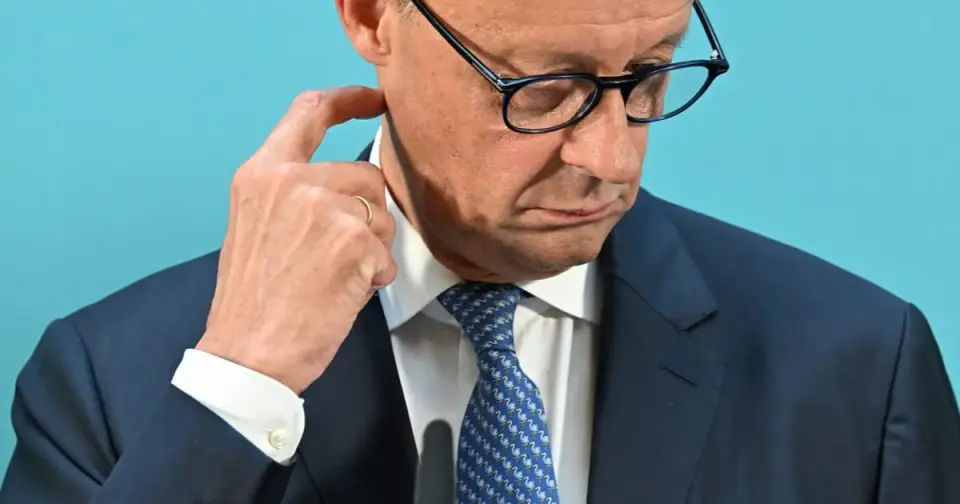
German Chancellor Friedrich Merz faces a severe leadership crisis as his Christian Democratic Union (CDU) party hits record lows in polls and the far-right Alternative for Germany (AfD) gains ground. Merz canceled his UN trip to manage domestic fallout ahead of critical state elections in Berlin and Mecklenburg-Western Pomerania. While party leaders have publicly backed him, internal debates over a potential leadership change are intensifying due to his plummeting approval ratings and the party's poor performance in recent regional votes.
Key points
- Merz’s national approval rating has dropped to 14%, while the CDU/CSU alliance falls to 18%, with the AfD leading at 29% in national polls.
- The CDU suffered a historic defeat in Saxony-Anhalt, where the AfD won 43.8% of the vote compared to the CDU’s 17.2%, marking the first near-majority for a far-right party since World War II.
- Merz canceled his scheduled trip to the UN General Assembly to address the political crisis in Berlin, citing the need for his presence during the upcoming state elections.
- Eight CDU state premiers issued a letter supporting Merz, urging stability and action over personnel debates, though the letter did not explicitly name him, suggesting cautious backing.
- Potential successors, including North Rhine-Westphalia premier Hendrik Wüst and Bavarian leader Markus Söder, are being discussed, but no consensus exists on a replacement.
- A constructive no-confidence vote is unlikely due to constitutional requirements and the thin coalition majority, while a confidence vote could trigger snap elections, which both CDU and SPD wish to avoid.
Background
Merz took office 16 months ago with promises of economic reform and renewed European leadership, following the collapse of Olaf Scholz’s coalition in November 2024. His initial success in rallying support for a €500 billion defense fund contrasted with his struggles to secure the chancellorship, requiring three attempts to become CDU leader and losing his first parliamentary vote. The current crisis mirrors the instability seen during Scholz’s tenure, highlighting Germany’s vulnerability to rapid leadership changes.
How outlets are covering it
POLITICO emphasizes the structural fragility of Merz’s position, detailing five scenarios for his ouster, from resignation to a confidence vote, and highlights the lack of consensus on a successor. CBS News focuses on the economic disillusionment and immigration concerns driving voter support to the AfD, noting that Merz’s promised economic upturn has not materialized, with unemployment rising to over 3 million. BBC highlights the public backing from eight state premiers and the potential for a 'Kanzlertausch' (chancellor swap), while noting the AfD’s historic gains in Saxony-Anhalt and the party’s internal debates over the 'firewall' against far-right cooperation. All sources agree on the severity of the crisis but differ on the likelihood of immediate ouster, with POLITICO and CBS viewing forced removal as unlikely in the short term, while BBC notes the ongoing speculation.
Why it matters
Germany’s political instability threatens its role as a stabilizing force in Europe, particularly amid upcoming elections in France, Italy, Poland, Spain, and Greece. The rise of the AfD and the potential collapse of the CDU could reshape European politics, with implications for EU budget talks, foreign policy, and the balance of power in the Bundestag. Merz’s ability to maintain his position or the emergence of a new leader will influence Germany’s economic reforms and its stance on immigration and security.
What to watch
The outcome of the state elections in Berlin and Mecklenburg-Western Pomerania on Sunday will be a critical test for Merz’s leadership. If the CDU suffers further losses, calls for a leadership change may intensify. Merz is expected to convene a party leadership meeting to assess support, and the results could trigger negotiations with the SPD for concessions or a potential confidence vote. The AfD’s continued surge may force the CDU to reconsider its stance on the 'firewall' against far-right cooperation, though Merz has ruled out such alliances.
- Friedrich Merz’s endgame: All the scenarios, rated politico.eu
- Germany's leader under huge pressure as far-right AfD gains steam, but could he be forced out? CBS News
- Eight German state premiers back Merz amid speculation over future BBC
- Germany’s Merz girds for a post-election fight for political survival politico.eu
- Germany news: Conservative state premiers rally behind Merz DW.com
Want the full story? Read the original reporting
Read on politico.eu