
102 Ex-Diplomats Demand Trade and Arms Sanctions Against Israel
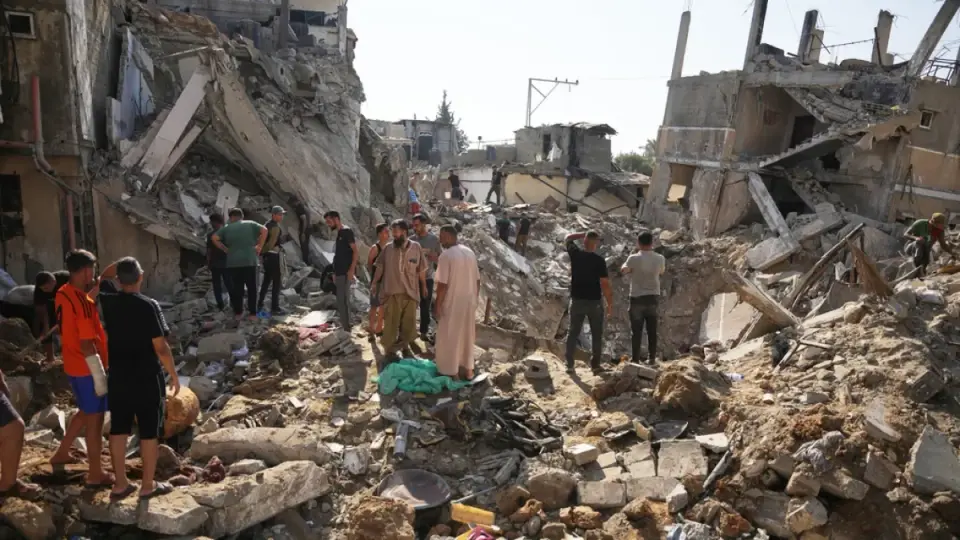
A coalition of 102 former French and British diplomats has issued an open letter demanding that London and Paris impose concrete sanctions on Israel, including halting arms transfers and suspending trade agreements. The signatories argue that diplomatic recognition of Palestine in 2025 must be followed by action to prevent the 'erasure' of a Palestinian state. They accuse Israel of ethnic cleansing in the West Bank and demand that Western governments uphold international law by penalizing settlement expansion and ensuring humanitarian access to Gaza.
Key points
- 102 former diplomats, including 52 French and 50 British officials, signed a joint letter addressed to President Macron and Prime Minister Burnham.
- The letter demands seven specific actions, including suspending the EU-Israel association agreement and UK-Israel trade partnership, halting arms transfers, and banning trade with Israeli settlements.
- Signatories accuse Israel of 'ethnic cleansing' through house demolitions and settler violence in the West Bank, stating that the world no longer views Israel as a genuine democracy.
- The letter calls for unrestricted humanitarian aid access to Gaza via UN agencies and warns that continued inaction will create an 'irreconcilable problem' and future violence.
- The diplomats acknowledge that Palestinian leadership is 'unrepresentative and dysfunctional' but argue that the primary responsibility lies with Israel to allow a democratic, law-abiding state to function.
Background
This letter follows a series of recent escalations in the West Bank and Gaza. In August 2026, European leaders condemned Israel's publication of construction tenders for the E1 settlement project, which would bisect the West Bank and undermine a two-state solution. Prior to this, US envoy Mike Huckabee condemned settler violence in Qusra, and Israel rejected a 15-point US-led peace plan for Gaza. The current letter builds on these events, arguing that previous diplomatic condemnations have failed to stop the 'systematic policy of destruction' in Gaza and the West Bank.
How outlets are covering it
Al Jazeera and The Guardian highlight the unprecedented nature of the letter, noting that it moves beyond diplomatic language to accuse Israel of 'ethnic cleansing' and 'erasure' of Palestine. The Guardian emphasizes the specific policy steps demanded, such as banning citizens from buying property on occupied land. Le Monde focuses on the moral and legal responsibility of France and the UK, citing their historical role in shaping the Middle East and their 2025 recognition of Palestine. Middle East Monitor frames the letter as a direct response to Israel's 'colonial' policies and the failure of international bodies to enforce accountability. All sources agree that the letter represents a shift from 'words to action,' but they differ in emphasis: Al Jazeera and The Guardian focus on the immediate threat to a two-state solution, while Le Monde and Middle East Monitor stress the broader implications for international law and Western credibility.
Why it matters
The letter signals a potential shift in Western policy toward Israel, moving from diplomatic criticism to concrete economic and military sanctions. If France and the UK act on these demands, it could significantly impact Israel's economy and military capabilities, potentially altering the dynamics of the conflict in Gaza and the West Bank. The letter also highlights the growing pressure on Western governments to uphold international law and address the humanitarian crisis in Gaza, where over 1,200 Palestinians have been killed since the October 2025 ceasefire.
What to watch
The next steps will depend on whether France and the UK respond to the letter's demands. If they do, it could lead to a significant escalation in tensions with Israel and the United States. The letter also calls for Palestinian elections in November to renew democracy, which could have implications for the future of the Palestinian state. The diplomats will likely continue to press their governments for action, potentially through further public campaigns or direct engagement with policymakers.
- Over 100 ex-diplomats urge France, UK to sanction Israel over Palestine Al Jazeera
- Former British and French diplomats urge action over Israel’s ‘erasure’ of Palestine The Guardian
- 'France and the UK should act together to uphold international law in Palestine': An open letter by former French and British ambassadors Le Monde.fr
- Former French, British ambassadors urge halt to arms exports, ban on trade with illegal Israeli settlements in West Bank Middle East Monitor
- AI: France, Italy, Britain, Germany Must take action to Stop "Israeli" violations وكالة سبأ
Want the full story? Read the original reporting
Read on Al Jazeera