
Frederiksen’s ‘Enemy Within’ Rhetoric Fractures EU Left Over Ceuta Crisis
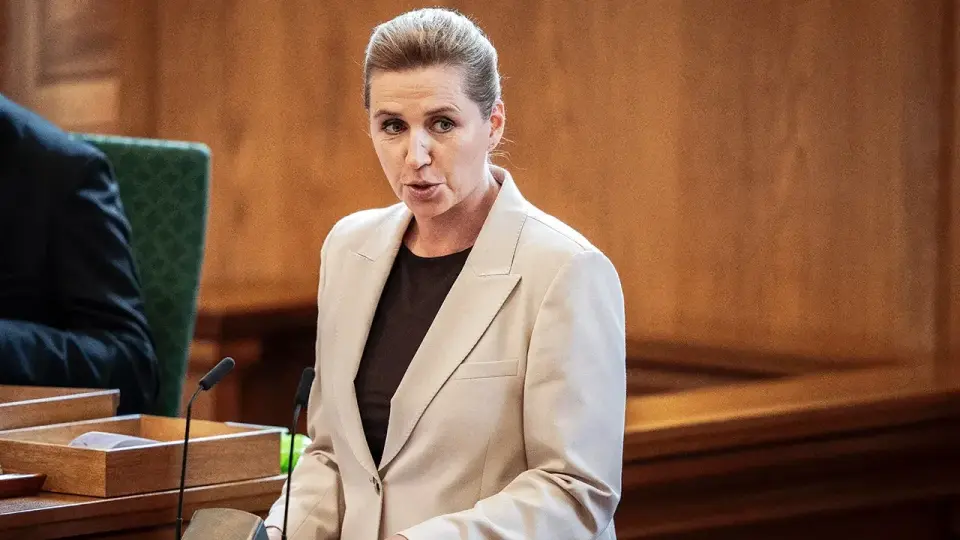
Danish PM Mette Frederiksen has intensified her critique of EU migration policies, labeling uncontrolled immigration and Islamist extremism as an 'enemy within' that threatens European values. Her comments, made in the wake of the mass migration into Spain's Ceuta, have sparked a significant rift within the European left, with Spain's Pedro Sánchez accusing her of abandoning socialist solidarity. While Frederiksen argues that failed integration poses a security risk comparable to external threats like Russia, critics argue her stance is a populist deviation from center-left principles that ignores the humanitarian toll of the crisis and the reality that most migrants do not reach Denmark.
Key points
- Frederiksen stated in the Danish Parliament that a 'big enemy has started to grow from within' Europe, citing individuals with Islamic backgrounds who reject European values and support groups like Hamas.
- The comments followed the August 1 mass migration into Ceuta, where Frederiksen joined 20 other EU leaders in a letter warning against 'instrumentalization of migration' and 'hybrid threats.'
- Frederiksen and Italian PM Giorgia Meloni issued a joint statement on August 10 emphasizing Europe's 'Christian cultural heritage' and the need for newcomers to respect local values.
- Spain's left-wing government, led by Pedro Sánchez, has criticized Frederiksen for aligning with right-wing Italy rather than showing solidarity with fellow Socialist governments.
- Frederiksen's party suffered a record-low electoral result in March 2026, leading to a minority coalition government, which some analysts link to her shift toward stricter migration rhetoric.
Background
This development follows a series of escalating tensions within the EU over border control and asylum policies. In 2021, Frederiksen introduced deportation laws allowing the return of refugees to countries of origin even without diplomatic relations, a move the European Commission deemed incompatible with EU law. Denmark had previously enacted laws targeting 'parallel societies' in social housing areas with high non-Western populations. The current dispute is part of a broader pattern where Nordic leaders have pushed for stricter integration and border controls, often clashing with Mediterranean states like Spain and Italy over the management of migration flows.
How outlets are covering it
Fox News frames Frederiksen's comments as a necessary and courageous acknowledgment of failed integration and Islamist extremism, quoting experts who argue that a center-left leader speaking in such blunt terms signals a major shift in the European immigration debate. They emphasize her long-standing strict migration policies and her argument that Europe is threatened both from outside (Russia) and within (radical Islam). In contrast, EUobserver characterizes Frederiksen's stance as 'race-baiting' and a betrayal of left-wing values, arguing that her rhetoric mimics the far right for political gain despite her party's poor electoral performance. EUobserver highlights that most migrants from Ceuta did not travel to Denmark and that irregular border crossings actually fell by 37% in 2026, suggesting the 'crisis' is largely a political construct. Politico notes that the European Socialists are in a state of paralysis, with many MEPs unwilling to confront the issue to avoid internal division, and that Nordic solidarity protects Frederiksen from ostracism within the Socialist group, despite criticism from Spanish and Italian left-wing figures.
Why it matters
Frederiksen's rhetoric represents a pivotal moment for the European left, as it challenges the traditional consensus on migration and asylum. Her willingness to frame migration as a security threat and to prioritize 'Christian cultural heritage' over humanitarian solidarity could reshape the political landscape in the EU, potentially empowering right-wing parties and fragmenting the center-left. The dispute also highlights the deepening divide between Nordic and Mediterranean EU states over border control and the future of the Schengen Area, with potential implications for EU cohesion and policy-making in the coming years.
What to watch
The conflict is expected to escalate before the October European Council, where migration is likely to be a key agenda item. The Socialist and Democrats group in the European Parliament is scheduled to meet in September, where the internal rift may come to a head. Additionally, the EU's next seven-year budget negotiations, which are currently underway, may be influenced by the migration dispute, as countries like Denmark and Germany are pushing for stricter border controls and reduced funding for migration-related programs. The outcome of these negotiations could determine the future of EU migration policy and the balance of power within the European left.
- Denmark's left-wing PM warns: 'Big enemy has started to grow from within' as Europe faces migrant reckoning Fox News
- Why the Socialists are stuck on migration politico.eu
- Frederiksen’s party hits back at progressive allies over Ceuta row euractiv.com
- Denmark’s ‘socialist’ leader is a race-baiting fake, not an EU model EUobserver
- Meloni-Frederiksen deal on migration sparks fight inside Europe’s socialist family Brussels Signal
Want the full story? Read the original reporting
Read on Fox News