
German Chancellor Merz Faces Existential Test as Berlin and Mecklenburg-Vorpommern Vote Amid AfD Surge
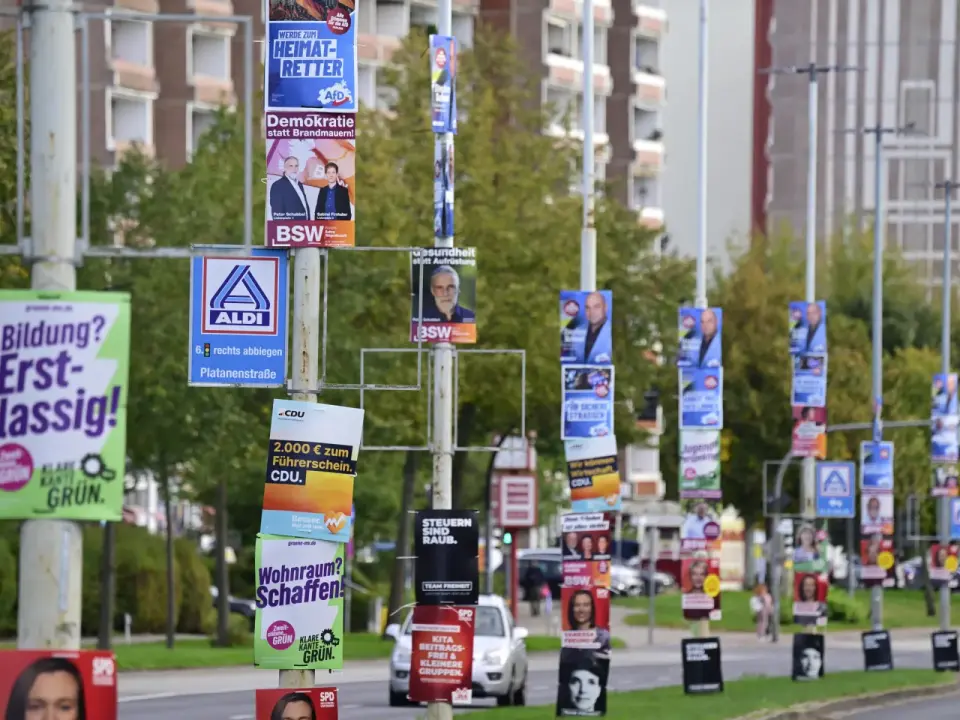
Voters in Berlin and Mecklenburg-Vorpommern are set to vote on Sunday, with Chancellor Friedrich Merz’s political future hanging in the balance after his Christian Democratic Union (CDU) suffered a major defeat in Saxony-Anhalt to the far-right Alternative for Germany (AfD). Merz has canceled his trip to the UN General Assembly to hold a crisis meeting, as his approval ratings have plummeted to between 10% and 14%. In Mecklenburg-Vorpommern, the CDU risks falling below the 5% parliamentary threshold for the first time in 75 years, while in Berlin, the CDU faces a tight race against the far-left Die Linke. The results could trigger internal party revolts or even a constructive vote of no confidence, though Merz has vowed to serve his full four-year term.
Key points
- Merz canceled his UN General Assembly appearance to lead a CDU crisis meeting after the AfD’s landslide victory in Saxony-Anhalt two weeks prior.
- Merz’s approval ratings have dropped to 10-14%, with his government struggling to implement economic and social reforms.
- In Mecklenburg-Vorpommern, the CDU is polling at just 6%, risking its first single-digit result in 75 years and potentially falling below the 5% parliamentary threshold.
- In Berlin, the CDU is in a tight race against the far-left Die Linke, which is campaigning on housing reform and expropriation of corporate landlords.
- The AfD is polling at 36% in Mecklenburg-Vorpommern and strongly in third or fourth place in Berlin, despite the city’s cosmopolitan nature.
- Merz’s government has adopted a 10-point plan to combat Islamist terrorism, but voters remain frustrated with the economy and immigration.
Background
This is the second major state election for Merz’s government in a month, following the AfD’s landslide victory in Saxony-Anhalt. The CDU has historically ruled Germany’s government for most of its post-WWII history, but the AfD’s rise has challenged this dominance. Merz’s government has struggled with economic issues, including a weak labor market and rising living costs, while also facing criticism for its immigration policies. The AfD has focused on economic anxiety, crime, and resistance to Merz’s support for Ukraine, mobilizing non-voters in Saxony-Anhalt. The 'firewall' policy, which prevents the CDU from cooperating with the AfD, is under debate within the party, with some members questioning its strictness. Merz’s approval ratings have plummeted, and there are rumors of a possible replacement or even snap elections, though these are considered unlikely. The AfD’s success in Saxony-Anhalt has sent shockwaves through Europe, with the party seeing it as a step toward winning federal elections in 2029.
How outlets are covering it
Al Jazeera emphasizes the immediate political crisis for Merz, highlighting his canceled UN trip and the potential for a CDU revolt. The Guardian focuses on the economic and social issues driving the AfD’s rise, including housing costs and immigration, and notes the risk of a constructive vote of no confidence. CBS News highlights the 'firewall' debate within the CDU and the difficulty of removing a chancellor under German constitution, while also noting the government’s new 10-point plan to combat Islamist terrorism. All three sources agree on the severity of the situation for Merz and the AfD’s momentum, but differ in their emphasis on the economic vs. political factors driving the crisis.
Why it matters
The results of these state elections could determine whether Merz remains chancellor or faces a party revolt. A CDU defeat in Berlin or Mecklenburg-Vorpommern could trigger a constructive vote of no confidence or a confidence vote, potentially leading to snap elections. The AfD’s success in Saxony-Anhalt has sent shockwaves through Europe, and its momentum could influence federal elections in 2029. The 'firewall' debate within the CDU could also have long-term implications for German politics, as the party grapples with how to respond to the AfD’s rise. The economic and social issues driving the AfD’s rise, including housing costs and immigration, are also likely to shape the political debate in the coming years.
What to watch
Merz will watch exit polls on Sunday and likely face tough questions about his leadership if the CDU performs poorly. The CDU may debate its 'firewall' policy and consider separating the office of chancellor from the party leadership role. If Merz loses support of fellow CDU lawmakers on crucial votes, calls for a confidence vote could rise later this year. The AfD may continue to mobilize non-voters and focus on economic anxiety, crime, and immigration. Tens of thousands of Germans have protested against the AfD, and mainstream democratic parties may try to mobilize voters in response. The results of these state elections could also influence federal elections in 2029, as the AfD sees its success in Saxony-Anhalt as a step toward winning national rule.
- Two German states go to the polls after far-right gains Al Jazeera
- Future of German chancellor hangs in the balance as two states go to polls The Guardian
- Germans Are Voting Again, Amid a Far-Right Surge. Here’s What to Watch. The New York Times
- Merz under pressure as two more German states go to the polls Reuters
- Germany's leader under huge pressure as far-right AfD gains steam, but could he be forced out? CBS News
Want the full story? Read the original reporting
Read on Al Jazeera