
Hungary Unseals Communist-Era Informant Files in Controversial National Reckoning
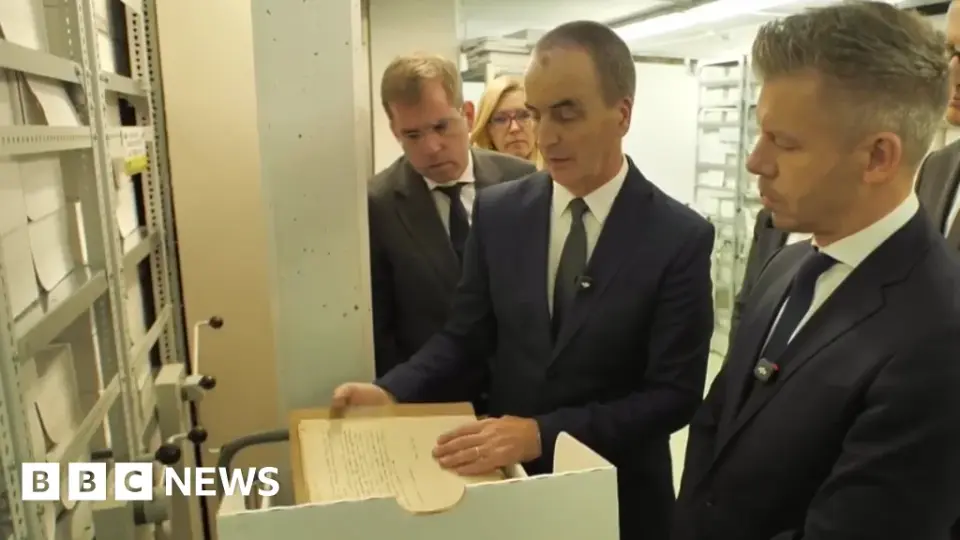
Hungary has released secret police files from the communist era, making the names of approximately 60,000 informants public for the first time. Prime Minister Péter Magyar framed the release as a necessary step for national healing and fulfilling a campaign promise, while critics argue the incomplete records risk causing unnecessary family trauma and public division. The initial release, timed to coincide with the 1956 revolution anniversary, includes basic identification data, with more detailed recruitment records scheduled for February 2027.
Key points
- The government released 'Form 6' cards containing names, codenames, and basic personal details of around 60,000 individuals recruited by communist-era security services.
- The release was delayed from the 1956 revolution anniversary to November 4, 2026, to allow for the digitalization of records.
- Detailed 'B-dossiers' regarding recruitment motives and reporting activities are scheduled for release on February 25, 2027, after redaction of sensitive personal data.
- Historians estimate that 150,000 to 160,000 people were recruited as informants in Hungary between 1944 and 1990, though many files were destroyed or blacked out in previous decades.
- The move was a central promise of Péter Magyar’s election campaign, with polls indicating over two-thirds of the population supported public access.
Background
This development follows the ousting of long-ruling Prime Minister Viktor Orbán by youth-led movements in 2026, as noted in our archive. Magyar’s government has since moved to dismantle previous conservative policies, including anti-LGBTQ measures, and is now pursuing a policy of historical transparency. Previous attempts by conservative, socialist, and Fidesz-led governments to open these files had failed, with access previously restricted to researchers and victims' relatives.
How outlets are covering it
BBC and The Guardian both highlight the symbolic timing of the release, linking it to the 1956 revolution, though the BBC notes the date was shifted to November 4. While BBC emphasizes the government’s framing of 'healing' and the incomplete nature of the files, The Guardian focuses on the broader regional context, comparing Hungary’s delay to earlier releases in East Germany (1992) and the Czech Republic (2003). Critics cited in both outlets, such as historian Zsuzsanna Borvendég, argue that releasing names without full context risks public shaming, whereas supporters like historian Krisztian Ungváry view it as a fundamental citizen right. The Guardian also notes that while the files are extensive, they are smaller than those of Poland or Romania due to prior destruction during the 1956 uprising and the 1989 transition.
Why it matters
This release marks a significant shift in Hungary’s approach to its communist past, potentially reshaping public trust and historical memory. It tests the limits of democratic transparency in a post-authoritarian society and may influence how other former Eastern Bloc nations handle their own archival secrets. The outcome will determine whether the process leads to societal reconciliation or deepens generational and political divides.
What to watch
The government plans to release the detailed 'B-dossiers' on February 25, 2027, which will include information on recruitment processes and the value of intelligence provided. Public reaction to the initial release will likely determine the tone of the subsequent disclosures, with authorities monitoring for potential social unrest or family disputes.
- Secret police files released in Hungary, 47 years after fall of communism BBC
- Hungary opens communist-era informer files in belated reckoning with Cold War past Reuters
- In Hungary, Magyar Is Driving a Renewed Examination of the Past Bloomberg.com
- ‘Traitors in every family’: Hungary to unmask communist-era informants and confront past The Guardian
- Hungary opens communist-era secret police files for first time, identifying thousands of informants DW.com
Want the full story? Read the original reporting
Read on BBC