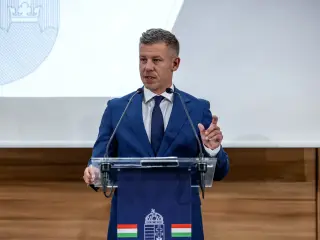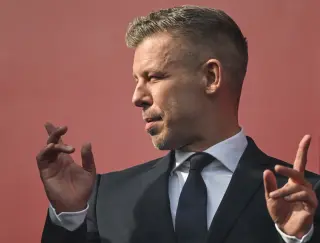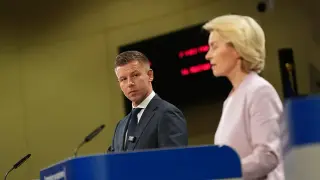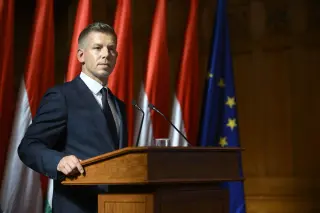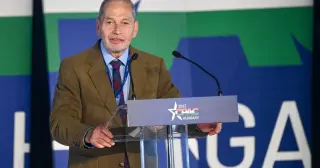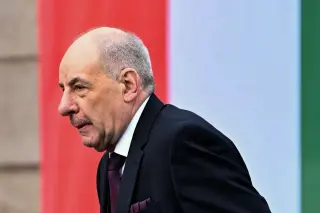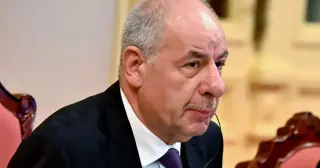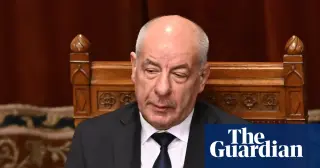
Hungary's Prime Minister Viktor Orban and opposition leader Peter Magyar held closing campaign rallies—Orban addressing supporters in Budapest and Magyar in Debrecen—as voters head to a tightly watched election.
Hungary’s 2026 vote pits Viktor Orbán’s long-running rule against Péter Magyar’s Tisza, with polls suggesting the challenger leads. A Magyar victory would unsettle the MAGA-aligned autocracy model and potentially weaken Moscow’s influence, while an Orbán win could entrench the regime and its global sway.
Viktor Orbán’s four-decade-rule in Hungary faces a potential end in the April 12 vote, as Péter Magyar’s Tisza party leads polls and draws huge crowds. The Bulwark argues Hungary is an autocratic, crony state where Orbán controls the constitution, judiciary, media and electoral rules, so only a genuinely clean election can determine the outcome. Magyar’s energetic, nationalist campaign challenges the regime’s legitimacy, but Orbán may resort to drastic measures, including disinformation and alleged voter intimidation by local officials to tilt the results. A narrow Magyar win could force a coalition with the far-right Mi Hazánk; a landslide could topple the regime, though Kremlin-linked campaigns and external interference add uncertainty. Polls vary, with some showing Magyar ahead and others favoring Fidesz, making the race a pivotal test for Hungary’s democratic trajectory.
Hundreds of thousands filled Budapest for dueling National Day rallies as Viktor Orban’s government framed the April 12 parliamentary vote around Europe, Ukraine, and energy security, while opposition leader Peter Magyar billed the election as a referendum on Hungary’s domestic future, anti-corruption, and reduced Kremlin dependence. The events underscored a widening EU-Ukraine rift, with disputes over the Druzhba pipeline, energy ties to Russia, and Kyiv’s funding, highlighting a country deeply divided on its European path and stance toward Ukraine amid a tense electoral backdrop.
Hungary’s opposition leader Péter Magyar launched the centrist Tisza party’s campaign in Budapest, promising to restore Hungary’s Western orientation and EU ties ahead of the April 12 vote. He argues for recovering suspended EU funds, adopting the euro by 2030, cracking down on corruption, and boosting health care and public transport, while positioning his group against Orbán’s government and its Western alignment and policy choices.
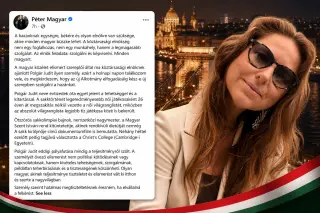
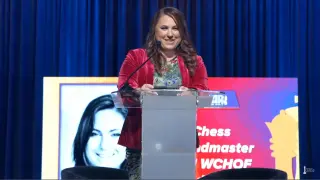
Hungary's opposition leader Péter Magyar filed a police report alleging the government orchestrated an unauthorized secret recording of a sexual encounter with his ex-girlfriend as a 'honey trap' to weaken his campaign ahead of April elections; he calls for investigations into who ordered the acts and cites potential data misuse.
Peter Magyar, a former Fidesz member who leads the opposition party Tisza, is seen as a possible challenger to Viktor Orban. Even as Orban trails in polls, observers note that election rules and incumbency advantages could still favor him, with Hungary's elite MCC circle reportedly backing Orban while some students view Magyar’s rise with optimism.
Hungary's Prime Minister Viktor Orbán faces a significant challenge in the upcoming EU elections from Péter Magyar, a former Fidesz party member who has built a new political movement. Magyar's Respect and Freedom party has gained substantial support by criticizing Orbán's government for corruption and economic mismanagement. Despite Orbán's strong track record in elections, his popularity has waned amid economic struggles and scandals. The June elections are seen as a precursor to Magyar's planned run in the 2026 national elections.
Tens of thousands of protestors gathered in Budapest in support of lawyer Peter Magyar, a critic of Hungarian Prime Minister Viktor Orban, who plans to challenge Orban's leadership by forming a new political party. Magyar, a former insider, has gained prominence over a child abuse scandal involving Orban's ex-justice minister. The protest reflects growing discontent with Orban's government, with many expressing support for Magyar's initiative as a potential alternative to the current opposition. Orban is facing significant political challenges, including a recent scandal involving a presidential pardon for a convicted child abuser, as well as ongoing tensions with the EU and NATO over issues such as press freedom and ties to Russia.
Peter Magyar, a rising challenger to Hungarian Prime Minister Viktor Orban, mobilized tens of thousands of supporters in Budapest, outlining a plan to unite the country and end Orban's 14-year hold on power. Magyar, a former insider within Orban's party, has accused the government of corruption and cronyism and announced the creation of a new political community to run in upcoming elections. Critics accuse Orban of eroding democratic institutions, and the EU has withheld funding over alleged democratic backsliding and misuse of funds.
Tens of thousands marched in Budapest against Hungarian Prime Minister Viktor Orban, led by lawyer Peter Magyar, a former ally of Orban's government who plans to launch his own political movement. Protesters expressed concerns about corruption, healthcare, and education, with many wearing national colors and flags as symbols of opposition to Orban's party. Magyar's insider knowledge and recent revelations about government corruption have garnered attention, with 13% of voters indicating potential support for his party, posing a challenge to Orban ahead of European parliamentary elections.
Tens of thousands of protesters marched in downtown Budapest against the government of Prime Minister Viktor Orban, led by lawyer Peter Magyar, who aims to challenge Orban's administration. Many demonstrators expressed concerns about corruption, education, and healthcare, with some wearing national colors and carrying flags as symbols of opposition. Magyar, a former insider of the Orban government, has gained attention for his incendiary comments and plans to launch his own political party, with 13% of voters indicating potential support, as Orban faces political challenges ahead of European parliamentary elections in June.
Peter Magyar, a former insider within Hungary's ruling Fidesz party, mobilized tens of thousands of supporters in Budapest, announcing the creation of a new political community aimed at uniting conservative and liberal Hungarians disillusioned by Prime Minister Viktor Orbán's governance. Magyar, who has accused the government of corruption and cronyism, outlined a plan to bring an end to Orbán's 14-year hold on power and create a more pluralistic political system. His rise has compounded political headaches for Orbán, who has faced resignations and a painful economic crisis. Magyar plans to found a new party to run in upcoming elections.
Peter Magyar, a former insider of Hungary's ruling Fidesz party, rallied tens of thousands of supporters in Budapest, announcing the creation of a new political community aimed at uniting conservative and liberal Hungarians disillusioned by Prime Minister Viktor Orbán's 14-year hold on power. Magyar, who has accused the government of corruption and cronyism, aims to bring about a moral, political, and economic transformation in Hungary, calling for fair elections and an end to what he sees as the erosion of democratic institutions. His rise has compounded political headaches for Orbán, who has faced resignations and economic crises, while the EU has withheld funding over alleged democratic backsliding.