
Icelanders Reject EU Talks Resumption in 52.8% to 47.2% Vote
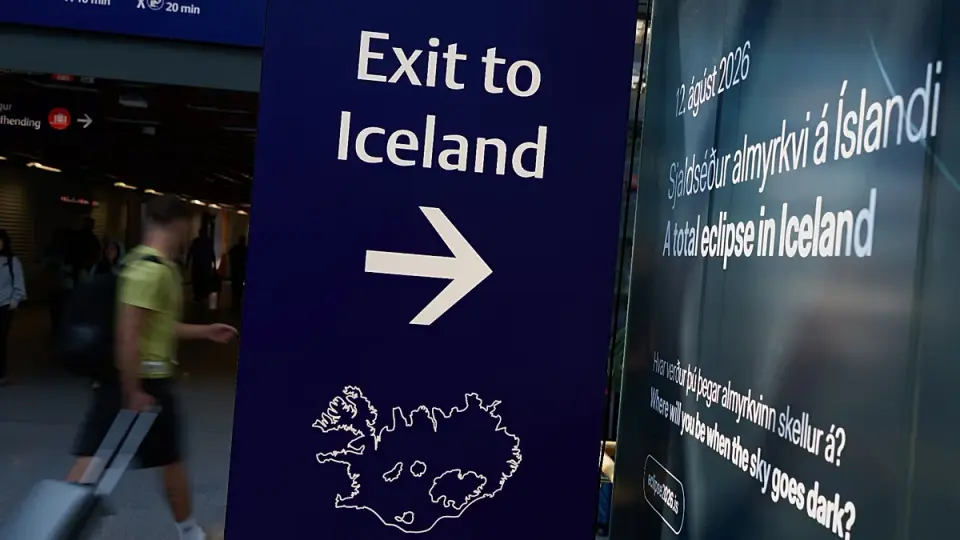
Icelanders voted 52.8% to 47.2% against resuming EU accession negotiations, a decision that ended a 13-year pause in talks. The EU’s muted response, led by Commission President Ursula von der Leyen, drew comparisons to its silence during the 2016 Brexit referendum. While the 'No' camp emphasized sovereignty and fishing rights, the 'Yes' camp cited economic stability and euro adoption. The result reinforces Iceland’s status as a close EU partner outside full membership, mirroring the relationship of Norway and Liechtenstein.
Key points
- Icelanders rejected resuming EU membership talks in a referendum held on August 16, 2026, with 52.8% voting 'No' and 47.2% voting 'Yes'.
- The vote followed a 13-year suspension of negotiations, which were halted in 2015 by a eurosceptic government.
- EU Commission President Ursula von der Leyen issued no public statement, with a spokesperson merely noting the results, while Council President António Costa expressed respect for the democratic choice.
- The 'No' campaign focused on protecting fishing and farming industries and national sovereignty, while the 'Yes' campaign argued for lower interest rates, currency stability, and euro adoption.
- The referendum was accelerated after President Trump mistakenly referenced Iceland in discussions about Greenland, prompting the left-leaning coalition government to move the vote up from 2027.
- Iceland remains a member of the European Economic Area and the Schengen zone, similar to Norway and Liechtenstein, allowing free movement of people and goods without full EU membership.
Background
Iceland applied to join the EU in 2009 following a financial crisis that devastated its economy. Negotiations began but were suspended in 2015 by a eurosceptic government. The current left-leaning coalition, elected in 2024, planned a referendum for 2027 but moved it up after President Trump’s erroneous references to Iceland in 2026. This is the second time Iceland has put the issue to a vote, with the previous attempt also failing to secure support for accession.
How outlets are covering it
Euronews highlights the EU’s 'silent treatment' as a strategic error, drawing parallels to the 2016 Brexit referendum where EU institutions also remained quiet despite misinformation. It notes that the 'No' campaign was better financed and framed the vote as a sovereignty issue, resonating with Icelandic identity. CBS News focuses on the practical implications, noting that Iceland already benefits from the single market and Schengen zone without full membership. It emphasizes the 'No' camp’s argument that Iceland’s voice would be muted in the European Parliament and that it could negotiate its own trade deals, such as with China. Both sources agree that the 'Yes' camp emphasized economic stability and euro adoption, but Euronews places more weight on the political and identity-based arguments, while CBS News highlights the economic and practical benefits of the status quo.
Why it matters
The result underscores the EU’s ongoing challenge in balancing non-interference with the need to counter misinformation in referendums affecting its expansion. It highlights the tension between economic integration and national sovereignty, a theme that resonates in other European contexts. For Iceland, the vote reinforces its unique position as a close EU partner without full membership, potentially influencing future EU enlargement strategies and the political dynamics of small European states.
What to watch
The EU is expected to maintain its current relationship with Iceland as a European Economic Area and Schengen member. The Icelandic government may reassess its economic policies, potentially focusing on independent trade deals, such as with China, as suggested by the 'No' campaign. The EU may review its approach to future referendums, potentially adopting a more proactive stance to counter misinformation, though this remains debated among officials. The result may also influence the political landscape in other European countries considering EU membership or integration.
- The EU gave Iceland the silent treatment. It didn't work, again Euronews.com
- EU enlargement hits an Icelandic snag The Economist
- Iceland votes against plan to resume EU membership talks in referendum CBS News
- Trump card fails to clinch Iceland’s EU vote euractiv.com
- Why Iceland and Others Might Want In, Not Out, of the E.U. Club The New York Times
Want the full story? Read the original reporting
Read on Euronews.com