
Iceland's EU Referendum Hinges on Fishing Rights and Arctic Security
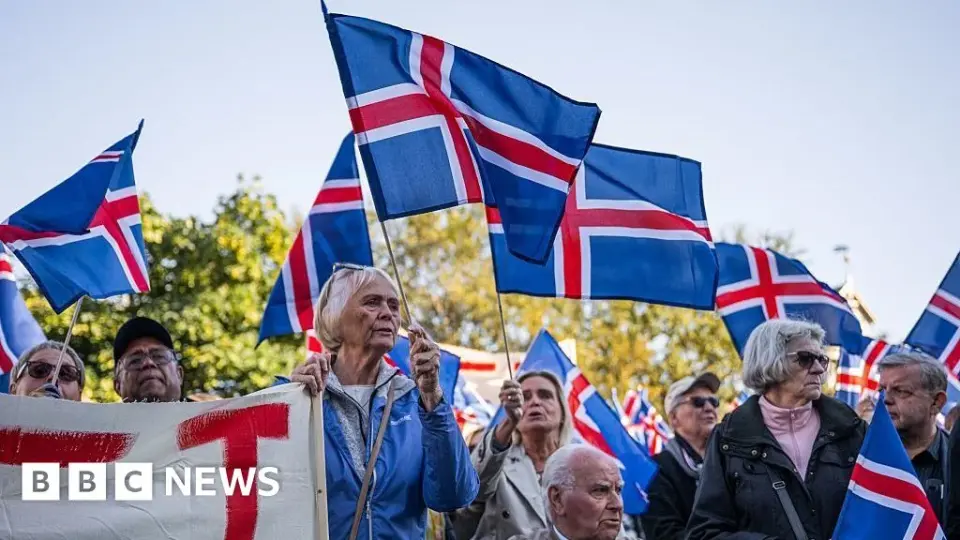
Icelanders are voting on whether to restart European Union accession talks, a decision that has split the nation over sovereignty, fishing rights, and economic stability. While polls show a near-deadlock, the debate centers on whether to preserve control over lucrative marine resources or seek the stability of the eurozone.
Key points
- Icelanders are voting on whether to resume EU accession negotiations, which were halted in 2013.
- Polls indicate a razor-thin margin, with the 'No' campaign slightly ahead in some surveys and 'Yes' in others.
- The primary conflict is between preserving sovereignty over fishing grounds and gaining economic stability through EU membership.
- A 'Yes' vote would not finalize membership but would trigger negotiations, potentially followed by a second referendum.
- Geopolitical tensions, including US interest in Greenland and Russian naval activity, have heightened security concerns.
Background
Iceland initially applied to join the EU in 2009 following the 2008 financial crisis but suspended talks in 2013 due to concerns over fishing rights. The current referendum is the first step in a multi-stage process that could lead to full membership, requiring subsequent parliamentary approval and a second national vote.
How outlets are covering it
Outlets highlight different drivers for the vote. The BBC and CNN emphasize the economic debate, noting that while Iceland is affluent, high interest rates and inflation drive the 'Yes' campaign, while the 'No' side fears losing control over its fishing industry, which accounts for nearly 40% of exports. The Washington Post focuses on the geopolitical catalyst, arguing that President Trump's aggressive stance toward Greenland and Arctic security has made EU membership more appealing as a strategic anchor. The New York Times captures the social tension, describing a 'bitterly divided' country where the debate has fractured families and communities, contrasting with Iceland's typically genial reputation.
Why it matters
The outcome will determine whether Iceland moves closer to full EU integration, potentially reshaping its economic and security posture in the Arctic. A 'Yes' vote could signal a shift in European enlargement strategy, while a 'No' would reinforce national sovereignty over natural resources and maintain the status quo within the European Economic Area.
What to watch
If the 'Yes' campaign wins, Iceland will begin formal accession negotiations, which could take 18 months to two years. A subsequent referendum and constitutional amendment would be required for final approval. If 'No' wins, Iceland will likely remain in the EEA and Schengen zone without pursuing full EU membership for the foreseeable future.
- Close race as Iceland votes on whether to restart talks on joining EU BBC
- A tiny nordic nation weighs moving closer to Europe under the shadow of Trump CNN
- Poll finds Icelandic voters swing to narrowly opposing EU membership Reuters
- Trump’s grab for Greenland rattles Iceland, which considers joining E.U. The Washington Post
- ‘The Sauna Is Hot and Uncomfortable’: Vote on E.U. Talks Makes Iceland Sweat The New York Times
Want the full story? Read the original reporting
Read on BBC