
India's Supreme Court Intervenes as Police Lock Down Delhi to Block 'Cockroach' Voter Roll Protests
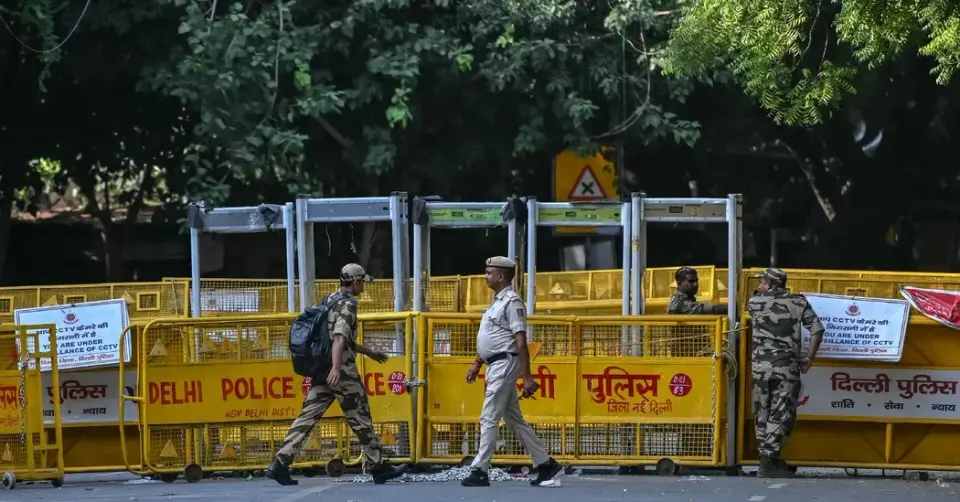
Indian authorities imposed a virtual lockdown on New Delhi to prevent a massive protest by the Gen Z-led Cockroach Janta Party (CJP) against the Election Commission's voter roll revision. Police canceled trains, shut metro stations, and detained movement leaders, prompting the Supreme Court to intervene. The dispute centers on the removal of 130 million names from voter lists, which critics allege disenfranchises opposition supporters, while the government claims the purge removes ineligible entries.
Key points
- Authorities canceled trains and suspended mass transit in New Delhi to prevent protesters from reaching Jantar Mantar, the designated protest site.
- The Supreme Court issued a rare emergency order urging the government to reconsider restrictions and provide an alternative protest space.
- CJP founder Abhijeet Dipke and other leaders were detained upon arrival in Delhi but released the next day by a court on condition they maintain peace for one year.
- The protests demand the resignation of Chief Election Commissioner Gyanesh Kumar over the Special Intensive Revision, which removed 130 million names from voter rolls.
- Police justified the crackdown as necessary for public safety, while opposition leaders and CJP members accused the government of dictatorial measures to suppress dissent.
Background
This escalation follows a series of nationwide protests in late September and early October 2026. The CJP, which originated as an online satirical movement, previously forced the resignation of Education Minister Dharmendra Pradhan in July 2026 over exam paper leaks. The current unrest stems from the Special Intensive Revision (SIR) of voter rolls, which began in summer 2026. Opposition parties, including the Indian National Congress, have joined the CJP in demanding Kumar's resignation, alleging the revision favors Prime Minister Narendra Modi's Bharatiya Janata Party (BJP).
How outlets are covering it
The New York Times highlights the Supreme Court's intervention and the extraordinary measures taken by police, including house arrests and transit cancellations. NBC News emphasizes the scale of the crackdown, noting that thousands were detained and that the government dismissed protesters as 'anarchic elements.' CNN focuses on the release of CJP leaders and the movement's resilience, while BBC details the massive deployment of over 30,000 security personnel and the logistical disruptions caused by the lockdown. All sources agree that the government and Election Commission deny allegations of voter manipulation, maintaining that the revision removes duplicate or ineligible entries, whereas critics argue it disenfranchises eligible voters to benefit the BJP.
Why it matters
The crackdown underscores the shrinking space for dissent in India's largest democracy and tests the limits of judicial oversight over executive power. The voter roll dispute could impact upcoming state elections in 2027, particularly in BJP-ruled Uttar Pradesh and Gujarat, and signals a potential shift in the political landscape as youth-led movements challenge established power structures.
What to watch
The CJP has vowed to continue protests despite the crackdown, with supporters planning to return to Jantar Mantar. The Supreme Court's order may lead to further legal challenges against the government's restrictions. The political impact of the voter roll revision remains uncertain, but the dispute is likely to intensify as opposition parties and youth movements continue to demand accountability from the Election Commission.
- India Cancels Trains, Floods Capital with Police to Block Protests The New York Times
- India cracks down on ‘Cockroach’ youth protests as anger grows against Modi and election chief NBC News
- Blocked by Police, India’s Youth Voice Their Fury The New York Times
- Founder of India’s Gen-Z ‘Cockroach’ movement detained ahead of planned protest, party says CNN
- Thousands of security personnel deployed as Delhi braces for ‘cockroach’ protest BBC
Want the full story? Read the original reporting
Read on The New York Times