
India’s Youth Uprising Tests Modi’s Grip as Voter Roll Purge Sparks Mass Protests
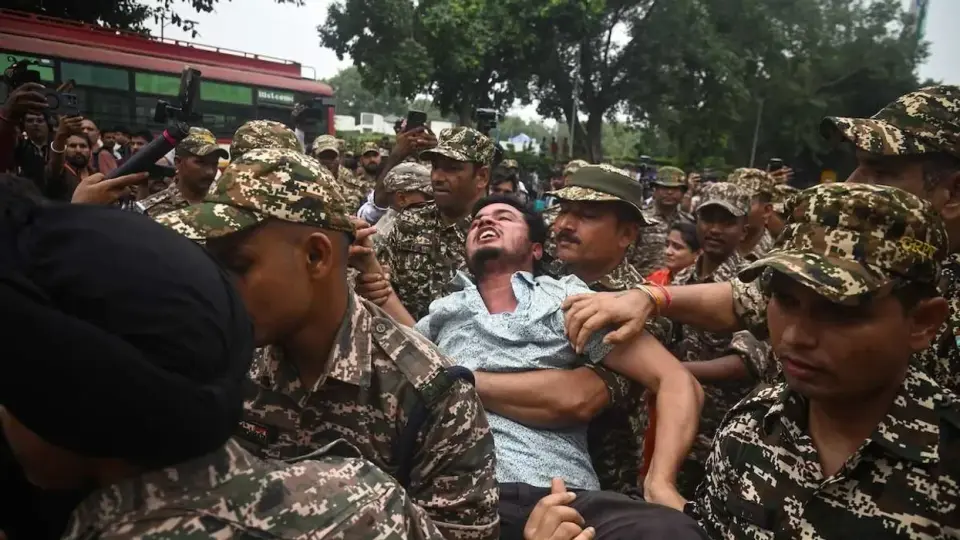
Indian Prime Minister Narendra Modi faces his most significant domestic challenge in 12 years as a youth-led movement, the 'Cockroach Janta Party,' protests the removal of 130 million names from voter rolls. The unrest, sparked by a leaked medical exam and a Supreme Court justice’s derogatory remark, has forced the resignation of the education minister and exposed deep economic and democratic anxieties among young Indians.
Key points
- The 'Cockroach Janta Party' (CJP) was formed after Chief Justice Surya Kant called young protesters 'cockroaches' in response to a leaked National Eligibility cum Entrance Test (NEET) that led to 12 student suicides.
- Protests have shifted focus to the Special Intensive Revision (SIR) of voter rolls, which removed 130 million people, a move critics allege targets Muslims and non-BJP voters to influence 2027 state elections.
- The movement is cross-sectional, involving middle-class and upper-caste youth who previously supported the BJP, signaling a shift in Modi’s traditional voter base.
- The government has responded with a heavy crackdown, detaining thousands of protesters and briefly arresting CJP founder Abhijeet Dipke, though Modi retains a parliamentary majority and high approval ratings.
- Analysts warn that while Modi is unlikely to be ousted immediately, the protests signal a 'slow chipping away' at his political machine, potentially weakening India’s diplomatic heft.
Background
This escalation follows earlier coverage of the SIR controversy, where authorities detained CJP leaders on flights and in Delhi to disrupt rallies. Previous reports noted that opposition leaders like Rahul Gandhi were also briefly detained, and international bodies raised concerns over the suppression of peaceful assembly. The current unrest builds on a 12-year tenure defined by economic growth but criticized for democratic backsliding and Hindu nationalist policies.
How outlets are covering it
GZERO Media frames the unrest as a 'slow chipping away' at Modi’s power, noting that while he retains a 20-point lead in polls, the protests expose cracks in his support due to youth unemployment and low private investment. The New Yorker emphasizes the 'cross-sectional' nature of the protests, highlighting that middle-class and upper-caste youth, previously bastions of the BJP, are now joining the movement, which the party views as a major threat. The Washington Post focuses on the 'unprecedented' scale of the challenge, comparing it to regional youth uprisings in Sri Lanka and Bangladesh, and notes that the government may resort to increased repression to survive, as it can no longer rely on implied consensus.
Why it matters
The protests threaten to erode the legitimacy of India’s democratic processes ahead of critical 2027 state elections, particularly in Uttar Pradesh and Gujarat. A weakened domestic position for Modi could reduce India’s diplomatic leverage in global affairs, affecting its relationships with the US, China, and Europe, and potentially altering the geopolitical balance in Asia.
What to watch
The CJP demands the resignation of Chief Election Commissioner Gyanesh Kumar and the annulment of the SIR changes. The government is unlikely to restore the 130 million voters but may remove Kumar to defuse tensions. The next national elections are scheduled for 2029, but the 2027 state elections will be a key test of the BJP’s continued dominance.
- Modi’s Cockroach Problem GZERO Media
- Is This the Beginning of the End of Indian Democracy? The New Yorker
- India’s government fails to crush Gen Z protests The Economist
- India’s Modi faces unprecedented challenge to power as youth mobilize The Washington Post
- Despite lockdowns and thousands detained, India's youth-led protests grow Reuters
Want the full story? Read the original reporting
Read on GZERO Media