
Israel’s 2026 Political Deadlock: Eisenkot’s Coalition Struggles as Far-Right Legacy Endures
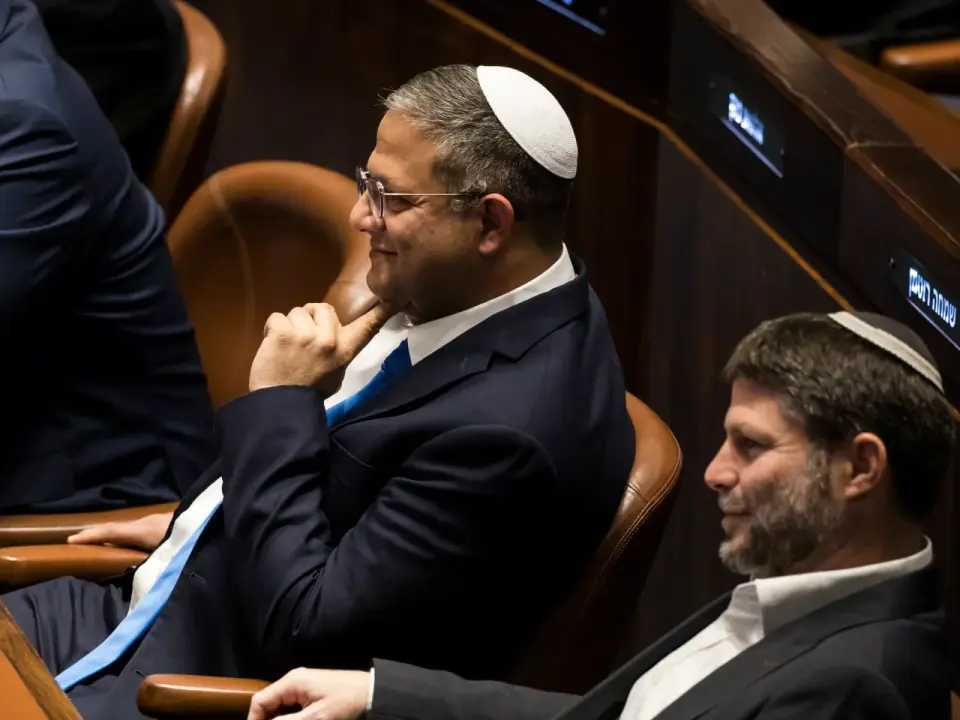
Gadi Eisenkot faces a 28-day deadline to form a minority government after the October 2026 election left Israel deadlocked. While Netanyahu’s bloc lost its majority, the opposition’s 67-seat coalition is fractured by ideological conflicts over ultra-Orthodox and Arab party inclusion. Analysts warn that even if the far-right ministers Itamar Ben-Gvir and Bezalel Smotrich are ousted, their structural changes to Israeli institutions and settlement policies may persist, embedding hardline ideologies into the state’s fabric.
Key points
- Eisenkot has 28 days to form a government; failure may trigger new elections or a Netanyahu-led minority coalition.
- The opposition’s 67-seat bloc is divided between Eisenkot’s minority plan (relying on Arab support) and Avigdor Liberman’s 61-seat plan (relying on ultra-Orthodox support).
- Ben-Gvir and Smotrich have opposed any government led by Eisenkot, with Smotrich threatening to abandon ultra-Orthodox allies if they negotiate with the opposition.
- Western nations, including Ireland and the Netherlands, sanctioned Ben-Gvir and Smotrich in June 2025 for their roles in Gaza and West Bank policies.
- Experts argue that while the ministers may leave office, their institutional changes to police, prisons, and settlement administration are difficult to reverse.
Background
The 2026 election followed a significant rightward shift among young Israeli voters, with polls indicating nearly three-quarters of young Jewish voters identify as right or center-right. This demographic trend empowered far-right figures like Ben-Gvir, who had previously sought to force Netanyahu into a more hardline coalition. The election resulted in a deadlock, with neither bloc securing the 61 seats needed for a majority, making Arab-led and ultra-Orthodox parties decisive kingmakers despite public rhetoric excluding these groups.
How outlets are covering it
Al Jazeera emphasizes the enduring legacy of Ben-Gvir and Smotrich, arguing that their hardline policies have transformed Israeli institutions and normalized hatred toward Palestinians, a legacy that may persist even if they are ousted. CNN focuses on the mechanical challenges of forming a government, highlighting the ideological rift between Eisenkot’s minority plan and Liberman’s 61-seat coalition, and the potential for a Netanyahu-led unity government. The New York Times frames the issue through the lens of Israel’s damaged relationship with the United States, suggesting that Eisenkot’s primary challenge, if he succeeds, will be repairing this alliance, a perspective not detailed in the other sources.
Why it matters
The outcome of this political deadlock will determine whether Israel continues its current hardline trajectory or attempts a shift toward a more centrist governance model. The persistence of far-right institutional changes could entrench apartheid-like conditions and further isolate Israel internationally, while a successful coalition could signal a potential, albeit difficult, pivot in Israeli policy.
What to watch
Eisenkot must negotiate cabinet posts and policies within 28 days, with a possible 14-day extension. If he fails, the mandate may pass to Netanyahu, who could attempt to lure opposition defectors to form a minority government. If no government is formed, Israel may face another round of elections. The opposition plans to use its parliamentary majority to take control of the Knesset and advance legislation, regardless of the final government formation.
- Netanyahu may fall, but his far-right legacy in Israel is going nowhere Al Jazeera
- The U.S.-Israel Relationship Is Broken. Here’s How Eisenkot Could Fix It. The New York Times
- Israel's parliament sworn in as Eisenkot tries to forge a government Reuters
- Netanyahu’s grip on power is weakening. What will it take to end the disarray in Israel? CNN
- Analysis • Caught between two clocks: Eisenkot races to block Netanyahu's war Haaretz
Want the full story? Read the original reporting
Read on Al Jazeera