
United Russia secures Duma dominance despite wartime chaos and drone strikes
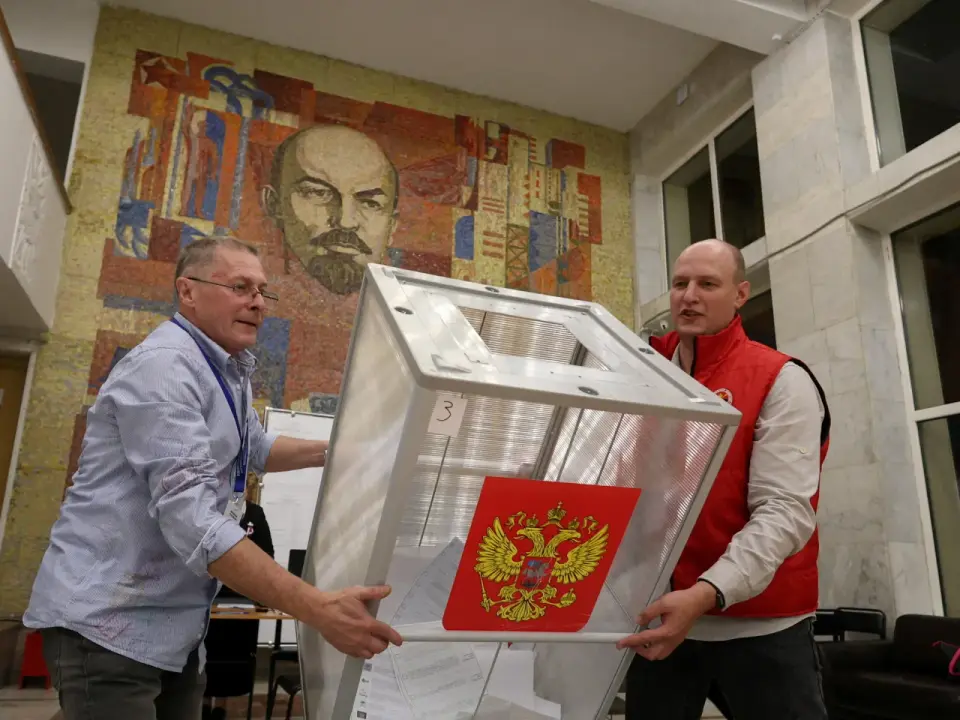
United Russia is poised to win a constitutional majority in Russia's first wartime parliamentary elections, with early results showing nearly 58% of the vote. The Kremlin aims to use this result to legitimize its war in Ukraine, despite massive Ukrainian drone attacks on Moscow and cyberattacks on voting systems. Turnout reached 56.66%, while the only anti-war party, Yabloko, was barred from the ballot by the Supreme Court.
Key points
- United Russia is on track to win nearly 58% of the vote in the party-list portion of the State Duma, securing a constitutional majority.
- The three-day vote, held from September 18 to 20, saw a turnout of 56.66% across 111 million eligible voters.
- Ukraine launched over 1,900 drones at Moscow during the election, killing at least three people and damaging an oil refinery.
- Russian authorities reported 3,000 DDoS attacks on election infrastructure and damage to 74 commission buildings in 10 regions.
- The Yabloko party, the only registered anti-war entity, was removed from the ballot by the Supreme Court last month, leaving no meaningful opposition.
Background
This is the first parliamentary vote since Russia's full-scale invasion of Ukraine began in 2022. Previous coverage noted that Yabloko was barred from the ballot in August 2026 after a Supreme Court ruling, and that voting was extended to four Ukrainian regions annexed by Moscow. The 2021 election saw United Russia win 324 of 450 seats, a dominance expected to be replicated or exceeded in this wartime vote.
How outlets are covering it
Al Jazeera and CNN emphasize the Kremlin's intent to use the election as a legitimacy tool for the war, noting the absence of genuine opposition and the suppression of Yabloko. BBC highlights the predictable nature of the result, noting that all parties on the ballot support Putin's policies, and focuses on the public's resignation to drone attacks. CNN and Al Jazeera detail the scale of Ukrainian drone strikes and cyberattacks, with CNN noting specific figures for DDoS attacks and damaged buildings. All sources agree that the outcome was not in doubt, but differ in emphasis: Al Jazeera focuses on the international condemnation of voting in annexed territories, while BBC focuses on the domestic political implications for future mobilization.
Why it matters
The election result provides the Kremlin with a political mandate to continue its war effort and potentially justify future mobilization, despite economic hardship and battlefield losses. The suppression of the only anti-war party and the exclusion of international observers underscore the tightening of political control in Russia. The vote also serves as a test of public support for the war, with turnout and results being used to signal unity against external threats.
What to watch
Final results will be tallied by September 25. The Kremlin is expected to use the outcome to claim a 'mandate from the people' to continue the war. Observers will monitor whether the result leads to increased pressure for mobilization or changes in war policy, though Putin has recently ruled out a new wave of mobilization. The international community is likely to continue condemning the vote in annexed Ukrainian territories as illegal.
- Ruling party dominates early results in Russia’s wartime parliamentary vote aljazeera.com
- Russia's elections had few surprises - but how the Kremlin uses the results is far from clear BBC
- Ruling pro-Putin party set to win Russia’s tightly controlled wartime parliamentary election CNN
- Early results show Russia's main Kremlin party dominating tightly controlled parliamentary vote AP News
- Russia's ruling pro-Putin party on track to win wartime election after drones strike Moscow Reuters
Want the full story? Read the original reporting
Read on aljazeera.com