
Macron Bans Non-Union Protests as France Prepares for Second Wave of Unrest
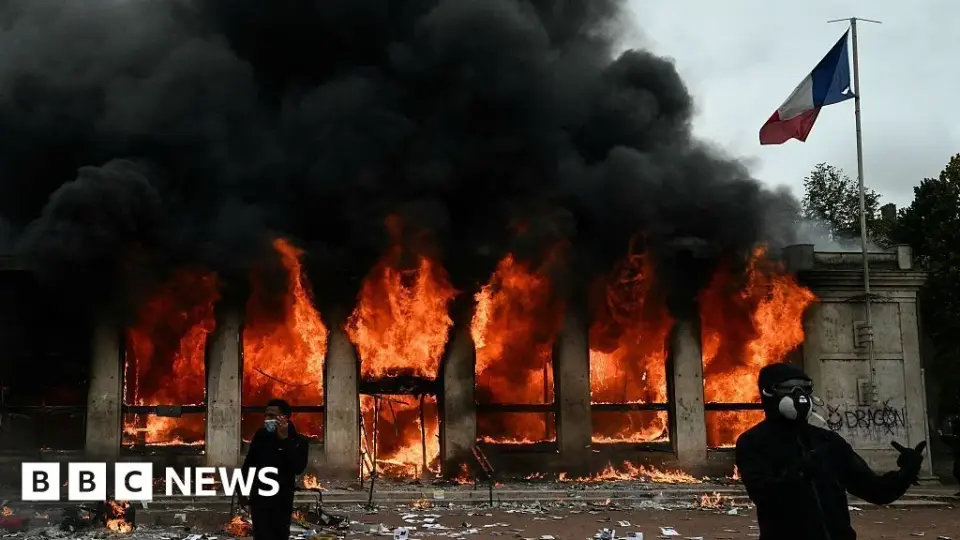
French President Emmanuel Macron has restricted weekend demonstrations to authorized union marches only, banning other groups after violent riots last Saturday. Approximately 550,000 people protested cost-of-living and school conditions, but the events turned violent, resulting in over 2,500 arrests and significant property damage. Macron blamed far-left groups for the disorder, while the government prepares a massive police deployment for Saturday. Cities like Lyon and Nice have imposed total bans on demonstrations, and curfews remain in effect in several major urban areas.
Key points
- Macron stated that only trade union organizations will be permitted to demonstrate, with alternative routes required to protect businesses.
- Non-union protests are to be banned wherever possible, with Macron labeling them 'illegitimate' and 'seditious.'
- Interior Minister Jean-Didier Berger confirmed police presence will be 20% higher than last weekend.
- Lyon, Nice, Toulon, Rouen, and Grenoble have issued blanket bans on demonstrations for Saturday.
- Partial curfews restricting movement and gatherings remain in place in cities including Marseille, Bordeaux, and Lille.
Background
The current unrest follows a weekend of severe riots on October 17, which resulted in at least two deaths and over 2,000 arrests. The protests originated from student strikes over education funding and expanded to include grievances regarding high living costs. Previous coverage noted that Interior Minister Laurent Nuñez offered his resignation over the failure to anticipate the scale of the crisis, though President Macron rejected the resignation and tasked him with improving street safety. Additionally, Macron has recently rejected claims by US leaders that migrants caused the riots, calling such narratives false and exploitative.
How outlets are covering it
BBC and Al Jazeera report that Macron is directly blaming far-left groups for the violence, describing the actions as 'seditious' and aimed at bringing down the Republic. The American Prospect offers a broader structural analysis, arguing that the unrest stems from economic failure and the collapse of the political center, which has energized both the far-left and far-right. The Guardian highlights how European far-right parties, including France's National Rally, are weaponizing the violence to promote an anti-immigration agenda, with leaders like Marine Le Pen and Jordan Bardella accusing the government of incompetence. While Macron rejects foreign blame for the riots, The Guardian notes that US officials have used the unrest to bolster their own immigration platforms.
Why it matters
The government's decision to restrict protests to unions only signals a shift toward a more authoritarian approach to public dissent, potentially setting a precedent for future unrest. The massive police deployment and city-wide bans indicate that the state is prioritizing order over the right to demonstrate. Furthermore, the unrest has intensified the political polarization ahead of the 2027 presidential elections, with polls showing Marine Le Pen as the frontrunner. The crisis also highlights the fragility of the French social contract, as the welfare state struggles to compensate for an economy that many citizens feel excludes them from prosperity.
What to watch
The government is preparing for a national day of protests on Saturday, with a 'massive' police deployment expected. Macron is set to convene the country's defense council on Friday to review security measures. Union representatives are now focusing on a further day of action scheduled for November 5, calling on private and public sector employees to join. The political landscape remains volatile, with the far-right gaining momentum in the lead-up to the 2027 elections.
- French weekend protests to be limited to union demos only, says Macron BBC
- France's Macron tightens curbs on protests, blaming hard left for unrest Reuters
- Is Paris Burning? The American Prospect
- Europe’s far right seizes on protest violence to push authoritarian anti-immigration agenda The Guardian
- Macron blames ‘seditious’ far left for unrest as France bans some protests Al Jazeera
Want the full story? Read the original reporting
Read on BBC