
Macron Vows Transparency After France’s Cost-of-Living Protests Spark Historic Riots
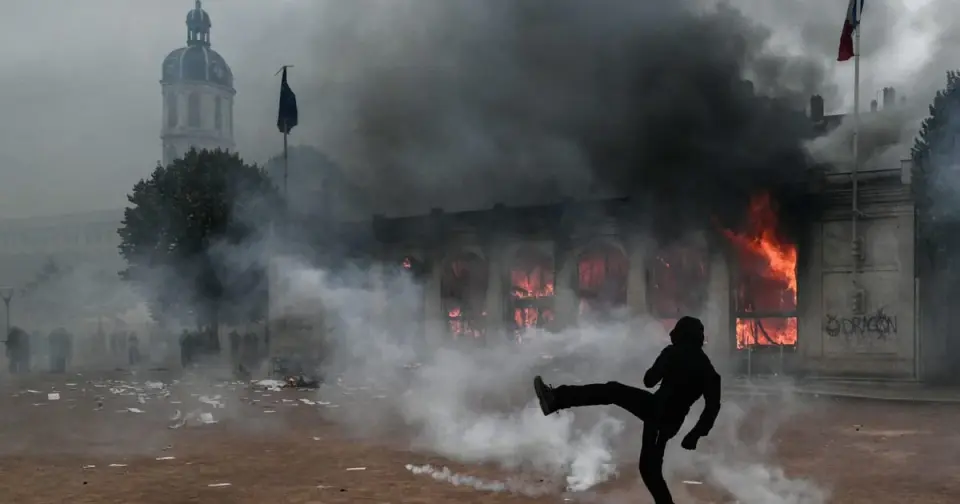
President Emmanuel Macron addressed the nation on Sunday, October 18, 2026, promising full transparency and accountability after Saturday’s massive protests over the cost of living devolved into widespread riots. While hundreds of thousands participated in largely peaceful demonstrations, violent clashes resulted in the destruction of historic buildings, including the Limoges city hall, and widespread looting. Macron condemned the violence, blaming far-left splinter groups and delinquents, while political opponents accused the government of mismanagement. The unrest has intensified the political landscape ahead of next year’s presidential election, with figures from the far-left, center, and far-right trading blame over the chaos.
Key points
- Macron stated that 'those who destroyed must pay' and promised full transparency regarding the police response to the demonstrations.
- Approximately 550,000 to 800,000 people protested nationwide on Saturday, with the majority of marches remaining peaceful.
- Violent clashes led to the arson of the 19th-century Limoges city hall, which largely collapsed, as well as looting in Paris, Marseille, and Lyon.
- The French interior ministry reported around 2,000 to 2,400 arrests, with approximately 1,000 police officers injured, seven of them seriously.
- Prime Minister Sébastien Lecornu and Interior Minister Laurent Nuñez blamed 'radical far-left groups' for inciting the violence, a claim disputed by left-wing leaders.
- The unrest has added a political dimension to the 2027 presidential election, with Marine Le Pen using the chaos to pitch herself as a candidate for stability.
Background
The current unrest follows weeks of escalating student-led protests in France, which began in late September 2026. Earlier coverage indicated that while initial marches were largely peaceful, tensions rose over grievances regarding school funding, public spending cuts, and the rising cost of living. The October 17 events marked a significant escalation in violence and turnout, surpassing previous demonstrations in scale and destructive impact.
How outlets are covering it
Outlets differ on the scale and nature of the violence. The New York Times highlighted the destruction of the Limoges city hall as a surprising and symbolic act of arson in a city not typically associated with unrest. The BBC emphasized the distinction between peaceful protesters and violent rioters, noting that Macron called for calm and warned against escalation. ABC News focused on the specific police response in Paris, reporting 855 arrests in the capital region and noting that one person died of a heart attack. POLITICO and the BBC both reported that Macron and Prime Minister Lecornu blamed 'far-left' groups, specifically mentioning Jean-Luc Mélenchon’s movement, for fomenting the violence. Mélenchon rejected these accusations, arguing that the government’s failure to address social demands allowed the situation to deteriorate. Marine Le Pen’s National Rally used the footage to criticize the government as a 'party of chaos,' while US President Donald Trump blamed immigration for the unrest on social media.
Why it matters
The unrest has significant implications for France’s political stability and international reputation. With six months remaining until the 2027 presidential election, the violence has intensified the campaign, with candidates from across the spectrum trading blame. The destruction of historic buildings and the potential for further escalation have raised concerns about public order and the government’s ability to manage social grievances. Additionally, the incident has drawn international attention, with US President Donald Trump using the events to criticize immigration policies, highlighting the global resonance of domestic political crises.
What to watch
Macron is awaiting 'clear answers' on why the protests turned violent, and local prefects and mayors are drafting measures to protect shops and civic buildings. The government is assessing the damage to businesses, with Minister Serge Papin meeting with company representatives to suggest assistance. The political debate is expected to intensify as the 2027 presidential election approaches, with candidates using the unrest to position themselves on issues of security, social justice, and economic policy. Further protests or unrest may occur as the government addresses the underlying grievances of the cost of living and public services.
- Macron vows ‘full transparency’ in France after protests turn to widespread unrest POLITICO.eu
- The French City of Limoges Wasn’t Known for Unrest. Then Rioters Set Fire to Its City Hall. The New York Times
- Macron calls for calm in France and warns rioting must not escalate BBC
- In France's Limoges, the fire-ravaged town hall rekindles memories of Notre Dame Reuters
- Paris police report 855 arrests after violent clashes and looting during protests ABC News - Breaking News, Latest News and Videos
Want the full story? Read the original reporting
Read on POLITICO.eu