
Merz Labels AfD Remigration Policy 'Ethnic Cleansing' in Volatile Bundestag Clash
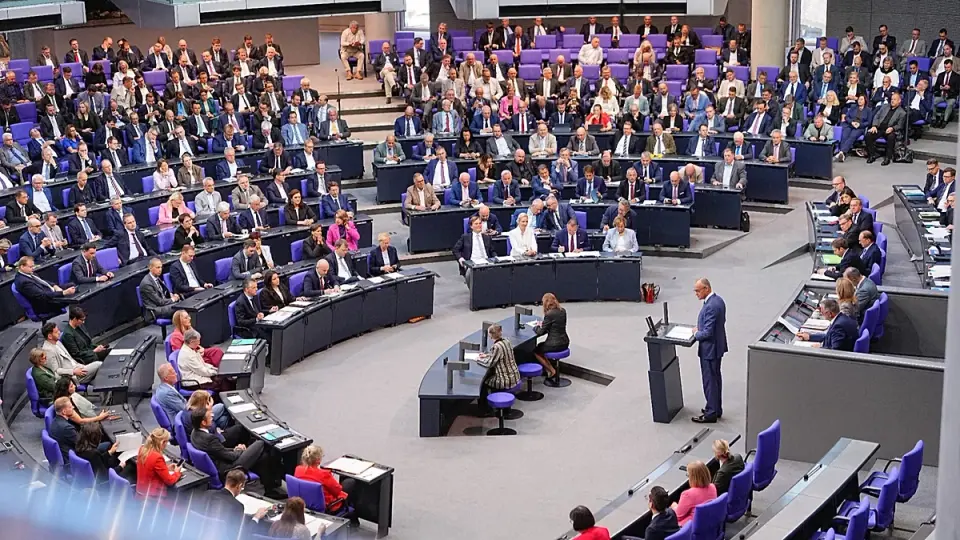
German Chancellor Friedrich Merz condemned the far-right AfD's 'remigration' policy as 'ethnic cleansing' during a heated Bundestag debate, following the party's significant electoral victory in Saxony-Anhalt. The exchange highlighted deepening tensions between the federal government and the AfD, with Merz warning that mass deportations would cripple essential services like healthcare and hospitality. In response, AfD co-leader Alice Weidel accused the current coalition of failing to address security and migration issues, declaring that the era of 'business as usual' had ended. The confrontation occurred three days after the AfD secured nearly 44% of the vote in Saxony-Anhalt, a result that has unsettled European political observers and prompted Merz to cancel a scheduled call with U.S. President Donald Trump, who had praised the AfD's gains.
Key points
- Merz stated that the AfD's demand for mass deportations of rejected asylum seekers is a synonym for 'ethnic cleansing by skin colour and origin.'
- The AfD won approximately 44% of the vote in the Saxony-Anhalt state election, compared to 17% for the CDU, though they fell three seats short of an absolute majority.
- Merz argued that the AfD's immigration stance would make it impossible for care homes, hospitals, and restaurants to function due to labor shortages.
- Alice Weidel criticized the government's immigration policies, citing daily knife violence, attacks on trains, and deteriorating urban environments as evidence of failure.
- Parliamentary speaker Julia Kloeckner warned AfD deputies against heckling, threatening to have them removed from the chamber if disruptive behavior continued.
- Merz accused the AfD of contributing to Russian efforts to destabilize Germany, referencing a foiled drone attack at Leipzig airport in August.
Background
This confrontation follows a series of recent developments where the AfD's electoral surge in Saxony-Anhalt has rattled European political foundations. Previous coverage noted that Merz had already labeled the AfD a 'destructive force' and canceled a planned phone call with U.S. President Trump after the latter praised the AfD's regional victory. Political analysts have suggested that the CDU's poor performance, driven by economic frustration and unmet promises, may signal a broader shift in national politics if parties ignore these warning signs ahead of upcoming elections in Berlin and Mecklenburg-Western Pomerania. Despite the AfD's strong showing, no far-right state government has been formed since World War II, and Merz maintains a strict firewall against cooperating with the party.
Why it matters
The clash underscores the growing polarization in German politics and the potential for the AfD's policies to influence federal discourse. Merz's characterization of remigration as ethnic cleansing highlights the moral and legal boundaries the federal government is drawing around the party's platform. The economic warnings regarding labor shortages in critical sectors suggest that the political debate is moving beyond rhetoric into practical governance concerns. Furthermore, the international dimension, involving U.S. reactions and alleged Russian interference, indicates that domestic German politics are increasingly entangled with broader geopolitical stability and European security concerns.
What to watch
The AfD is currently in talks with other groups and MPs to form a state government in Saxony-Anhalt, despite not holding an absolute majority. The federal government will likely continue to monitor the party's activities and potential alliances, while Merz faces pressure to address voter discontent and economic frustrations that fueled the AfD's surge. Upcoming elections in Berlin and Mecklenburg-Western Pomerania will be critical tests for the CDU's ability to recover support and counter the far-right narrative. The Bundest may also see continued tensions, with parliamentary leadership likely enforcing stricter rules to manage disruptive behavior from AfD deputies.
- Germany's Merz accuses far-right AfD of promoting 'ethnic cleansing' Euronews.com
- Germany’s Right Turn The New York Times
- Germany news: Merz, Weidel face off after AfD state win DW.com
- With the AfD's Election Victory, German Democracy, as We Knew It, Is Over Foreign Policy
- Holocaust survivor 'appalled' by prospect of far-right in power in German state Reuters
Want the full story? Read the original reporting
Read on Euronews.com