Tag

Saxony Anhalt

All articles tagged with #saxony anhalt

Merz Confronts 'Historic Rupture' as AfD Secures First State Parliament Presidency
politics13 days ago

Merz Confronts 'Historic Rupture' as AfD Secures First State Parliament Presidency

German Chancellor Friedrich Merz condemned recent electoral defeats as a 'historic rupture' after the far-right Alternative for Germany (AfD) secured its first state parliament presidency in Saxony-Anhalt. The AfD’s Tobias Rausch was elected speaker with support from the far-left BSW and alleged secret votes from CDU members, triggering a crisis within Merz’s coalition. Simultaneously, the Left Party won the Berlin state election, promising to nationalize housing. Merz’s approval rating has hit a record low, with major tests looming in North Rhine-Westphalia.


Saxony-Anhalt Vote Breaches Germany’s ‘Firewall’ as AfD Secures First Regional Speaker
politics13 days ago

Saxony-Anhalt Vote Breaches Germany’s ‘Firewall’ as AfD Secures First Regional Speaker

German Chancellor Friedrich Merz faces a new crisis after the far-right Alternative for Germany (AfD) elected Tobias Rausch as the first regional parliament speaker in the state of Saxony-Anhalt. The secret ballot revealed four unexpected votes, which the AfD claims came from Christian Democratic Union (CDU) members, breaching the long-standing political 'firewall' against the party. While Merz denies CDU involvement, suggesting potential 'false flag' operations, the result threatens the stability of his coalition and the party’s credibility. The AfD now seeks to form a government in December, with lead candidate Ulrich Siegmund claiming negotiations with CDU members are progressing, despite official denials from CDU leadership.

AfD Candidate Rausch Becomes First Far-Right Speaker of a German State Parliament Since 1945
politics14 days ago

AfD Candidate Rausch Becomes First Far-Right Speaker of a German State Parliament Since 1945

Tobias Rausch of the far-right Alternative for Germany (AfD) was elected speaker of the Saxony-Anhalt state parliament on October 6, 2026, marking the first time a far-right party has held this position in a German state legislature since 1945. Rausch, 35, won with 48 votes in an 83-seat chamber, despite the AfD holding only 39 seats. His victory relied on support from the far-left Alliance Sahra Wagenknecht (BSW) and four unidentified lawmakers from other parties, breaking the post-war 'firewall' consensus against cooperating with the AfD. The AfD’s September election victory in Saxony-Anhalt, where it won 44% of the vote, set the stage for this breakthrough. The next major test is in December, when AfD leader Ulrich Siegmund will seek to become state premier, though the BSW has stated it will not support him. The election has intensified debates over the normalization of the AfD and sparked protests in Magdeburg.

politics14 days ago

AfD’s Tobias Rausch becomes first far-right speaker of a German state parliament since 1945

Tobias Rausch of the far-right Alternative for Germany (AfD) was elected president of the Saxony-Anhalt state parliament on October 6, 2026, marking the first time a far-right party has led a German state legislature since 1945. Rausch won 48 votes in a secret ballot, aided by the far-left Alliance Sahra Wagenknecht (BSW) and four unidentified lawmakers from mainstream parties, despite the AfD holding only 39 of 83 seats. The AfD’s September election victory, which captured 44% of the vote, positioned the party to potentially govern the state. The next major test is in December, when AfD leader Ulrich Siegmund will seek to become minister president, though the BSW has stated it will not support him. The result has intensified debates over the 'firewall' policy that has traditionally isolated the AfD from other parties.

AfD's First State Parliament President Elected Amid Migrant Anxiety and Political Firewalls
politics14 days ago

AfD's First State Parliament President Elected Amid Migrant Anxiety and Political Firewalls

The far-right Alternative for Germany (AfD) has secured its first-ever presidency of a regional parliament in Germany since 1945, with Tobias Rausch elected speaker of the Saxony-Anhalt Landtag. This follows the party's landslide victory in September, where it won nearly 44% of the vote. The election, which relied on secret support from other parties, has intensified fears among migrants in eastern Germany and sparked a national debate over the traditional 'firewall' against extremist parties.

German Industrial Collapse and AfD Surge Signal a New 'China Shock'
politics1 month ago

German Industrial Collapse and AfD Surge Signal a New 'China Shock'

The Alternative für Deutschland (AfD) has surged to 44% in Saxony-Anhalt, threatening Germany’s political 'firewall' against the far right. Analysts link this rise to a 'China Shock' in the auto sector, where Chinese competition has caused a 12% drop in German exports and mass layoffs. While the AfD dominates the East, economic decline in Western industrial hubs may soon mirror these results.

AfD Secures Historic Saxony-Anhalt Victory, Setting Stage for First Far-Right State Government Since 1945
politics1 month ago

AfD Secures Historic Saxony-Anhalt Victory, Setting Stage for First Far-Right State Government Since 1945

The Alternative for Deutschland (AfD) won 43.8% of the vote in the Saxony-Anhalt state election on September 6, 2026, marking its strongest performance in any German state since reunification. With 77% voter turnout, the party is poised to form a government, potentially becoming the first far-right party to lead a German state since 1945. The AfD lacks an outright majority but may secure power through a third-round vote mechanism or by abstaining from coalition partners like the BSW. The party’s platform includes ending compulsory schooling, cutting arts funding, and tightening deportation policies. Critics warn of economic losses estimated at €1.8–3.2 billion by 2031 due to labor shortages, while supporters frame the win as a response to economic anxiety and demographic shifts. Pro-democracy groups are mobilizing to resist the AfD’s rise, emphasizing solidarity and visibility in the coming weeks.

German Protests Surge as AfD Seeks First Post-War State Government
politics1 month ago

German Protests Surge as AfD Seeks First Post-War State Government

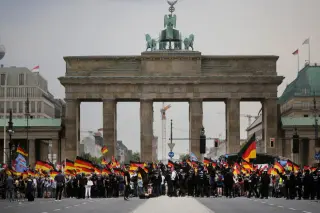
Approximately 150,000 people demonstrated across 20 German cities on September 12, 2026, demanding a ban on the Alternative for Germany (AfD) following its landslide victory in Saxony-Anhalt. The party secured 44% of the vote, falling just short of an outright majority, and is now negotiating coalition partners to form a state government. While organizers like Pruef and Campact emphasize democratic defense, analysts argue that economic decline and global trade shifts, rather than immigration alone, are driving the far-right’s rise.

150,000 Protesters Challenge AfD’s Path to First Postwar Regional Government
europe1 month ago

150,000 Protesters Challenge AfD’s Path to First Postwar Regional Government

Approximately 150,000 people demonstrated across 20 German cities on September 12 against the Alternative for Germany (AfD), following the party’s 44% victory in the Saxony-Anhalt state election. The AfD is now attempting to form the first far-right state government in Germany since World War II, a move that has triggered widespread civil society opposition and debates over potential party bans.

AfD’s Saxony-Anhalt Win Challenges European Far-Right Moderation Strategy
politics1 month ago

AfD’s Saxony-Anhalt Win Challenges European Far-Right Moderation Strategy

The Alternative for Germany (AfD) won 44% of the vote in Saxony-Anhalt, challenging the assumption that far-right parties must moderate to gain power. While the party remains three seats short of a majority, its radical stance on immigration and Russia has inspired other European movements, though experts warn that governing realities may limit long-term success.

AfD Leader Links Local Arms Plant to Planned Mass Deportations in Saxony-Anhalt
politics1 month ago

AfD Leader Links Local Arms Plant to Planned Mass Deportations in Saxony-Anhalt

Ulrich Siegmund, the likely leader of Saxony-Anhalt, stated that the Alternative for Germany (AfD) supports domestic arms production to facilitate its planned mass deportation campaigns. This stance contradicts the party’s traditional anti-military posture and has sparked intense backlash from rival parties, including the BSW, which is the only group currently open to coalition talks with the AfD. The controversy centers on a potential investment by Israeli defense firm Elbit Systems in the city of Sangerhausen, which could create up to 400 jobs but risks entangling the state in foreign conflicts.

AfD’s Saxony-Anhalt Win Exposes Germany’s Economic and Cultural Fractures
geopolitics1 month ago

AfD’s Saxony-Anhalt Win Exposes Germany’s Economic and Cultural Fractures

The Alternative for Germany (AfD) won a historic 44% of the vote in the Saxony-Anhalt state election, marking a significant shift in German politics. While the party advocates for closer ties with Russia and Euroscepticism, analysts debate whether this reflects a resurgence of nationalism or deep-seated economic grievances in former East Germany. The victory highlights a widening rift between the prosperous West and the economically struggling East, with some viewing it as an inevitable cultural evolution and others as a symptom of failed reunification policies and global economic competition from China.

AfD’s Saxony-Anhalt MPs Face Scrutiny Over Extremist Ties and Stasi Past
politics1 month ago

AfD’s Saxony-Anhalt MPs Face Scrutiny Over Extremist Ties and Stasi Past

The Alternative for Germany (AfD) has won a historic majority in Saxony-Anhalt, but faces intense scrutiny over the backgrounds of its new parliamentarians. The Guardian reports that several elected members have links to neo-Nazi groups, the former East German secret police (Stasi), and criminal records. While the party is three seats short of an absolute majority, its victory marks the first time a far-right party has gained power in a German state since World War II. International observers, including Vladimir Putin, have welcomed the result, raising concerns about its impact on European support for Ukraine.