
Merz’s Coalition Crumbles as Germany’s Political Center Faces Existential Crisis
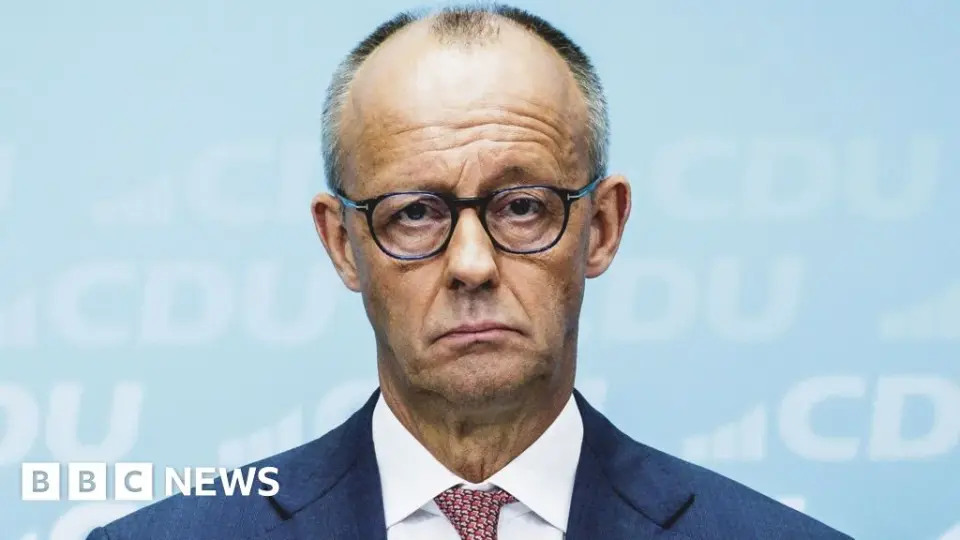
Chancellor Friedrich Merz faces a severe leadership crisis after his CDU party suffered historic defeats in recent state elections, including being ousted from parliament in Mecklenburg-Vorpomerania. While Merz retains internal party support, his approval ratings have hit record lows. The collapse of the political center has accelerated the rise of the far-right AfD, which now leads national polls at approximately 28%, while the Left party gained ground in Berlin. Analysts debate whether this reflects a failure of centrist moderation or the consequences of decades of rigid austerity policies that alienated the public.
Key points
- Merz’s CDU lost first place in Berlin and was eliminated from parliament in Mecklenburg-Vorpomerania, marking a significant shift in German politics.
- The AfD has surged to approximately 28% in national polls, capitalizing on voter dissatisfaction with economic stagnation and immigration policies.
- Merz’s approval ratings are at record lows, with critics describing him as arrogant and out of touch, though no internal challenger has emerged yet.
- Economic forecasts for 2026 and 2027 have been raised above 1%, but high energy costs and industrial decline persist, fueling public anxiety.
- The Left party topped the polls in Berlin, further eroding support for Germany’s traditional governing parties.
Background
Merz assumed office in 2025, promising to address immigration and economic stagnation, but his coalition with the SPD has struggled to gain public trust. Recent months have seen a series of state elections where the CDU performed poorly, leading to speculation about a potential chancellor swap. The political landscape has been further complicated by the AfD’s growing influence, which security officials view with concern due to its Russia-friendly stance and extremist regional branches. Previous coverage highlighted Merz’s attempts to maintain stability despite mounting pressure, including his decision to cancel a UN trip to focus on domestic issues.
How outlets are covering it
BBC reporting emphasizes the erosion of Germany’s traditional identity and the uncertainty surrounding Merz’s future, noting that while he lacks a formal challenger, his communication skills and public image are failing. The outlet highlights the AfD’s rise as a symptom of deeper societal anxieties about security and integration. In contrast, Al Jazeera frames the crisis as a failure of centrist extremism, arguing that decades of rigid austerity and refusal to entertain alternative policies have driven voters toward the far right. The Al Jazeera piece criticizes the European center for treating economic orthodoxy as immutable, comparing it to the fiscal policies that preceded the 1930s, and suggests that the AfD’s surge is a direct result of this perceived betrayal of democratic contestation.
Why it matters
The instability in Germany’s political center has significant implications for European stability, as Germany is a key economic and political anchor in the EU. The rise of the AfD, which is viewed as a threat to democratic norms and European unity, could influence policy decisions across the continent. Furthermore, the failure of centrist parties to address economic and social concerns may lead to further polarization, potentially affecting the outcome of upcoming federal elections and the broader trajectory of European politics.
What to watch
Merz is expected to continue his coalition with the SPD, focusing on reforms and improving public communication, though his position remains precarious. The AfD is likely to consolidate its gains in the former eastern states, while the Left party may face scrutiny over allegations of antisemitism. The next federal elections will be a critical test for Germany’s political landscape, with the potential for a significant shift in power if the current trends continue.
- As Merz scrambles for support, Germany's identity crisis is laid bare BBC
- Friedrich Merz, the zombie chancellor economist.com
- Europe’s centrists are finally paying the price of their extremism Al Jazeera
- Germany Is Officially Adrift Foreign Policy
- Political psychology: Why extremist parties are thriving and what democratic politicians can do DW.com
Want the full story? Read the original reporting
Read on BBC