
Netanyahu Offers Rotating Premiership to Rival Eisenkot Amid Coalition Deadlines
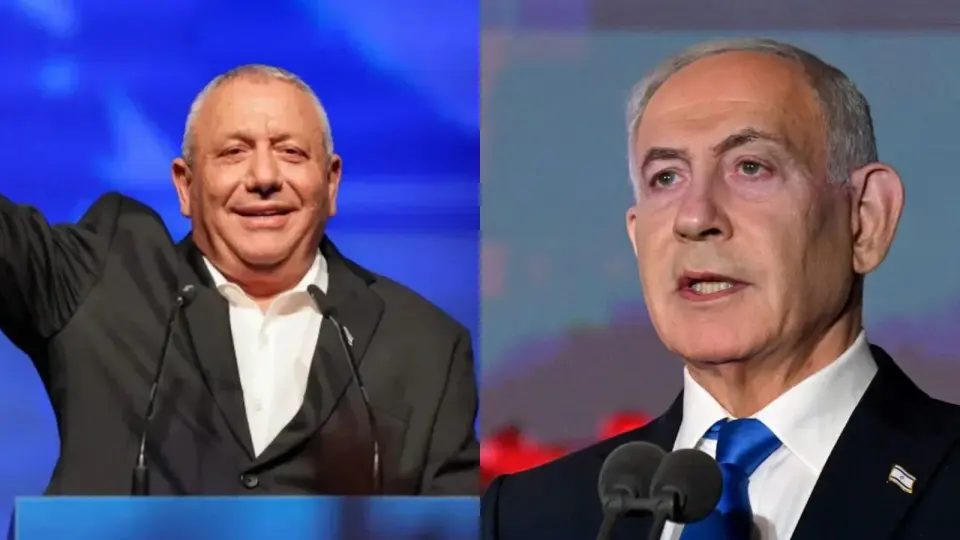
Israeli caretaker Prime Minister Benjamin Netanyahu has proposed a rotating premiership with his main rival, Gadi Eisenkot, offering to serve as alternate prime minister while Eisenkot leads the government first. The offer comes as Eisenkot faces a December 6 deadline to form a government without using a 14-day extension. While Netanyahu framed the move as a necessary sacrifice for national unity, Eisenkot and his allies have largely dismissed it as a stalling tactic, though the two leaders have agreed to hold negotiations on Sunday morning.
Key points
- Netanyahu stated he would 'set everything aside' to allow Eisenkot to serve first as prime minister, with Netanyahu serving as alternate, despite Likud being the largest party in the Knesset.
- Eisenkot accused Likud of stalling talks for two weeks and refusing to put concrete proposals on the table, claiming the goal was to trigger new elections.
- Eisenkot’s current coalition bloc holds only 36 seats, far short of the 61 needed for a majority in the 120-seat parliament.
- Netanyahu and Eisenkot spoke after the offer and agreed to meet on Sunday morning to discuss basic guidelines and policy issues.
- Eisenkot has until December 6 to form a government, with an option to extend the deadline by 14 days, which he has vowed not to use.
Background
The proposal follows the October 27, 2026, general election, which produced no clear majority. Israeli President Isaac Herzog instructed Eisenkot to form a government by December 6. Previous coalition talks collapsed in late November due to disagreements over the premiership and the inclusion of far-right ministers. Netanyahu’s current offer mirrors a 2020 unity deal with Benny Gantz, which ultimately failed when Netanyahu refused to pass a budget, triggering new elections.
How outlets are covering it
CNN and NDTV report that Netanyahu’s offer was met with skepticism from his opponents, with former Prime Minister Yair Lapid calling it a 'transparent con.' However, CNN notes that former Prime Minister Naftali Bennett, who previously criticized Netanyahu harshly, praised the move as the 'right decision.' Al Jazeera highlights internal divisions within Eisenkot’s camp, noting that the left-wing Democrats party suspended talks earlier in the week to protest the prospect of Netanyahu remaining in government. While NDTV and CNN focus on the immediate political maneuvering, Al Jazeera emphasizes the structural difficulty of reaching a 61-seat majority without controversial alliances with Arab or ultra-Orthodox parties.
Why it matters
The outcome of these negotiations determines whether Israel will form a new government or face another round of elections. A failure to reach a deal by December 6 could lead President Herzog to assign the task to another Knesset member or dissolve the parliament, prolonging political instability and delaying decisions on critical issues such as the state of inquiry into the October 7, 2023, failures and military conscription laws.
What to watch
Netanyahu and Eisenkot are scheduled to meet on Sunday morning to discuss basic guidelines and policy issues. If no agreement is reached, Eisenkot must decide whether to pursue alliances with ultra-Orthodox or Arab-majority parties, or risk failing to form a government by the December 6 deadline, which could trigger new elections.
- Netanyahu Offers To Let Rival Eisenkot Be PM First In Rotation Deal NDTV
- Running out of options, Israel’s Netanyahu offers power sharing deal to main rival Eisenkot CNN
- How Israel’s odd-couple politics could be close to toppling Netanyahu The Washington Post
- At risk of losing power, Netanyahu makes unity appeal to rival Eisenkot Reuters
- Israel unity government talks stall: What happens now? Al Jazeera
Want the full story? Read the original reporting
Read on NDTV