
New Zealand election leaves no clear winner as minor parties gain leverage
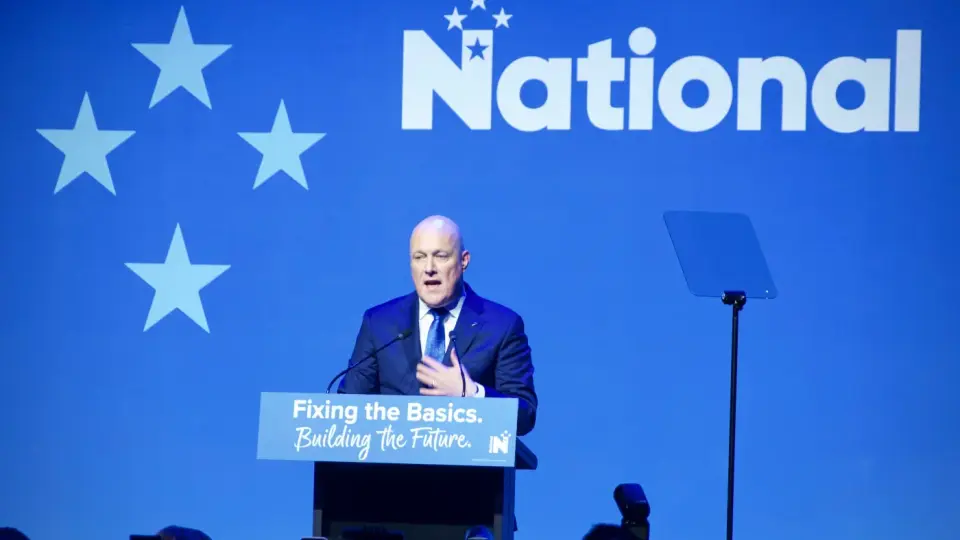
New Zealand’s 2026 general election produced a fragmented parliament with no clear majority. Prime Minister Christopher Luxon’s National Party holds a razor-thin 67-seat majority in a 131-seat house, but the result is too close to call pending the count of special votes on November 27. Both major parties, National and Labour, suffered historic declines, with their combined vote dropping to 58%, the lowest ever. Minor parties, including the centrist Opportunity Party, gained significant leverage, potentially acting as kingmakers. Luxon faces a precarious second term, while opposition leader Chris Hipkins did not concede defeat.
Key points
- No clear winner: Neither the National-led right nor the Labour-led left secured a decisive majority, leaving the outcome dependent on coalition negotiations.
- Minor party surge: The centrist Opportunity Party, led by Qiulae Wong, won seven seats and entered parliament for the first time, positioning itself as a potential kingmaker.
- Major party decline: National and Labour combined for just 58% of the party vote, the lowest ever, with both leaders facing significant internal and external challenges.
- Uncertain outcome: Final results are delayed until November 27 due to the counting of nearly 400,000 special votes, which could shift the balance of power.
- Economic and social discontent: Voters expressed deep dissatisfaction with economic conditions, healthcare, and housing, contributing to a record number of voters deserting the major parties.
Background
New Zealand’s political landscape has been dominated by the National and Labour parties for decades, but recent elections have seen a rise in minor party support. The 2023 election saw Labour’s Chris Hipkins take power after Jacinda Ardern’s resignation, but his tenure was marked by economic struggles and internal party conflicts. Luxon’s National Party won in 2023, promising to 'get the country back on track,' but faced challenges including a major Māori protest march and two leadership challenges. The 2026 election reflects growing voter disillusionment with both major parties, as evidenced by the historic decline in their combined vote share.
How outlets are covering it
NPR emphasizes the 'stinging rebuke' to major parties and the rise of the Opportunity Party, highlighting Luxon’s cautious optimism and Hipkins’s lack of benefit from economic discontent. The Washington Post focuses on the 'battle of the Chrises' and the uncertainty surrounding special votes, noting Luxon’s concession that the result is 'too close to call.' The Guardian stresses the 'flatlining' of major parties and the shift toward 'transformationist' minor parties, criticizing the major parties’ campaign strategies. BBC highlights the 'unusually gloomy' mood of voters, linking the election to broader economic and social issues, including youth unemployment and healthcare crises. All sources agree on the fragmented result but differ in emphasis: NPR and Washington Post focus on the immediate political implications, while The Guardian and BBC delve into the underlying voter sentiment and economic conditions.
Why it matters
The 2026 New Zealand election signals a significant shift in the country’s political dynamics, with minor parties gaining unprecedented leverage. The fragmented parliament and uncertain outcome could lead to prolonged coalition negotiations, potentially resulting in a government that must make deeper policy concessions to secure support. This election also reflects broader voter dissatisfaction with economic conditions, healthcare, and housing, which may influence future political strategies and policy priorities. The rise of the Opportunity Party and other minor parties could reshape New Zealand’s political landscape, challenging the dominance of the traditional major parties.
What to watch
Final results are expected on November 27, following the count of special votes. Coalition negotiations will likely begin after the final tally, with the Opportunity Party potentially playing a decisive role in determining the governing coalition. Luxon’s National Party faces the challenge of securing support from emboldened minor parties, while Hipkins’s Labour Party must navigate a more remote path to power. The outcome of these negotiations will shape New Zealand’s policy direction and address the economic and social issues that drove voter discontent.
- No clear winner in New Zealand election, as leaders prepare for weeks of talks NPR
- New Zealand’s election results are too close to call The Washington Post
- New Zealand’s two major parties are flatlining as dispirited voters seek transformational change The Guardian
- 'Flat', 'tired', 'cynical': Unusually gloomy Kiwis deliver New Zealand's tightest election in years BBC
- New Zealand in political limbo after knife-edge election CNN
Want the full story? Read the original reporting
Read on NPR