
Opposition Leaders File Petition Against Election Chief Amid Heavy Delhi Security Lockdown
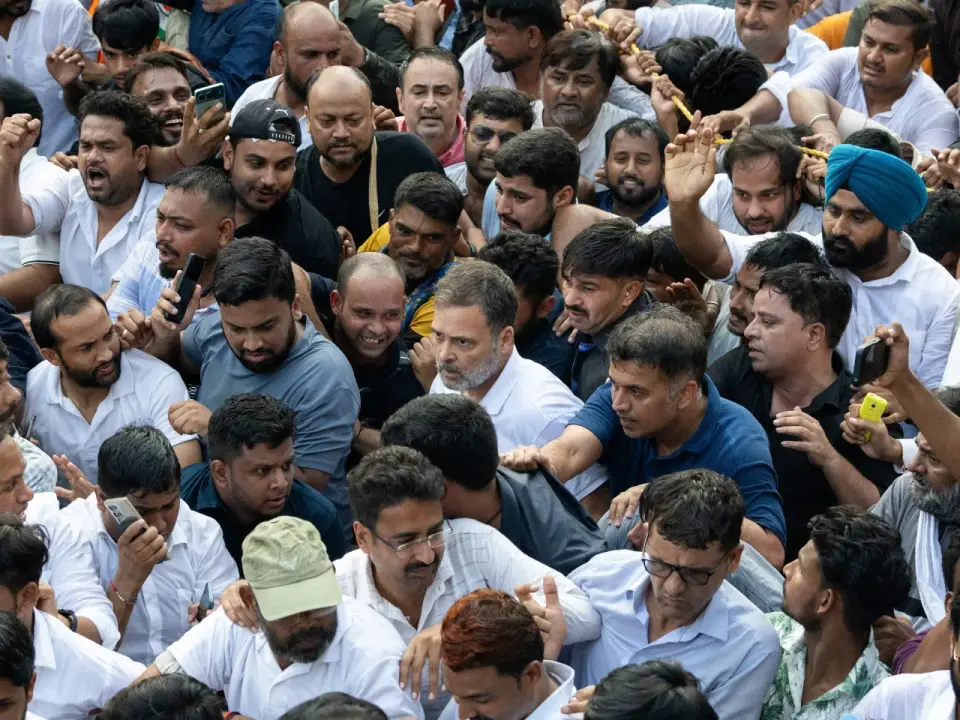
On October 12, 2026, Indian opposition leader Rahul Gandhi led a large march in New Delhi to demand the resignation of Chief Election Commissioner Gyanesh Kumar. Despite a massive police presence that prevented protesters from physically reaching the Supreme Court, opposition lawyers filed a petition challenging the Special Intensive Revision (SIR) of voter lists. The dispute centers on the removal of over 130 million names from electoral rolls, which critics allege disproportionately affects minorities to benefit the ruling BJP. While the government denies bias, the opposition and youth-led groups like the Cockroach Janta Party (CJP) continue to mobilize, signaling that protests will persist until Kumar steps down.
Key points
- Rahul Gandhi and other opposition leaders marched to the Supreme Court on October 12, submitting a petition against Chief Election Commissioner Gyanesh Kumar.
- Police deployed over 30,000 officers in New Delhi, erecting barricades that stopped the march from reaching the court, though some supporters breached initial lines.
- The protest follows the removal of more than 130 million names from voter lists during the Special Intensive Revision (SIR) since June 2025.
- Critics argue the SIR disproportionately disenfranchises minorities and vulnerable groups, while the Election Commission and BJP deny any partisan intent.
- Youth-led groups, including the Cockroach Janta Party, are adopting guerrilla tactics, using flash protests and social media to evade police detention.
Background
This escalation follows weeks of unrest beginning in late September 2026, when the Gen Z-led Cockroach Janta Party (CJP) first demanded Kumar's resignation. Earlier protests in Delhi and Mumbai saw thousands detained, with the CJP successfully forcing the resignation of Education Minister Dharmendra Pradhan in July 2026. The current crisis stems from the Special Intensive Revision (SIR) of voter rolls, which began in June 2025. While the Election Commission frames the SIR as a cleanup of duplicate entries, internal dissent among commissioners and reports of mass deletions have fueled allegations of electoral manipulation to favor the ruling Bharatiya Janata Party (BJP).
How outlets are covering it
Al Jazeera emphasizes the physical confrontation, noting that while police blocked the march, Gandhi’s team submitted the petition remotely, and highlighting the shift from youth-led humor to broader opposition anger. BBC focuses on the legal and procedural aspects, noting that Chief Justice Surya Kant acknowledged the petition but stated the matter was already sub judice. The Guardian highlights the demographic impact, stressing that the 130 million deletions disproportionately affect Muslim voters and other minorities, while NDTV focuses on the political strategy, describing the march as a 'tandav' (dance) to mobilize all citizens against the government. All sources agree on the heavy security deployment and the opposition's refusal to back down, but differ on the framing: some view it as a democratic crisis, while the BJP and Election Commission view it as an attempt to destabilize legitimate electoral processes.
Why it matters
The standoff threatens the integrity of India's world's largest democracy. If the Supreme Court halts the SIR or forces Kumar's resignation, it could alter the electoral landscape for upcoming state elections. Conversely, if the government maintains its stance, it risks further eroding public trust in electoral institutions. The heavy-handed police response, including the detention of journalists and MPs, has drawn international criticism and signals a potential shift away from the democratic norms that have characterized India since the end of the Emergency in 1975.
What to watch
The Supreme Court is expected to hear the petition at the earliest possible opportunity. The CJP and opposition parties have indicated they will continue protests, potentially seeking new dates for gatherings if police refuse permission. Analysts predict the movement will shift from youth-led flash protests to sustained opposition-led mobilization, with the government likely maintaining a heavy security presence in central Delhi to prevent large-scale disruptions.
- Indian opposition defies lockdown, marches to demand election chief sacking Al Jazeera
- India's opposition parties march to top court as protests over voter lists escalate NPR
- Rahul Gandhi leads opposition march to top court to demand election chief resign BBC
- Indian opposition figures lead march to police barricades around supreme court The Guardian
- Rahul Gandhi Leads Massive Rally In Delhi. Then A Supreme Court Visit NDTV
Want the full story? Read the original reporting
Read on Al Jazeera