
Piddington declares symbolic independence to protest asylum accommodation
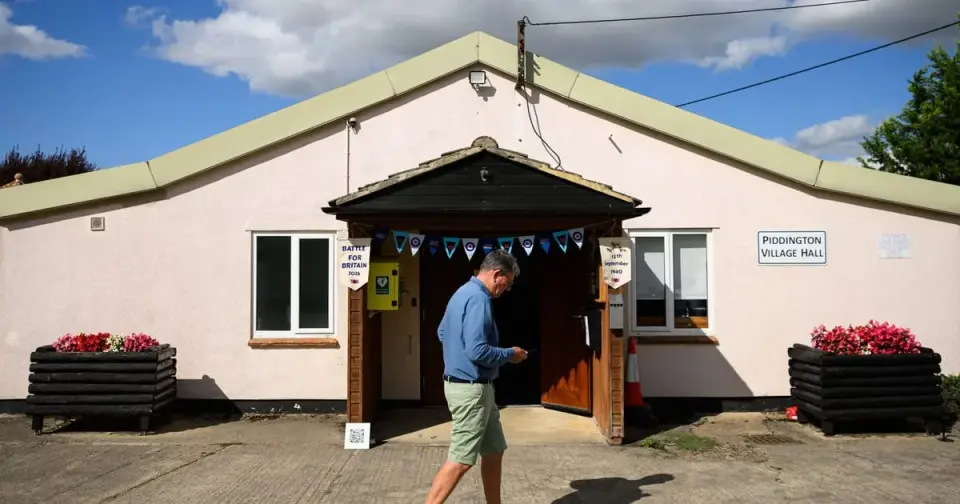
Residents of Piddington, Oxfordshire, voted 285 to 26 in a non-binding referendum to secede from the UK, protesting government plans to house up to 1,256 asylum seekers at a nearby Ministry of Defence site. The symbolic vote highlights deep local opposition to the accommodation plan, which critics say was imposed without adequate consultation. While the result has no legal effect, it has drawn sharp responses from the government, opposition parties, and refugee advocacy groups, intensifying a national debate over asylum processing and community burden.
Key points
- Piddington’s parish council organized a non-binding referendum on September 15, 2026, with 285 votes for independence, 26 against, and one spoiled ballot.
- The protest targets a Home Office plan to accommodate up to 1,256 male asylum seekers at the MoD Bicester site, located half a mile from the village.
- Parish Chair Tim McNally declared the area the 'Principality of Piddington,' emphasizing the vote as a message of local democratic dissent.
- Culture Secretary Lisa Nandy acknowledged 'serious frustration' but cited faster asylum processing and record removals as evidence of progress, while stressing the need to share accommodation burdens fairly.
- Opposition figures, including Reform UK’s Suella Braverman and Conservative leader Kemi Badenoch, seized on the issue, with Badenoch calling the forced accommodation 'only slightly less absurd' than independence.
- Refugee Council analyst Jon Featonby warned that housing asylum seekers in remote military barracks exacerbates insecurity and undermines social cohesion, urging against scapegoating migrants.
Background
The Piddington dispute unfolds amid a broader UK crisis over asylum accommodation, including anti-migrant protests at ports like Dover and Portsmouth in early September 2026. The government has cited a 40% drop in English Channel crossings this year compared to 2025, but tensions persist over the placement of asylum seekers in cheaper, often working-class areas. Previous similar plans for the MoD Bicester site in 2005 were abandoned, and recent disturbances in Thetford, Norfolk, have heightened concerns about the targeting of deprived communities for asylum accommodation.
How outlets are covering it
Politico and The Guardian frame the vote as a symbolic act of local democracy, with Politico emphasizing the 'scale of local opposition' and The Guardian highlighting the government's failure to engage with residents. NBC News and BBC News note the darker undercurrents, including far-right activism and comparisons to the 1940 Battle of Britain, while also reporting on the government's efforts to speed up asylum processing. The Refugee Council, cited by NBC and The Guardian, contrasts the government's narrative by arguing that military barracks are unsuitable for asylum seekers and that the dispute risks undermining social cohesion. Opposition parties, as reported by Politico and BBC, use the issue to criticize the government's 'open borders' policy, while the government, via Lisa Nandy, stresses the need to share the burden of accommodation more equitably across communities.
Why it matters
The Piddington referendum underscores the deepening political and social divide over asylum accommodation in the UK, with local communities feeling excluded from decisions that affect their safety and property values. The symbolic secession vote, while legally meaningless, has become a flashpoint for broader debates on immigration policy, community burden, and the government's approach to asylum processing. It also highlights the risk of far-right exploitation of local grievances, as seen in earlier anti-migrant protests, and the government's challenge in balancing humanitarian obligations with public sentiment.
What to watch
The public consultation on the MoD Bicester site will close on September 17, 2026, potentially influencing the government's decision on the accommodation plan. Local residents may pursue further symbolic actions, such as renaming the village or electing new leaders, as suggested by Politico. The government is expected to address the 'serious frustration' raised by Piddington, possibly by revisiting the site selection or accelerating asylum processing to reduce the need for temporary accommodation. Opposition parties will likely continue to leverage the issue in the lead-up to future elections, while refugee groups will press for more suitable and humane accommodation options.
- Tiny village votes to quit UK in protest at asylum-seeker accommodation politico.eu
- This English Village Is Threatening to Quit the U.K. Over Planned Asylum Camp WSJ
- English village votes to leave the U.K. over migrant housing plan NBC News
- English village votes to leave UK in protest over migrant housing plan The Guardian
- Why is a village holding a referendum on leaving the UK? BBC
Want the full story? Read the original reporting
Read on politico.eu