
Paraguay President Santiago Peña Resigns After Ueno Bank Collapse Triggers Impeachment and Protests
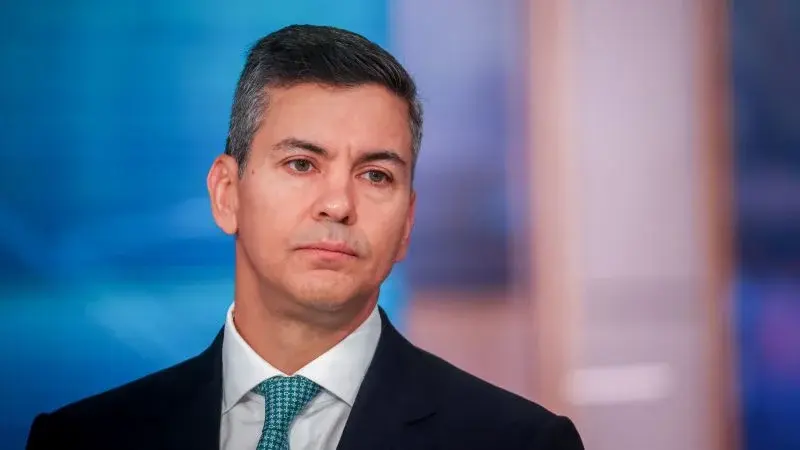
Paraguayan President Santiago Peña resigned on Thursday after the central bank seized Ueno Bank due to insolvency, freezing millions of customer accounts. The crisis, linked to Peña’s prior business ties with the bank, triggered impeachment proceedings and widespread protests in the capital. Congress must now decide whether to accept his resignation, with Vice President Pedro Alliana poised to succeed him.
Key points
- President Santiago Peña submitted his resignation via a video message on social media, citing the need to preserve national stability and democratic institutions.
- The Central Bank of Paraguay seized Ueno Bank after its solvency ratio fell below 50% of the legal minimum following adjustments to its financial statements.
- Ueno Bank, which served approximately 2.9 million customers in a country of 6.1 million, froze operations, leaving millions unable to access savings and public pensions.
- Paraguay’s Chamber of Deputies began a special session to debate impeachment charges brought by 35 lawmakers, accusing Peña of 'serious and systematic dereliction of duty.'
- Protests erupted in Asunción, with demonstrators demanding accountability for the loss of savings and calling for Peña’s removal, while riot police used pepper spray to disperse crowds.
Background
Paraguay has faced a rapid escalation of financial and political turmoil since the central bank’s intervention in Ueno Bank. Earlier reports indicated that the digital lender, which grew to hold roughly $800 million in public deposits, collapsed after regulators identified risky insider lending. The crisis exposed deep connections between the bank’s owners and President Peña, who maintained a stake in the bank’s holding company until 2025. The seizure left millions of customers stranded, with regulators guaranteeing only 97% of deposits up to $38,000, while larger sums, including state pension funds, remain uncertain.
How outlets are covering it
CNN and AP News emphasize the procedural aspects of the resignation, noting that Congress must formally accept or reject Peña’s decision, while BBC highlights the political fallout, including the withdrawal of support from Peña’s own party. AP News provides detailed context on the bank’s rapid expansion and the central bank’s earlier warnings about risky lending practices, which Peña dismissed as a smear campaign. All sources agree on the immediate impact on depositors and the public anger fueled by the loss of savings and pensions, but AP News offers more granular details on the regulatory failures and the detention of eight senior Ueno executives.
Why it matters
The resignation of President Peña marks a significant political crisis in Paraguay, exposing vulnerabilities in its financial regulatory framework and the influence of political connections on banking oversight. The collapse of Ueno Bank, which held substantial public funds, has triggered widespread economic uncertainty and social unrest, potentially affecting investor confidence in the country’s previously stable economic environment. The outcome of Congress’s decision on the resignation and the recovery of frozen deposits will determine the next phase of Paraguay’s political and financial stability.
What to watch
Paraguay’s Congress is expected to vote on whether to accept or reject President Peña’s resignation. If accepted, Vice President Pedro Alliana will assume the presidency. Meanwhile, authorities are working to transfer customer accounts and assets to other banks, with officials promising to begin repaying depositors. The legal proceedings against the 27 charged bank officials and business associates will continue, and public protests may persist until there is clarity on the recovery of frozen funds.
- President of Paraguay resigns amid crisis over collapse of digital bank CNN
- Paraguay’s swaggering digital bank has fallen The Economist
- Paraguay President Santiago Peña resigns after bank collapse BBC
- How one bank’s collapse is upending Paraguay, trapping savings and threatening its president AP News
- Paraguay bank crisis spurs lawmakers' calls to impeach president Reuters
Want the full story? Read the original reporting
Read on CNN