
Paraguay’s Ueno Bank collapse ousts President Peña, exposing elite ties and public fund risks
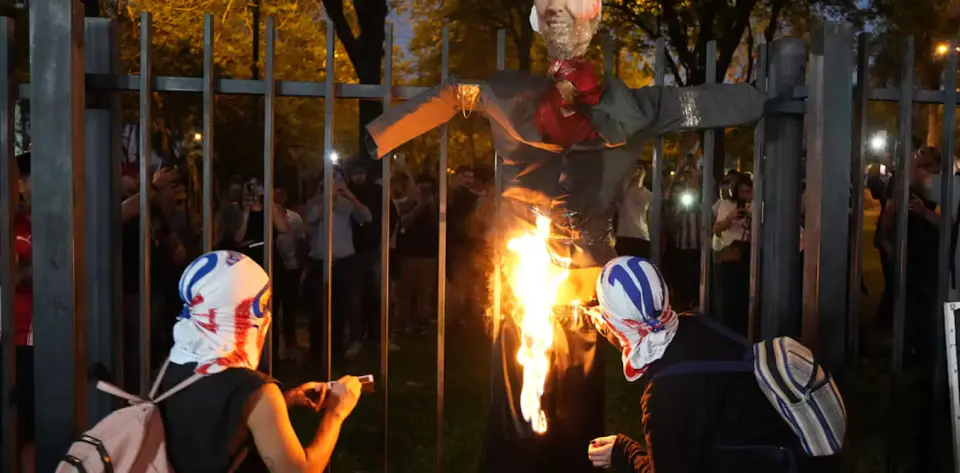
The collapse of digital lender Ueno Bank in November 2026 triggered a political crisis in Paraguay, resulting in the impeachment and arrest of President Santiago Peña. The bank, which served nearly 3 million customers, was seized by the central bank after solvency ratios fell below legal minimums. Prosecutors allege Peña used his position to channel public funds into the bank despite personal financial ties to its parent company. Vice President Pedro Alliana was sworn in as interim president, vowing to compensate depositors, while widespread protests erupted over frozen savings and perceived elite impunity.
Key points
- Ueno Bank was placed into resolution on November 2, 2026, after its solvency ratio dropped below half the legal minimum, freezing assets for approximately 2.9 million customers.
- President Santiago Peña resigned on November 5 but was impeached and removed by the Senate on November 6 to strip him of immunity; he was subsequently arrested and charged with breach of trust and administration for personal gain.
- Prosecutors allege Peña influenced public agencies to deposit roughly $850 million in state funds, including $355 million from the social security system, into Ueno despite his shares in its holding company until March 2025.
- Vice President Pedro Alliana was sworn in as interim president on November 6, pledging to compensate affected depositors, with $158 million already paid out to 1.2 million customers by November 8.
- Former Central Bank head Carlos Carvallo, who previously led Ueno, was also arrested and charged with producing false public documents and breach of trust.
Background
Paraguay had previously faced banking crises in the late 1990s and early 2000s, which exposed weak supervision and connected lending. The country had recently gained international attention as a 'Dubai of South America' due to low taxes and business-friendly policies, attracting conservative investors and aligning closely with the US administration. The IMF projected 4.4% economic growth for 2026, and Paraguay had achieved investment-grade credit ratings from Moody’s and S&P in 2024 and 2025, respectively.
How outlets are covering it
The Conversation emphasizes the structural contradiction between Paraguay’s image as a stable economic model and the reality of regulatory capture, noting that Ueno’s growth relied on close ties between political elites and public institutions. NPR highlights the immediate human impact, with citizens reporting frozen wages and pensions, and frames the crisis as a reckoning with the Colorado Party’s patronage networks. BBC focuses on the procedural aspects of Peña’s removal, noting that impeachment stripped him of immunity, and quotes his defense lawyer calling the allegations 'reckless.' Al Jazeera provides a skeptical view on long-term accountability, citing analyst Andrew Nickson who argues that Paraguay’s politicized judicial system will likely result in scapegoating rather than meaningful reform for powerful figures like former President Horacio Cartes. While all sources agree on the factual timeline of the collapse and impeachment, they differ on the interpretation of the crisis’s impact: The Conversation and NPR view it as a potential catalyst for institutional change, whereas Al Jazeera suggests the political establishment will remain intact.
Why it matters
The crisis undermines Paraguay’s reputation as a stable financial hub in Latin America, potentially deterring foreign investment. It exposes vulnerabilities in the oversight of public funds, particularly the social security system, and raises questions about the independence of regulatory bodies. The political fallout challenges the dominance of the Colorado Party, which has held power for decades, and may influence voter sentiment ahead of the 2028 presidential election. The freeze on savings has disrupted the real economy, affecting small businesses and daily transactions, highlighting the systemic risks of concentrated financial power.
What to watch
Prosecutors are expected to continue investigating Peña and other officials, with potential trials in the coming months. The interim government under Pedro Alliana must manage the payout of remaining depositors and restore confidence in the banking system. Analysts predict that while the Colorado Party may survive the immediate crisis, the political establishment faces pressure to address corruption and regulatory failures. The 2028 election may see increased scrutiny of the party’s leadership, though some experts doubt significant structural reforms will occur.
- Paraguay’s bank collapse brought down a president – and exposed as myth the nation’s status as a ‘Dubai of South America’ The Conversation
- A Country’s President Led to a Bank’s Stunning Rise, and Its Fall The New York Times
- How a bank collapse left millions in limbo and toppled Paraguay's president NPR
- Paraguay's President Santiago Peña impeached and under house arrest BBC
- Paraguay raids ex-president’s home: Why a bank crash brought down Pena Al Jazeera
Want the full story? Read the original reporting
Read on The Conversation