
Sokolov’s Sanctions Waiver and $201M Fund Raise Questions on Conflicts of Interest
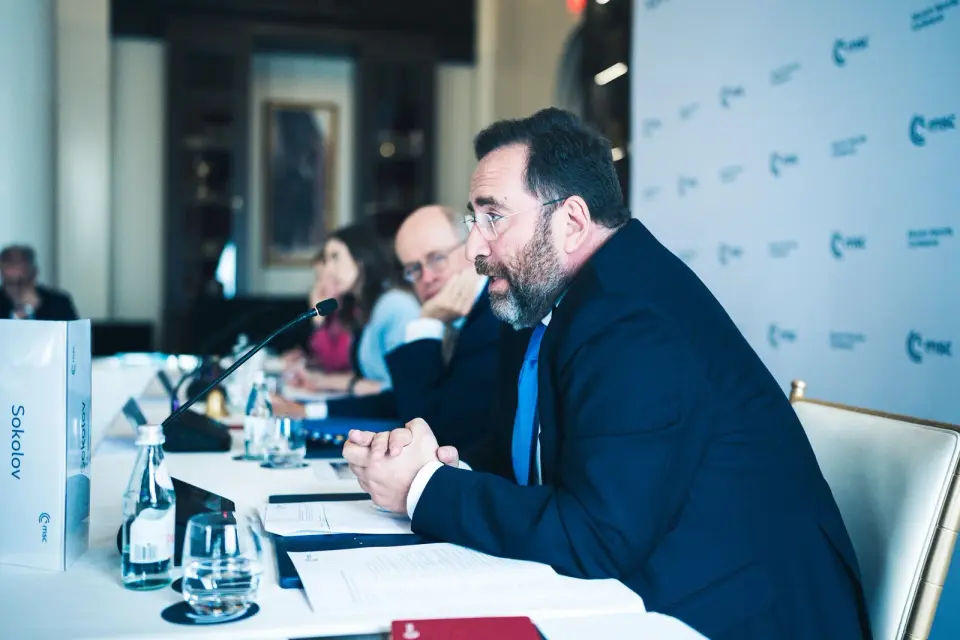
Russian-American investor Konstantin Sokolov received a rapid Treasury sanctions waiver to acquire a copper mine in Armenia, coinciding with his appointment to lead a $201 million U.S. government fund in the region. Despite his recent surge in political donations to Trump-aligned causes, his background remains opaque, and critics warn of potential conflicts of interest between his private business dealings and public role.
Key points
- Treasury’s OFAC issued a license to Dynamic Frontier Holdings LLC, managed by Sokolov, in January 2025, allowing it to bypass sanctions on VTB Bank to purchase an Armenian copper mine.
- The State Department appointed Sokolov to chair the Trans-Caspian Enterprise Fund, a $201 million initiative aimed at securing rare earths and AI infrastructure in the Caucasus.
- Sokolov donated over $14 million to Republican causes in 2025, including $12 million to MAGA Inc., and contributed to the White House ballroom project.
- Former State Department official Daniel Fried criticized Sokolov’s appointment, citing potential conflicts of interest between his private investments in Armenia and his public fund responsibilities.
- Sokolov’s spokesperson denied any conflict of interest or link between his donations and the sanctions waiver, though he did not address specific allegations regarding his biography.
Background
This story follows earlier concerns about opaque political financing in the 2026 midterms, where anonymous dark money influenced key races. It also connects to debates over the White House ballroom project, which faced legal challenges regarding public input and historic preservation. Sokolov’s sudden prominence in 2025, including a $100 million gift to the University of Chicago, marks a stark contrast to his minimal public profile prior to 2008.
Why it matters
The case highlights potential overlaps between private business interests and public policy roles in U.S. foreign investment, raising questions about oversight and ethical standards in national security-related funds. It also underscores the influence of political donations on regulatory decisions, particularly in regions critical to supply chain security and geopolitical strategy.
What to watch
Congressional oversight of the Trans-Caspian Enterprise Fund remains limited due to national security exemptions. Sokolov’s spokesperson has not provided further comment on specific allegations, and the fund’s operations in the Caucasus will likely face scrutiny from regional experts and former officials.
Want the full story? Read the original reporting
Read on Talking Points Memo