
Somalia Supreme Court voids presidential term extension, orders elections within 90 days
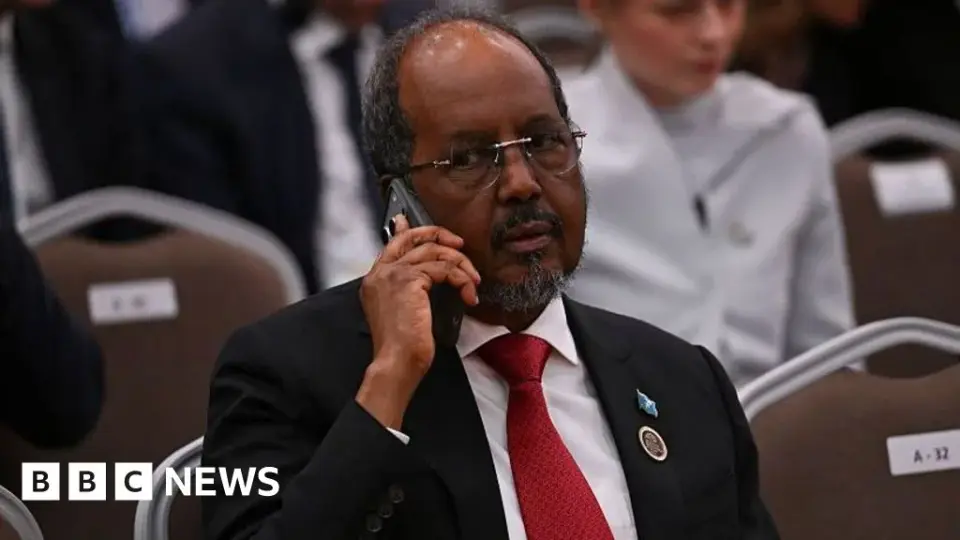
Somalia’s Supreme Court ruled that President Hassan Sheikh Mohamud’s one-year term extension was unlawful, declaring his dismissal of Chief Justice Bashe Yusuf Ahmed null and void. The court ordered political leaders to agree on an electoral plan within 30 days and hold elections within 90 days, disrupting the government’s 2027 schedule. The ruling escalates a standoff between the presidency and judiciary, with former leaders accusing the president of deploying security forces to the court compound.
Key points
- The Supreme Court ruled that constitutional changes approved in March could not be applied retrospectively to Mohamud’s current term, which expired in May.
- The court declared the dismissal of Chief Justice Bashe Yusuf Ahmed 'null and void,' stating the president lacked the authority to remove him outside established constitutional procedures.
- Mohamud appointed Ibrahim Idle Suleiman as the new chief justice, a move the court rejected as an interference with judicial independence.
- The court mandated that political leaders agree on an electoral plan within 30 days and hold elections within 90 days, conflicting with the electoral commission’s schedule for April 2027.
- Former Prime Minister Hassan Ali Khaire accused the president of deploying security forces to the Supreme Court and attempting to arrest the chief justice, though AFP could not independently verify the deployment.
- Opposition groups and regional administrations in Puntland and Jubaland reject the 2027 electoral timetable, while Mohamud has called for national talks from November 14 to 18 to resolve the deadlock.
Background
Somalia has not held nationwide direct elections since 1969 and relies on a clan-based system where elders select representatives, a method used since 2012. The country has faced civil war for over 30 years, with al-Shabab controlling many rural areas. Uganda, the largest contributor to the African Union mission fighting militants, announced plans to withdraw its troops by the end of 2026, adding to security concerns amid the political turmoil.
Why it matters
The ruling threatens to destabilize Somalia’s governance by invalidating the current presidential mandate and disrupting the electoral timeline. The confrontation between the presidency and judiciary risks further political fragmentation, potentially weakening the state’s ability to combat al-Shabab as international security support diminishes. The uncertainty over elections could prolong the reliance on the contested clan-based system, delaying the transition to direct democratic elections.
What to watch
Political leaders must agree on an electoral plan within 30 days, and elections must be held within 90 days according to the court’s order. Mohamud is scheduled to convene national talks from November 14 to 18, though opposition leaders question his legitimacy to do so. The outcome of these talks and the court’s enforcement of its rulings will determine whether the 2027 electoral schedule is abandoned or if a new timeline is established.
Want the full story? Read the original reporting
Read on BBC