
Spain’s Transport Minister Refuses Resignation Amidst Deadly Rail Crash Investigation
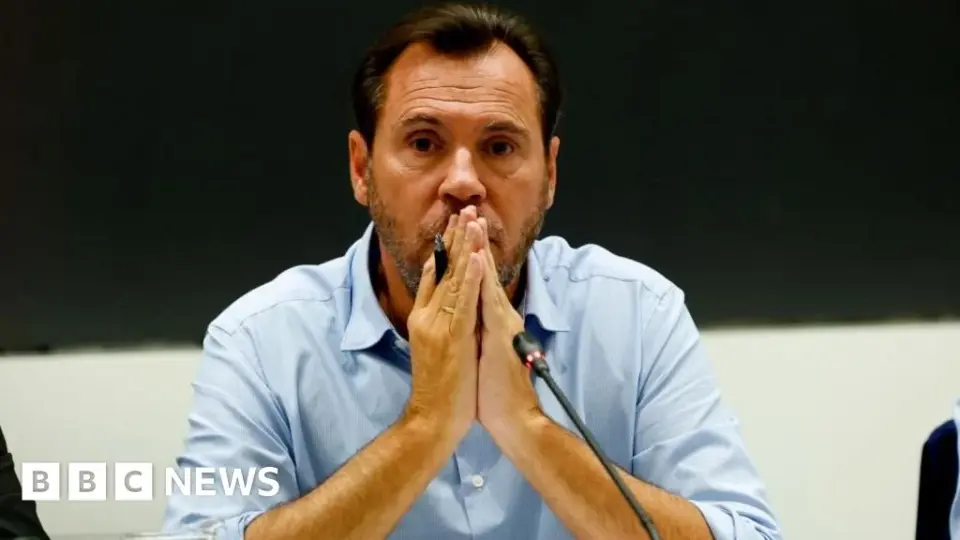
Spain’s transport minister Óscar Puente has refused to resign following a high-speed rail collision near Toledo that killed at least 69 people. The crash, the second major incident on the Madrid-Seville line in 2026, occurred when a moving Renfe train struck a stationary Iryo train. Preliminary reports indicate a control center error allowed the train to resume movement without speed restrictions after a signaling failure. While Prime Minister Pedro Sánchez declared national mourning and acknowledged broken public trust, Puente insists his role is to resolve the crisis, not step down, despite intense pressure from opposition parties and unions.
Key points
- Óscar Puente stated he will not resign, arguing his duty is to investigate the disaster rather than leave his post.
- At least 69 people died in the collision near Urda, Toledo, with 70 others reported missing and 39 hospitalized.
- Investigators found the Renfe train was traveling between 160 and 200 km/h when it hit the stationary Iryo train.
- Leaked audio suggests the control center cleared the train to move despite knowing another train was stalled ahead.
- Prime Minister Pedro Sánchez declared three days of national mourning and admitted public trust in the rail network is broken.
Background
This incident follows a similar crash in January 2026 near Adamuz, which killed 46 people on the same Madrid-Seville route. Both disasters involve the same operators, Renfe and Iryo, and have intensified scrutiny of Spain’s high-speed rail safety standards. The current crisis occurs ahead of upcoming national elections, adding political urgency to the investigation.
How outlets are covering it
BBC and ABC News report that Puente faces significant pressure to resign from the conservative People’s Party, trade unions, and demonstrators, but he maintains his position to ensure accountability. The Guardian highlights that Puente defended the rail system’s safety while acknowledging the need for improvements, noting that the control center had 16 operators, which he described as normal staffing levels. ABC News emphasizes the frustration of families still searching for missing loved ones, with 52 bodies yet to be identified. The Guardian notes that Puente suggested the crash was an 'inexplicable' human error, while ABC News points out that the Interior Ministry initially reported a higher death toll before revising it downward. All sources agree that the incident has damaged public confidence in Spain’s rail infrastructure, with Sánchez vowing to restore trust through systemic changes.
Why it matters
The refusal of the transport minister to resign highlights a deep political divide in Spain over accountability for infrastructure failures. With two major rail disasters in one year, the incident threatens to overshadow the upcoming election campaign and could lead to significant reforms in railway safety protocols and control center operations. The ongoing identification process and public outrage underscore the human cost of these systemic failures.
What to watch
Investigators will continue to analyze the control center’s decision-making process and the technical failures that led to the crash. The government is expected to review safety protocols across the high-speed rail network, potentially accelerating the rollout of the ERTMS signaling system. Political pressure on Puente will likely intensify as the investigation progresses, with opposition parties demanding his removal if human error is confirmed.
- Spain train crash: Transport minister says he won't resign over disaster BBC
- People of 27 nationalities may be among those killed or injured in Spain train crash, Sánchez says – Europe live The Guardian
- Why Does Spain Keep Having Deadly Rail Accidents? WSJ
- Death toll climbs to at least 69 as Spanish officials probe high-speed train crash ABC News - Breaking News, Latest News and Videos
- Spain’s latest deadly train crash puts human error and systemic failure under scrutiny Dallas News
Want the full story? Read the original reporting
Read on BBC