
Supreme Court clears path for Puigdemont’s return after rejecting Vox appeal
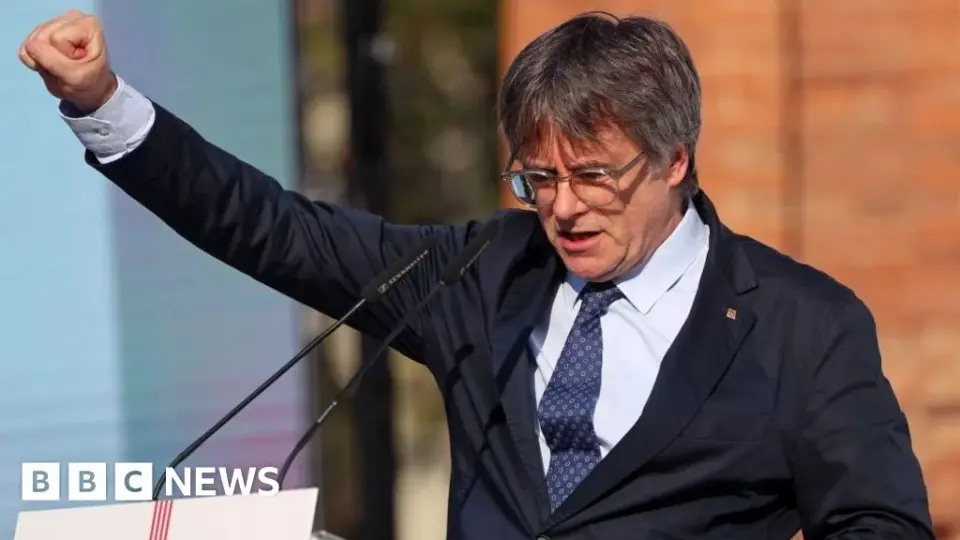
Spain’s Supreme Court has rejected a far-right appeal to reinstate arrest warrants for former Catalan president Carles Puigdemont and two ex-ministers, allowing them to return to Spain. This decision follows a Constitutional Court ruling that overturned the Supreme Court’s earlier exclusion of these figures from a 2024 amnesty law. Puigdemont, who fled to Belgium after the 2017 independence referendum, remains a political figure but has not yet announced a return date.
Key points
- The Supreme Court upheld the lifting of national arrest warrants for Puigdemont, Lluís Puig, and Toni Comín, linked to the 2017 Catalan independence referendum.
- The court rejected an appeal by the far-right Vox party, which had challenged the cancellation of these warrants.
- This ruling follows the Constitutional Court’s earlier decision this month to overturn the Supreme Court’s previous stance that excluded Puigdemont from the 2024 amnesty law due to alleged financial crimes.
- Puigdemont has lived in Belgium since fleeing in 2017, though he briefly returned to Barcelona in 2024 before escaping police pursuit.
- Toni Comín plans to travel to Madrid this week for administrative procedures related to his status as a Member of the European Parliament.
- Catalan independence is now a marginal political issue in Spain, overshadowed by housing and immigration concerns, though Puigdemont’s party JxCat remains influential in supporting the current government.
Background
This development concludes a lengthy legal dispute that began after the 2017 referendum, which triggered direct rule in Catalonia and Puigdemont’s exile. In 2024, the Spanish government passed an amnesty law for separatist figures, but the Supreme Court initially excluded Puigdemont and others due to financial crime charges. The Constitutional Court’s recent intervention and the Supreme Court’s final ruling on October 19, 2026, have resolved this legal impasse. Previous coverage noted that while the warrant was lifted, the broader political conflict between Catalonia and Madrid remains unresolved, and Puigdemont has continued to campaign from abroad.
How outlets are covering it
The BBC and UA.NEWS report consistent facts regarding the Supreme Court’s rejection of the Vox appeal and the lifting of arrest warrants for Puigdemont, Lluís Puig, and Toni Comín. Both sources emphasize the timeline of legal events, including the 2024 amnesty law and the Constitutional Court’s earlier overruling. The BBC provides additional context on the political landscape, noting that Catalan independence is now marginal and that Puigdemont’s party JxCat supports Prime Minister Pedro Sánchez’s government. UA.NEWS focuses more narrowly on the legal mechanics and the immediate implications for the individuals involved. The secondary source from Demócrata was inaccessible due to a 403 error, so no additional perspectives could be synthesized from it. There are no significant disagreements between the available sources, but the BBC offers a broader political analysis while UA.NEWS sticks to the legal and procedural details.
Why it matters
This ruling marks the end of a nearly decade-long legal standoff involving one of Spain’s most prominent separatist leaders. It allows Puigdemont to return to Spain without fear of arrest, potentially reshaping the political dynamics in Catalonia, where his party JxCat is losing ground to far-right pro-independence groups. The decision also highlights the ongoing tensions between the Spanish judiciary and political parties, particularly the far-right Vox, which opposed the amnesty. As Spain approaches a general election, the return of key separatist figures could influence voter sentiment and party alliances, even though independence is no longer a dominant national issue.
What to watch
It is not yet known when Puigdemont will return to Spain, though he has stated his role was to internationalize the conflict. Toni Comín is expected to travel to Madrid this week for administrative procedures. The political landscape in Catalonia may shift as JxCat struggles to retain voters against the rising Catalan Alliance party. Spain’s general election next month could see the far-right enter government for the first time, potentially altering the balance of power in Madrid and Catalonia.
- Catalonia's former rebel president can return to Spain, court rules BBC
- Turull celebrates the amnesty for Puigdemont as a victory Demócrata
- Llarena delays the archiving of the case against Puigdemont, but sees the amnesty as inevitable Diari ARA
- Spanish Supreme Court judge confirms lifting of Puigdemont's arrest warrant, says amnesty must apply Catalan News
- Spanish court allows Puigdemont to return without threat of arrest — BBC News UA.NEWS
Want the full story? Read the original reporting
Read on BBC