
Sweden's Left Bloc Clinches Narrow Victory, Ending Kristersson's Premiership
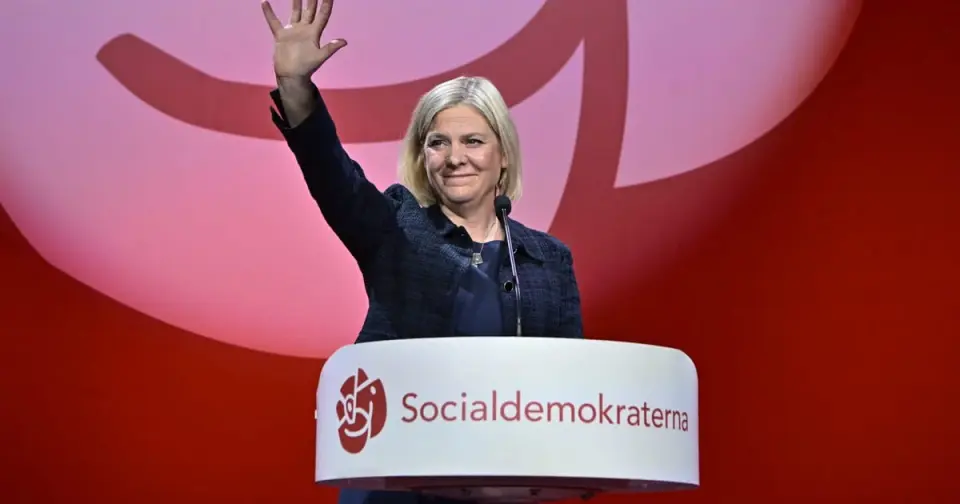
Sweden's center-left alliance won the general election by a three-seat margin, forcing Prime Minister Ulf Kristersson to resign. Magdalena Andersson is expected to lead a new government, but coalition talks face significant hurdles.
Key points
- The center-left bloc won 176 seats in the 349-seat Riksdag, narrowly defeating the right-wing bloc's 173 seats.
- Prime Minister Ulf Kristersson resigned, citing the need for a new government to be formed.
- Magdalena Andersson, leader of the Social Democrats, is expected to become the new prime minister.
- The far-right Sweden Democrats lost votes and seats, failing to enter government for the first time since 2010.
- Coalition talks are complicated by disagreements between the Left Party and the Center Party over ministerial positions.
Background
Sweden's political landscape has been defined by a tight contest between a center-left alliance and a center-right grouping that included the far-right Sweden Democrats. The Sweden Democrats, founded by Nazi sympathizers in the 1980s, rebranded in the mid-2000s and became the second-largest party in 2022, offering outside support to the current government. This election marked a significant shift, with the far-right party losing ground for the first time since entering parliament in 2010.
How outlets are covering it
Politico and The New York Times both highlight the narrow margin of victory for the center-left bloc, emphasizing the significance of the far-right Sweden Democrats' loss. The New York Times frames this as a broader European trend, noting that Sweden is bucking the rise of far-right nationalism. BBC focuses on the procedural aspects of the resignation and the challenges ahead in forming a new government, noting the potential for a prolonged negotiation process. All sources agree on the final seat count and the resignation of Kristersson, but differ in their emphasis on the broader political implications and the specific hurdles in coalition formation.
Why it matters
This election result signals a potential shift in Sweden's political direction, moving away from the far-right influence that had gained significant ground in recent years. The outcome could have implications for migration policy, climate initiatives, and economic strategies, as Andersson has promised a focus on fair migration, green transition, and improved healthcare. The success of the center-left bloc also suggests a broader trend in European politics, where voters may be rejecting far-right platforms in favor of more moderate, center-left alternatives.
What to watch
Magdalena Andersson will begin formal negotiations with the other parties in her bloc to form a government. The process could take weeks, with the earliest possible swearing-in date being September 29. The main challenge will be resolving disagreements between the Left Party and the Center Party over ministerial positions. If a coalition cannot be formed, there is a possibility of a grand coalition between the Social Democrats and the Moderates, though this is considered unlikely by political insiders.
- Left alliance wins Swedish election as PM Kristersson quits politico.eu
- Sweden Swings Back Left, Bucking a Trend in Europe The New York Times
- Sweden’s center-left opposition wins election, SVT says CNN
- The night Sweden's far-right stopped winning Reuters
- Swedish PM Kristersson resigns after election loss BBC
Want the full story? Read the original reporting
Read on politico.eu