
Taiwan Legislature Passes NT$20,000 Universal Cash Handout Despite Opposition and Absenteeism
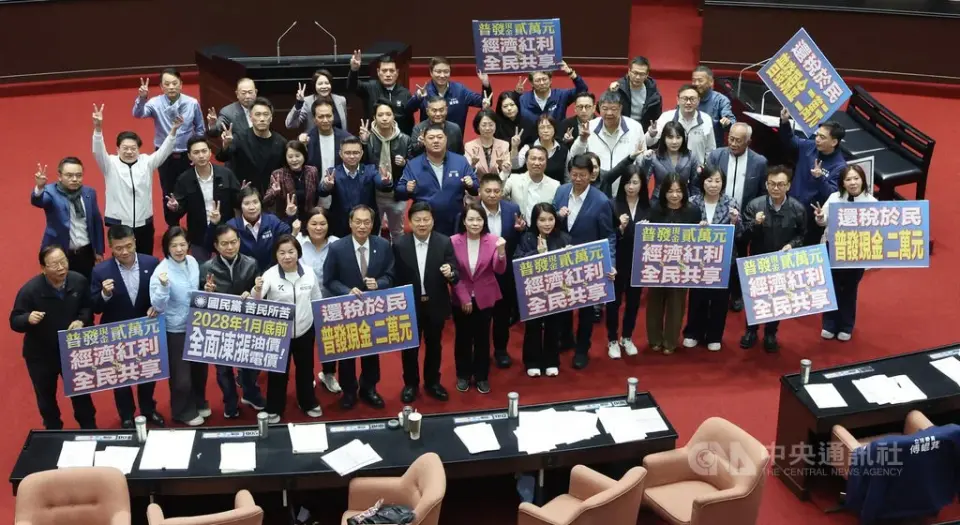
The Legislative Yuan passed a special bill authorizing a NT$20,000 cash handout for all citizens by a 50-46 vote on November 20, 2026. The Kuomintang (KMT) secured passage despite unified opposition from the ruling Democratic Progressive Party (DPP) and the Taiwan People’s Party (TPP), as 13 DPP lawmakers absent from the vote were campaigning in upcoming local elections. The bill, which doubles the previous year’s NT$10,000 payout, faces criticism over potential debt accumulation, with opponents arguing the government would need to borrow over NT$300 billion to fund the distribution given current budget surpluses.
Key points
- The special bill passed its third and final reading with a 50-46 vote, with all eight TPP lawmakers voting against it.
- 13 DPP lawmakers were absent from the vote, primarily because they were campaigning for the November 28 mayoral and county magistrate elections.
- KMT Legislator Hsieh Lung-chieh argued that high tax surpluses, driven by AI-related business activity, justify sharing economic benefits with the public.
- DPP caucus chief Chuang Jui-hsiung estimated the NT$20,000 payout would cost NT$460 billion, requiring the government to borrow over NT$300 billion since the current budget surplus is under NT$100 billion.
- TPP caucus convener Chen Ching-lung opposed the bill, insisting on a legal basis for cash handouts and warning against future generations bearing the debt burden.
- The bill mandates that the cash be distributed within three months of the special budget taking effect, with no means testing for recipients.
Background
In August 2026, President William Lai announced a NT$10,000 cash dividend for all citizens. The KMT subsequently drafted a special act to double this amount to NT$20,000. On October 16, the KMT and TPP used their combined majority to bypass committee review and send the bill directly to a second reading. Cross-party negotiations failed to reach an agreement, leading to the final plenary vote on November 20.
How outlets are covering it
The KMT framed the handout as a fair distribution of economic gains from high tax revenues, with Legislator Hsieh Lung-chieh asserting that the surplus exceeds last year’s and does not require borrowing. Conversely, the DPP and TPP opposed the measure, with DPP chief Chuang Jui-hsiung highlighting that the payout would force the government into significant debt, while TPP convener Chen Ching-lung emphasized the need for fiscal discipline and a legal framework to prevent future liabilities. The New Power Party criticized the DPP for failing to mobilize its legislators, whereas the DPP defended the absences by citing the proximity of local elections and a prior caucus resolution exempting candidates from mobilization after October 8. Central Bank Governor Yang Chin-long noted that while high tax revenue enabled the payment, making it a permanent mechanism funded by debt is inappropriate.
Why it matters
The passage of the bill highlights deep fiscal and political divisions in Taiwan, pitting immediate populist benefits against long-term debt sustainability. It also underscores the impact of local election campaigns on legislative attendance, raising questions about the prioritization of electoral campaigning over legislative duties. The outcome may influence future budgetary decisions and the political dynamics surrounding the November 28 local elections.
What to watch
The government must now determine the specific start date for the cash distribution, which must occur within three months of the special budget taking effect. The DPP and TPP may continue to oppose the implementation or seek legal challenges, while the KMT will likely push for the establishment of a permanent legal framework for universal cash payments. The outcome of the November 28 local elections may further shape the political landscape and future legislative negotiations.
- TPP, DPP fail to derail KMT-backed NT$20,000 cash handout bill Focus Taiwan
- Legislature passes NT$20,000 cash handout despite TPP opposition Taipei Times
- Taiwan legislature passes NT$20,000 cash handout Taiwan News
- Kuomintang seeks passage of NT$20,000 payout law — Taipei Times UA.NEWS
- Legislature approves KMT’s NT$20,000 payout bill Taipei Times
Want the full story? Read the original reporting
Read on Focus Taiwan