
Trump’s Asia Trip Highlights Strategic Tensions Between Personal Diplomacy and National Security
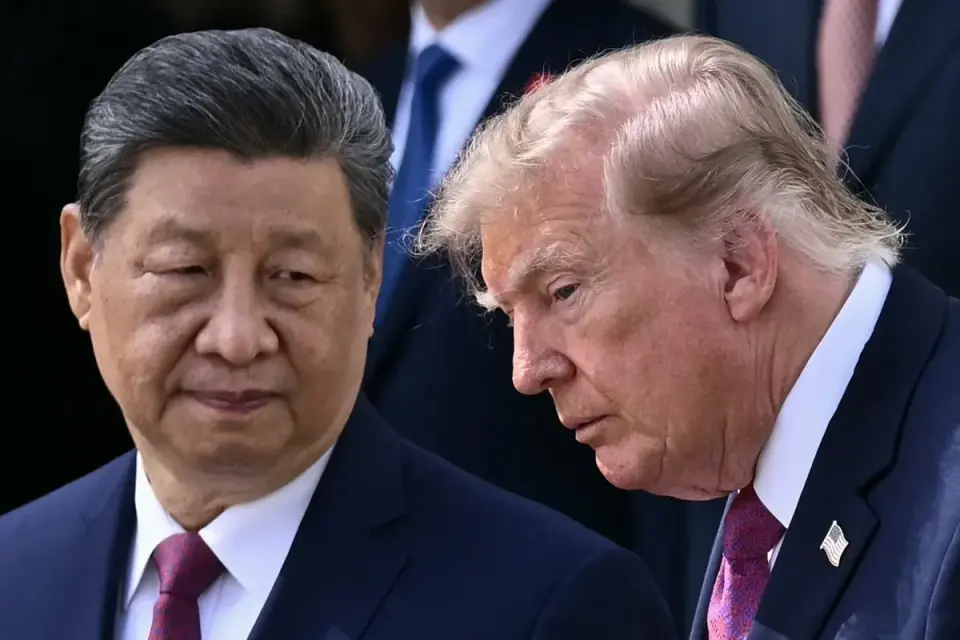
President Donald Trump is traveling to Asia for a trilateral summit with Chinese President Xi Jinping and Russian President Vladimir Putin in Shenzhen. Critics label the meeting a 'second Yalta,' while Trump aims to discuss denuclearization. The visit occurs amid a major espionage scandal involving former Nvidia CEO Jensen Huang and internal administration conflicts over semiconductor export controls. While some officials pushed for stricter restrictions on chip sales to China, Trump defended Commerce Secretary Howard Lutnick, prioritizing diplomatic relations with Beijing over immediate security crackdowns.
Key points
- Trump will meet Xi and Putin in Shenzhen for a trilateral summit, which critics compare to the 1945 Yalta Conference due to its potential to reshape global power dynamics.
- The summit follows a scandal where former Nvidia CEO Jensen Huang was accused of espionage, leading to internal battles within the Trump administration over semiconductor export controls.
- Treasury Secretary Scott Bessent and other hawks forced tighter AI chip export rules, overriding Commerce Secretary Howard Lutnick, who had delayed restrictions at Trump’s direction.
- Trump publicly defended Lutnick and Huang, stating he did not mind if Huang was reinstated and dismissing claims that Huang’s partner was a spy.
- Simultaneously, U.S. peace talks with Russia have stalled after Moscow demanded U.S. troop withdrawals and Finland’s expulsion from NATO, prompting Senator Tom Cotton to call the negotiations a farce.
Background
This visit follows a period of intense domestic political conflict, including Republican threats to block a $1.5 trillion defense budget due to Trump’s perceived concessions to Russia and lack of support for Ukraine. The administration’s foreign policy has been marked by shifting priorities, with some actions framed as countermeasures against China, while others prioritize personal relationships with foreign leaders.
How outlets are covering it
Tablet Magazine argues that Trump’s foreign policy is driven by a desire for personal rapport with Xi and Putin, rather than a coherent strategy to counter China. It notes that while hawks like Bessent and Rubio pushed for stricter chip controls, Trump consistently sided with Lutnick to maintain good relations with Beijing. In contrast, WJR-AM frames the trip as a critical moment for global stability, emphasizing how international relations directly impact American consumers and businesses through trade and security concerns. The outlets differ in focus: Tablet highlights the disconnect between national security and presidential preference, while WJR-AM emphasizes the broader economic implications for the U.S. public.
Why it matters
The summit and the ongoing chip export disputes reveal a fundamental tension in U.S. foreign policy: the conflict between transactional diplomacy and strategic national security. If Trump prioritizes personal relationships over security protocols, it could undermine long-term U.S. advantages in technology and influence in Europe. The outcome of these negotiations will likely determine whether the U.S. adopts a more hawkish stance or continues to pursue conciliatory approaches with adversarial powers.
What to watch
Observers will watch whether the trilateral summit produces any concrete agreements or if it remains a symbolic gesture. The Commerce Department’s new export controls will be tested in the coming weeks, particularly regarding enforcement against firms linked to China. Additionally, the administration’s approach to Ukraine and Russia will be scrutinized as peace talks continue, with potential consequences for NATO cohesion and U.S. defense funding.
Want the full story? Read the original reporting
Read on Tablet Magazine