
Trump’s Lavish Xi Welcome Clashes with GOP’s Anti-Communist Midterm Strategy
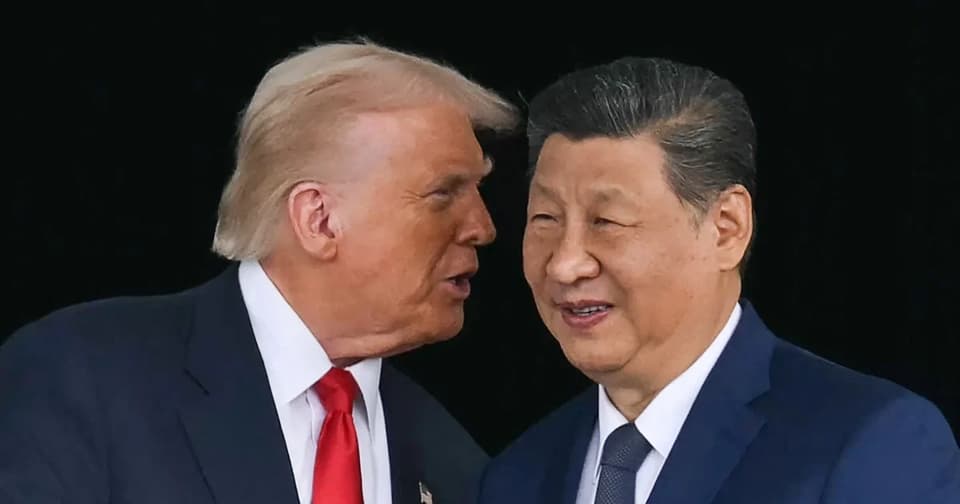
President Donald Trump hosted Chinese leader Xi Jinping with unprecedented ceremony, including tarmac greetings and a state dinner, despite recent accusations of Chinese interference. While the summit yielded a two-month trade truce extension and an AI hotline proposal, it sparked internal Republican backlash over the clash between Trump’s personal diplomacy and the party’s anti-communist messaging ahead of midterms.
Key points
- Trump met Xi at Joint Base Andrews, a first for a visiting leader, and laid two red carpets for the summit.
- The state dinner featured a Chinese-inspired menu and a gift of a bald eagle statue.
- Xi announced the transfer of two giant pandas to the Atlanta Zoo.
- The trade truce between the US and China was extended from November 10 to January 10.
- Secretary of State Marco Rubio proposed a US-China hotline for AI emergencies.
- Republicans criticized the lavish welcome as undermining their anti-communist narrative for the 2026 midterms.
Background
This summit follows a period of heightened US-China tensions, including trade wars and disputes over AI governance. Previous coverage noted Xi’s global diplomacy sprint and concerns over rare earth material dependencies. The current visit occurs amid a seven-month US-Iran conflict, where China is accused of aiding Iran, complicating Trump’s diplomatic posture.
How outlets are covering it
NBC News highlights the ceremonial excesses and the contradiction between Trump’s past accusations of Chinese election interference and his current charm offensive. AP News emphasizes the strategic weakness of the US position, noting Trump’s lack of leverage due to the Iran war and looming midterms. New York Magazine frames the event as a political disaster for the GOP, arguing that Trump’s praise for Xi and other socialists undermines the party’s 'Red Scare' strategy against Democratic candidates. While NBC focuses on the diplomatic optics, NY Mag centers on the domestic electoral fallout, and AP stresses the geopolitical imbalance.
Why it matters
The summit reveals a critical tension in Trump’s administration: the conflict between personal diplomatic relationships and ideological messaging. The lavish welcome risks alienating Republican voters and damaging the party’s anti-communist narrative, which is central to their 2026 midterm strategy. Additionally, the lack of substantive breakthroughs, aside from a trade truce extension, suggests limited leverage for the US in addressing broader issues like AI and military aid to Iran.
What to watch
The extended trade truce will be monitored for compliance through January 2027. The proposed AI hotline may be formalized in future negotiations. Republicans will likely intensify their anti-communist messaging to counter Trump’s diplomatic overtures, potentially creating internal party divisions. The impact of the summit on the 2026 midterms will depend on how voters perceive the balance between national security and ideological consistency.
- Trump rolls out red carpets for Xi Jinping, though he has portrayed China as a global menace NBC News
- Trump decries Democrats as 'communists,' even as he looks to impress China's communist leader AP News
- Democrats in competitive races fight back against GOP’s communist labels The Hill
- Trump Hates Communism But Likes Hanging Out With Communists New York Magazine
- Guest opinion: Socialism and capitalism in America Daily Inter Lake
Want the full story? Read the original reporting
Read on NBC News