
Tusk Defends Court Overhaul as Poland’s Constitutional Crisis Deepens
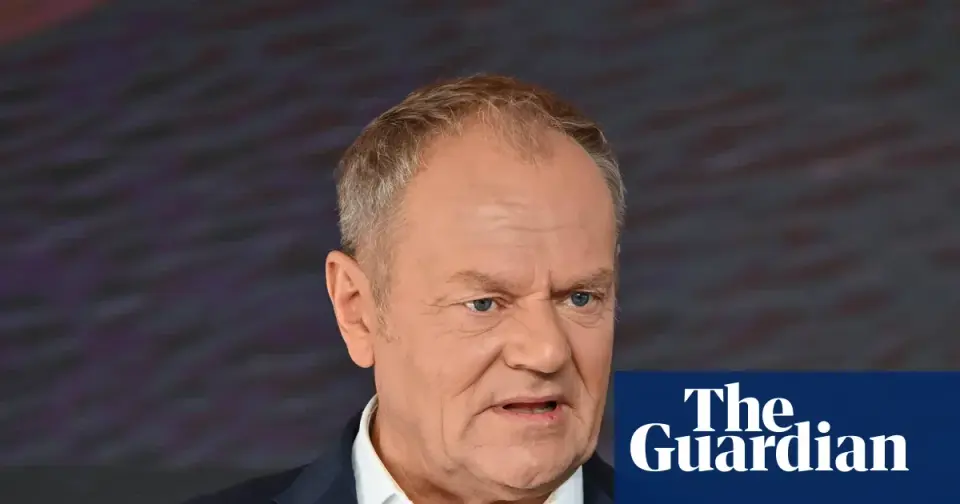
Prime Minister Donald Tusk vowed to proceed with the contested restructuring of Poland’s Constitutional Tribunal, dismissing opposition protests as illegitimate. The crisis began after the government suspended Tribunal President Bogdan Święczkowski, a move the opposition and President Karol Nawrocki condemned as a coup. While Tusk argues the action is necessary to restore judicial independence after years of PiS control, critics and some legal experts question the legality of the suspension, setting the stage for a polarized parliamentary election next year.
Key points
- Tusk declared in a prime-time address that the government would not compromise on overhauling the Constitutional Tribunal, calling the previous PiS-era court 'not a genuine court.'
- The dispute escalated on Friday when government-backed judges suspended Tribunal President Bogdan Święczkowski and his deputy, triggering street protests and the deployment of riot police.
- President Karol Nawrocki aborted a state visit to Senegal to return to Warsaw, where he physically entered the court building to support the suspended officials, an act Tusk criticized as undemocratic.
- The EU’s Court of Justice had previously ruled the tribunal was not impartial due to PiS appointments, a fact Tusk cited to justify the current government’s actions.
- Poland’s Helsinki Foundation for Human Rights described the legal basis for the suspension as 'questionable,' warning it would not help restore the court’s legitimacy.
- The confrontation intensifies ahead of next year’s parliamentary elections, with polls indicating a close race between Tusk’s coalition and the nationalist right.
Background
This crisis follows a decade-long conflict over judicial independence in Poland. The Law and Justice (PiS) party, which ruled from 2015 to 2023, implemented reforms that the EU and critics accused of politicizing the judiciary, leading to EU fines. Tusk’s center-right coalition took power in 2023 with a mandate to reverse these changes, but faced repeated vetoes from PiS-aligned presidents, including Nawrocki, who refused to swear in judges approved by parliament. The current standoff represents the most severe escalation of this institutional deadlock since Tusk assumed office.
How outlets are covering it
The Guardian and CNN present Tusk’s defense as a necessary, albeit controversial, step to restore rule of law, highlighting his comparison of the opposition to a thief claiming victimhood. AP News focuses on the procedural chaos, noting that the Tribunal’s website went down shortly after the suspension announcement, preventing independent verification of the official reasons. While Tusk and his allies frame the action as a legal correction of PiS-era abuses, opposition leaders like Jarosław Kaczyński and Zbigniew Ziobro, along with President Nawrocki, characterize it as a 'constitutional coup' and an attack on the state. International figures, including Russia’s former president Dmitry Medvedev, joined the opposition’s outcry, a point Tusk used to link the opposition to pro-Russian forces. Legal experts remain divided, with some, like the Helsinki Foundation, questioning the legality of the suspension, while Foreign Minister Radosław Sikorski conceded the events were 'not elegant' but necessary to prevent a shift to a presidential republic.
Why it matters
The outcome of this constitutional crisis will determine the trajectory of Poland’s rule of law and its relationship with the EU. If the government succeeds in restructuring the tribunal, it may solidify its pro-European stance but risk deepening domestic polarization. Conversely, if the opposition succeeds in blocking the changes, it could maintain influence over the judiciary and potentially win the next parliamentary election. The crisis also highlights the fragility of democratic institutions in Poland, where the balance of power between the executive, presidency, and judiciary remains highly contested.
What to watch
The government is expected to continue its efforts to staff the Constitutional Tribunal with judges approved by parliament, despite ongoing opposition resistance. President Nawrocki has invited cross-party talks to defuse tensions, but no breakthrough has been achieved. The situation is likely to remain volatile until the parliamentary elections next year, with both sides using the crisis to mobilize their bases. The EU may also monitor the situation closely, given its previous involvement in the dispute over judicial independence.
- Tusk defends overhaul of Poland’s constitutional court despite protests The Guardian
- Tensions over Poland’s top court ignite as the country’s prime minister and president square off CNN
- Polish PM Tusk vows support for tribunal amid court crisis Reuters
- Police secure Poland’s Constitutional Tribunal as protests erupt over court chief’s suspension AP News
- Donald Tusk vows to press on with overhaul of Poland’s judiciary Financial Times
Want the full story? Read the original reporting
Read on The Guardian