
US Warns EU Against Big Tech Tax as Budget Talks Face Ukraine and Le Pen Hurdles
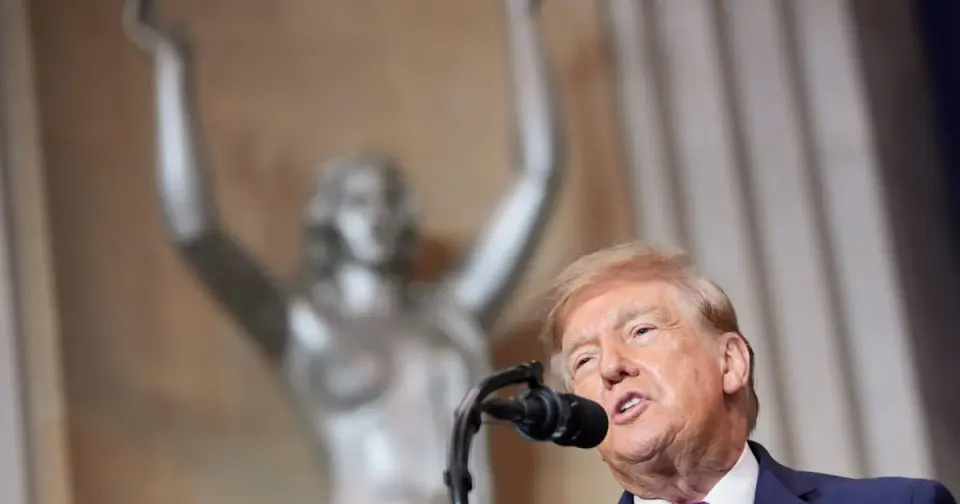
The Trump administration has formally opposed a revived EU-wide digital services tax, warning that it discriminates against US companies. This warning coincides with a two-day summit in Brussels where EU leaders are negotiating the bloc’s next seven-year budget. The talks are complicated by deep divisions over Ukraine funding, with Germany threatening to veto the budget unless a €45bn loan is approved, and by French efforts to shield the deal from potential disruption by far-right leader Marine Le Pen.
Key points
- The US State Department reiterated its opposition to an EU-wide digital levy, stating it discriminates against US companies and hurts consumers, as EU leaders gathered in Brussels to discuss new revenue sources.
- European Council President António Costa proposed reviving a digital tax targeting companies with global turnover above €750 million, a threshold that would capture US giants like Google, Meta, and Amazon.
- Germany’s Chancellor Friedrich Merz has linked his approval of the EU budget to securing a €45bn loan for Ukraine, threatening to veto the deal if member states do not agree to the funding.
- France is seeking €35bn in additional farming subsidies to make the budget harder for Marine Le Pen to dismantle if she wins the upcoming presidential election, while Germany aims to enshrine Ukraine funding in law to prevent future vetoes.
- EU leaders are divided, with 'frugal' nations like Germany and the Netherlands seeking to reduce the budget size, while 17 southern and eastern European countries oppose cuts to traditional spending like agriculture and regional funds.
Background
The EU previously shelved a digital tax proposal in 2018 to allow OECD-led global tax talks to proceed. Recent domestic US political dynamics, including tech industry opposition to wealth taxes in California, have highlighted the political sensitivity of taxing large technology firms. In Europe, the current budget negotiations are occurring against a backdrop of rising far-right support, particularly in France, where Marine Le Pen is leading polls ahead of the 2027 presidential election.
How outlets are covering it
POLITICO emphasizes the US government’s direct opposition to the digital tax and the internal EU divisions, noting that while France, Denmark, Spain, and Italy support the levy, Ireland, Sweden, Malta, Germany, and the Netherlands remain cautious. The Guardian focuses on the clash over Ukraine aid, highlighting Merz’s threat to veto the budget and the resistance from net beneficiary states like Slovakia, Hungary, and Czechia. The Financial Times centers on the strategic maneuvering by France and Germany to 'Le Pen-proof' the budget, detailing France’s demand for extra farm subsidies and Germany’s push to secure Ukraine funding through legal mechanisms rather than consensus.
Why it matters
The outcome of these negotiations will determine the EU’s fiscal capacity for 2028-2034, including its ability to fund defense, competitiveness, and support for Ukraine. A failure to reach a deal could lead to a fragmented EU response to the war in Ukraine and potential economic retaliation from the US if a digital tax is implemented, further straining transatlantic trade relations.
What to watch
EU leaders are expected to continue their two-day summit in Brussels, aiming to finalize a budget deal by the end of 2026 before the 2027 elections. Following the leaders' agreement, member states will negotiate with the European Parliament, and the ratification process will likely extend into 2027, potentially overlapping with the French presidential election.
- US warns EU leaders against Big Tech tax POLITICO.eu
- Leaders wrestle over EU's budget, Ukraine financing, as Le Pen focuses minds Reuters
- EU leaders divided over budget spending as they weigh a $49 billion loan to Ukraine AP News
- EU leaders braced for clashes over Ukraine aid at budget talks The Guardian
- Paris and Berlin seek to shield EU budget from Marine Le Pen Financial Times
Want the full story? Read the original reporting
Read on POLITICO.eu