
Albanian Student Protests Escalate to Fire and Clashes at Education Ministry
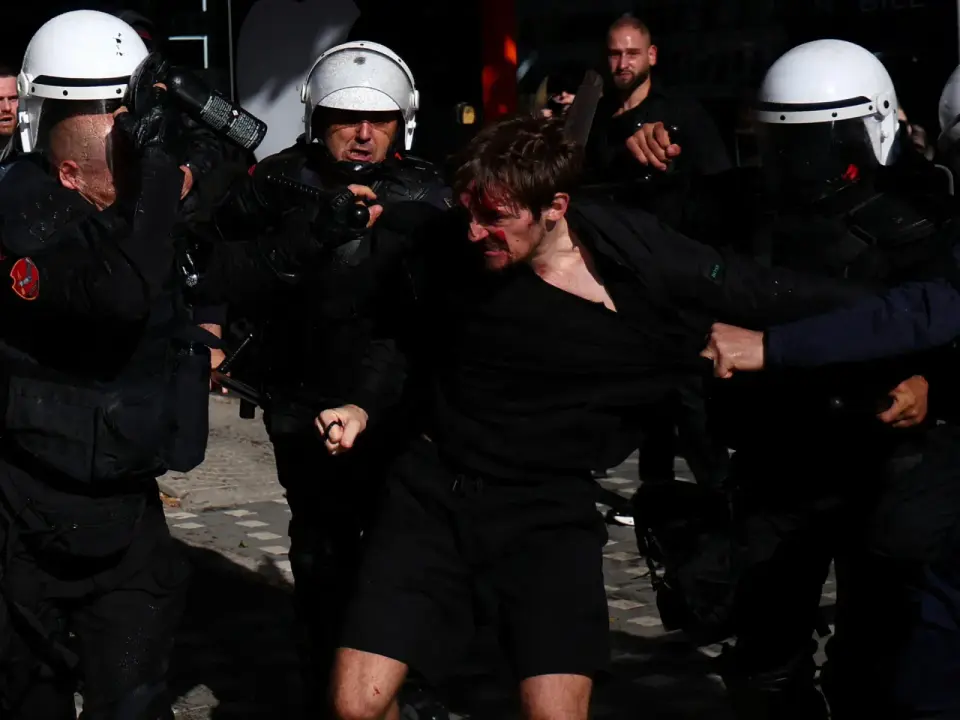
Violent student protests in Tirana, Albania, escalated on October 14, with demonstrators throwing bricks and setting fire to the Education Ministry. Police responded with tear gas and water cannons, marking the most intense clashes since anti-corruption demonstrations began in May.
Key points
- Protests in Tirana turned violent on October 14, with thousands of students clashing with police near the Education Ministry.
- Demonstrators threw bricks, broke barriers, and set fire to the Education Ministry and a nearby Raiffeisen Bank branch.
- Police used tear gas and water cannons to disperse crowds, resulting in several detentions and injuries.
- Student organizers cited high education costs, poor university conditions, and limited post-graduation employment prospects as primary grievances.
- The unrest is part of a broader wave of student activism across Europe, including recent protests in France.
Background
Albania has faced anti-corruption protests since May 2026, posing a growing challenge to Prime Minister Edi Rama’s government. This latest escalation follows a broader European trend of student activism, including violent clashes and over 440 detentions in France in late September 2026 over education funding and overcrowded classrooms.
How outlets are covering it
Al Jazeera emphasized the violent nature of the clashes, noting that protesters threw bricks and concrete blocks, while police responded with tear gas and water cannons. A protester quoted by Al Jazeera called for a 'complete overthrow of the system' due to deep social injustice. U.S. News & World Report, citing Reuters, highlighted that the Education Ministry caught fire during a second day of protests, with a nearby bank branch also burning. Deputy Prime Minister Albana Kociu condemned the violence, stating that protesting is a legitimate right but cannot be an excuse for vandalism or city destruction. Both sources agreed that the unrest is part of a wider European student movement, though Al Jazeera focused on the immediate physical clashes, while U.S. News & World Report emphasized the fire and the continuation of the protest into a second day.
Why it matters
The escalation of student protests in Albania to violent clashes and fires at government buildings signals deepening public discontent with education policy and economic inequality. The unrest challenges Prime Minister Edi Rama’s government and reflects a broader European trend of youth-led activism against perceived systemic failures in education and social mobility.
What to watch
Authorities may face continued pressure to address student grievances over education costs and employment prospects. The government may increase security measures around government buildings, while student organizers may plan further demonstrations. The situation could influence broader political discourse in Albania regarding social inequality and anti-corruption efforts.
- Photos: Student protest in Albania prompts violent clashes with police Al Jazeera
- Albanian students protest over education, jobs, clash with police Reuters
- Fire Breaks Out at Albania's Education Ministry During Student Protest U.S. News & World Report
- Anti-Government Student Protests Erupt in Albania Democracy Now!
- Student protests in Albanian capital turn violent Yahoo
Want the full story? Read the original reporting
Read on Al Jazeera